

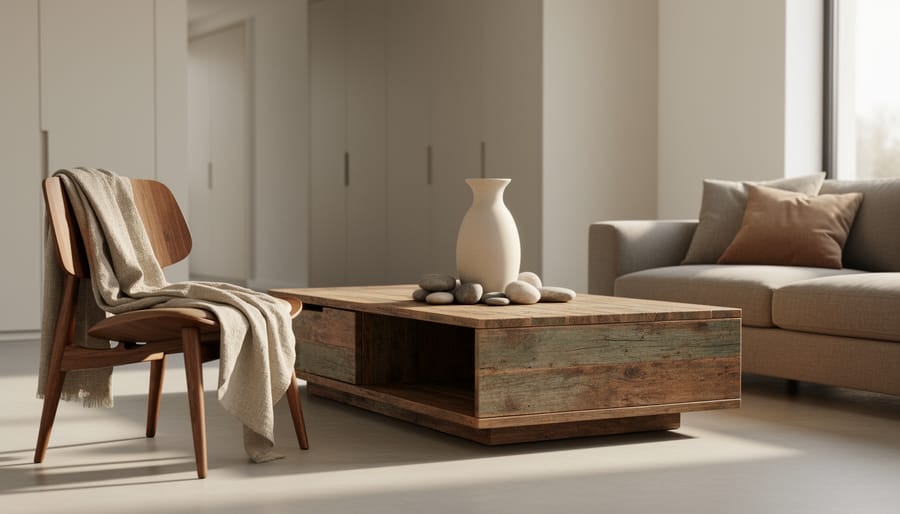
Minimalist home decor strips away visual clutter to create breathing room for what truly matters, transforming overwhelming spaces into calm sanctuaries through intentional furniture choices, neutral color palettes, and the discipline to display only items that serve a purpose or spark genuine joy. The approach works because removing excess visual stimuli actually reduces cortisol levels and improves focus, which explains why this design philosophy has gained momentum across cultures from Scandinavian hygge to Japanese wabi-sabi traditions.
If you’re picturing stark white rooms devoid of personality, reconsider. Modern minimalism in 2026 embraces warmth through natural textures like linen throws and reclaimed wood furniture, celebrates negative space as a design element rather than emptiness, and honors personal meaning over generic decoration. A minimalist living room might feature a single sculptural vase from your travels alongside a well-loved vintage chair, creating more impact than a dozen forgettable accessories ever could.
The shift toward this aesthetic reflects broader changes in how we live. Smaller urban apartments demand smarter storage solutions. Remote work requires homes that function as both productive offices and restorative retreats. Growing environmental awareness pushes us toward quality pieces that last rather than trendy items destined for landfills.
Getting started doesn’t require purging everything you own overnight. Success comes from understanding core principles like the 80/20 rule for belongings, choosing multi-functional furniture, and establishing clear zones for different activities. The journey from chaotic maximalism to serene minimalism follows predictable stages, and knowing what to expect prevents the sterile mistakes that make people abandon the style halfway through.
What Makes Minimalist Home Decor Different From Just Having Less Stuff
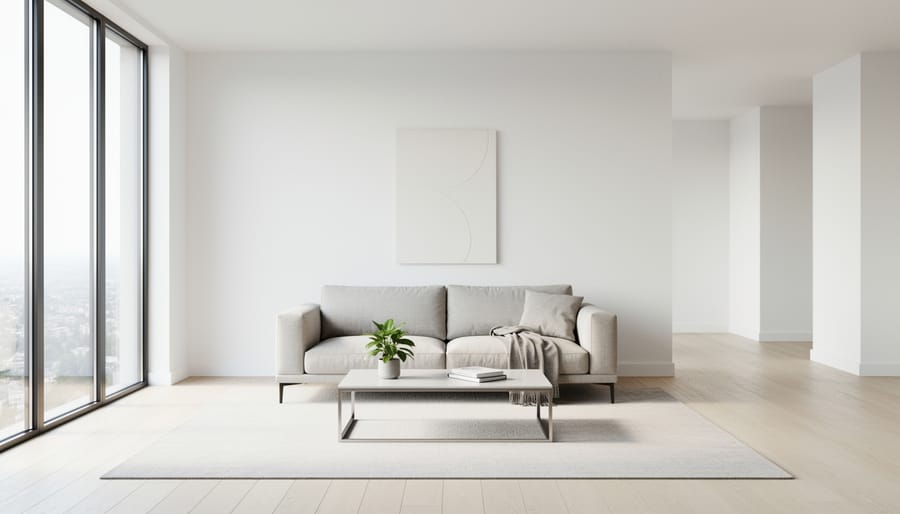
Walking into a minimalist home doesn’t mean stepping into an empty box. The difference between simply owning less and practicing minimalist home decor lies in the intention behind every choice you make. When you strip away the philosophy, what remains isn’t absence, it’s purpose.
True minimalist decor starts with a question: does this item enhance my life or my space? It’s not about counting possessions or following arbitrary rules about how many throw pillows you’re allowed to keep. Instead, it’s about curating your environment so that every piece serves a function, brings you joy, or tells a story that matters to you. That vintage ceramic vase your grandmother gave you absolutely belongs in a minimalist space if it holds genuine meaning. What doesn’t belong is the generic trinket you bought because a shelf looked bare.
The principle of quality over quantity drives much of minimalist thinking. Rather than filling your living room with an affordable sofa, two accent chairs you found on sale, and a collection of mismatched side tables, you invest in one exceptional sofa that will last years and truly serves how you use the space. This approach actually saves money long-term while creating rooms that feel calmer and more cohesive.
Functional beauty matters just as much as aesthetics. A minimalist kitchen doesn’t hide every appliance in cabinets if you use your coffee maker daily, that’s creating inconvenience for the sake of appearance. Instead, it might feature a beautiful espresso machine that earns its counter space through both regular use and sculptural presence. The room breathes because you’ve eliminated the waffle maker you used once and the decorative canisters that just collect dust.
Warmth and personality emerge through texture, natural materials, and the stories behind your carefully chosen pieces. A minimalist bedroom might have linen bedding in soft earth tones, a solid wood nightstand with visible grain, and a single piece of art that genuinely moves you. The limited palette and clean lines don’t create coldness, they create a backdrop that lets you notice the morning light on that wood grain and actually see the artwork without visual competition.
The Cultural Roots That Shape Modern Minimalism
Modern minimalism didn’t emerge from a single source. It’s a conversation between cultures, each contributing distinct philosophies that make the aesthetic richer than any one tradition could achieve alone.
Japanese wabi-sabi interior design introduced the idea that imperfection holds beauty. A handmade ceramic bowl with an irregular glaze, weathered wood floors that show their age, textiles with natural variations in weave, these elements add soul to minimal spaces. Wabi-sabi taught us that minimalism doesn’t mean perfection. It means finding contentment in things as they are.
Scandinavia brought hygge’s warmth to the equation. While Japanese minimalism often embraces asymmetry and shadow, Nordic design layers in cozy textures and soft lighting that make stark simplicity feel inviting. Think wool throws draped over clean-lined sofas, candlelight supplementing daylight, pale wood tones that glow rather than recede. This is minimalism you want to curl up in.
Contemporary minimalism in Latin America often incorporates vibrant accent colors and locally-sourced materials, terracotta tiles, woven palm, bold ceramics, that honor cultural heritage without abandoning clean lines. Middle Eastern interpretations might feature intricate geometric patterns in a single statement piece or elegant metalwork that catches light beautifully. African design brings natural textures like sisal, clay, and handwoven baskets that add dimension without clutter.
What makes minimalism work globally is its adaptability. The principles of intentionality and restraint translate across cultures, but each region fills the space with what matters locally, different textures, colors, crafts, and comforts that reflect real lives and histories rather than following a rigid rulebook.
Essential Elements Every Minimalist Space Needs
Color and Light: Your Foundation
Start with a neutral base that gives you room to breathe. Soft whites, warm grays, and calming paint colors in the beige and taupe families create a quiet backdrop without feeling clinical. The trick is layering in warmth through subtle variations, cream alongside white, or charcoal as a grounding accent rather than stark black.
Your lighting does just as much work as color. Natural light is your best asset, but you’ll need layers when daylight fades. Combine ambient fixtures with task lighting and accent pieces that brighten dim rooms without overwhelming them. Think dimmable overhead lights paired with a sculptural floor lamp and maybe a single spotlight highlighting texture on a wall.
Add one or two intentional accent colors through small, movable pieces, a terracotta vase, sage throw pillows, or a single piece of art. These pops give your space personality while keeping the overall palette restrained and cohesive.
Materials That Add Warmth Without Clutter
The secret to warm minimalism lies in layering texture, not pattern. Natural materials bring depth and character while keeping the visual field calm.
Consider these versatile natural materials and their unique contributions:
- Linen: softens hard surfaces with its relaxed drape and subtle weave texture
- Untreated wood: introduces organic grain patterns and warmth through honey, walnut, or bleached tones
- Stone: adds grounding weight and cool tactile contrast, from smooth marble to textured travertine
- Concrete: provides modern edge with its matte finish and industrial honesty
- Wool and jute: layer underfoot with natural variation that doesn’t read as busy
The key is mixing temperatures and finishes, pair cool concrete with warm oak, or sleek stone with nubby linen. Exhibitors like, featured for design events such as #LLDS25, showcase how raw stone surfaces create focal points without clutter.
Quality matters more than quantity here. A single chunky wood coffee table or stone vase commands more presence than a collection of smaller items. The material itself becomes the decoration, its natural variations providing visual interest that synthetic alternatives can’t match. This approach respects minimalism’s core principle: each element earns its place through both function and inherent beauty.
Room-by-Room Minimalist Transformations That Actually Work
Living Spaces: Creating Calm Centers
Your living room sets the tone for your entire home, so start here with intention. Choose one statement piece, a quality sofa in a neutral tone, a low-profile coffee table in natural wood, and build around it sparingly. Entertainment systems don’t need to disappear completely, but consider wall-mounting your TV or housing components in a simple console with closed storage to eliminate cord clutter and visual distraction.
The key is editing ruthlessly. Display only objects that carry genuine meaning or serve daily function. Three well-chosen books on your coffee table create more impact than a dozen stacked randomly. A single sculptural vase or a piece of art you love anchors a room better than a gallery wall of prints you barely notice.
Resist the urge to fill every surface. Negative space allows your eye to rest and makes the pieces you do keep feel more important. If your living space serves multiple purposes, working, relaxing, entertaining, use subtle room dividers like open shelving or a strategically placed rug to define zones without adding walls or visual barriers. The goal is a room that invites you to settle in, not one that demands constant tidying or decision-making about where to look.
Bedrooms: Your Personal Retreat
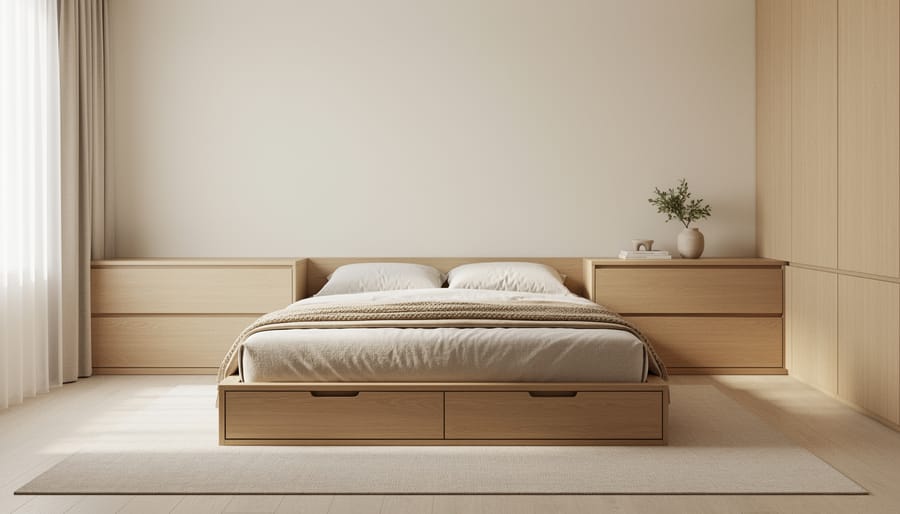
Your bedroom should function as a sanctuary from the day’s stimulation, and minimalist design delivers that through deliberate restraint. Start with concealed storage, built-in wardrobes with flush doors, under-bed drawers, or a single streamlined dresser eliminate the visual chaos of scattered belongings. Keep surfaces clear except for one or two meaningful objects: a small plant, a favorite book, perhaps a simple ceramic piece.
Simplified bedding makes a dramatic difference. Choose high-quality natural linens in neutral tones, white, oat, soft gray, and resist the urge to pile on decorative pillows. Two sleeping pillows and one textured throw provide comfort without clutter. A warm minimalist bedroom balances this simplicity with texture through materials like linen duvet covers, wool blankets, or a jute rug underfoot.
Intentional decor placement means each item earns its spot. Hang a single oversized piece of art above the bed rather than a gallery wall. Keep nightstands minimal, a reading lamp, perhaps a carafe of water, nothing more. If you need window treatments, choose simple linen curtains or streamlined blinds that complement rather than compete with the room’s calm energy.
Kitchens and Functional Areas
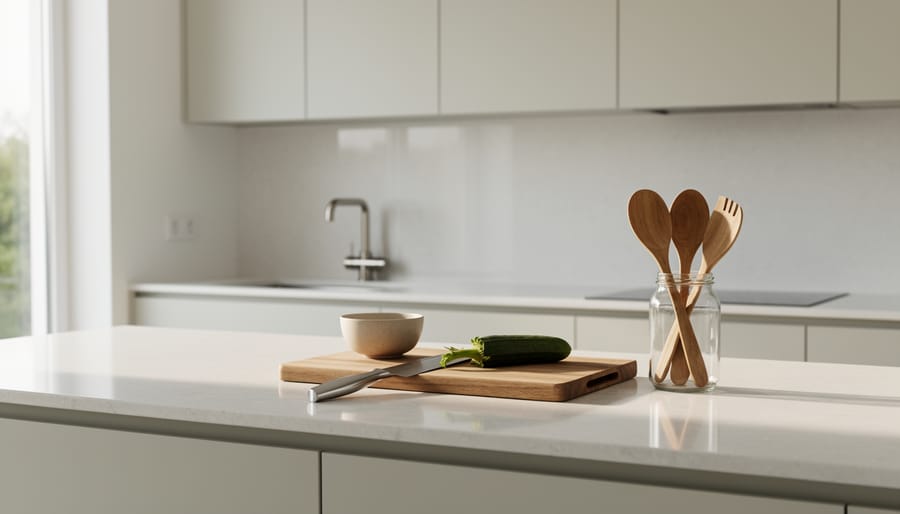
Kitchens demand a different kind of minimalism because they’re fundamentally working spaces. The goal isn’t pristine counters that look untouched, it’s surfaces clear enough to actually cook without playing Tetris with your coffee maker. Start by applying the “daily use” test: if you don’t reach for it at least weekly, it doesn’t belong on the counter. Your stand mixer might be beautiful, but if it emerges twice a year, find it a home in a cabinet.
Minimal kitchen design relies heavily on concealed storage that actually works for your cooking style. Open shelving looks gorgeous in photos but creates visual noise when you stock fifteen spice jars and mismatched mugs. If you love the look, limit open shelves to a single wall and display only uniform containers or a curated collection of everyday dishes. Drawer organizers and pull-out pantry systems keep staples accessible without the clutter.
The warmth comes through materials, a wooden cutting board left out as functional art, a ceramic utensil crock in matte white, natural stone countertops that show their grain. Choose one or two workhorses to display (perhaps your kettle and a plant) and stash everything else. Your kitchen can handle real life and still breathe.
The Mistakes That Make Minimalist Homes Feel Cold (And How to Avoid Them)
The fastest way to turn a minimalist room into a showroom nobody wants to live in? Strip it of everything that makes it yours. That’s mistake number one: confusing minimalism with erasure. When you remove all personal touches, the art that makes you smile, the books you actually read, the ceramics from your grandmother, you’re left with a space that feels like a hotel lobby. The correction is simple: minimalism means fewer things, but those things should matter deeply. Display what tells your story, just be selective about it.
Material choices make or break the warmth factor. Opting for the cheapest versions of furniture and finishes because you’re keeping things “simple” creates spaces that feel more sterile than serene. A pressed-wood side table and synthetic textiles give off an entirely different energy than solid wood and linen, even when both rooms have the same amount of furniture. Quality materials, natural fibers, real wood, stone, metal, bring texture and depth that prevent the cold, clinical look many people fear.
Pros
- Fewer objects mean each piece can be higher quality and more meaningful
- Natural materials like wood and stone add inherent warmth through texture
- Thoughtful lighting layers create atmosphere without adding clutter
- Negative space actually highlights the personality pieces you do display
Cons
- All-white palettes with no textural variation read as cold and uninviting
- Eliminating personality items entirely makes spaces feel like nobody lives there
- Cheap materials chosen for simplicity look sterile rather than sophisticated
- Ignoring functional storage needs leads to hidden chaos and stress
Another common trap is designing for aesthetics alone without accommodating real life. If you have nowhere to put your keys when you walk in, no surface for your coffee cup, or storage so minimal that clutter constantly reappears, your minimalist space becomes a source of frustration rather than calm. The solution isn’t abandoning minimalism, it’s designing with honest consideration for how you actually live. Include closed storage for everyday items, landing zones for daily routines, and enough surfaces to function without constant tidying.
The difference between a minimalist home that feels cold and one that feels like a warm, intentional refuge often comes down to these practical choices: keeping what matters, investing in quality over quantity, and designing for the life you actually live rather than a magazine fantasy.
Making the Shift: Where to Start Your Minimalist Journey
Starting your minimalist journey doesn’t mean gutting your home in a weekend. The most successful transitions happen when you work room by room, allowing yourself time to understand what truly serves your life versus what’s just taking up space.
Begin with a single surface, your kitchen counter, bedroom nightstand, or entryway table. Clear everything off, clean it thoroughly, then return only what you use daily. That coffee maker you reach for every morning? Back on the counter. The decorative bowl collecting receipts and old batteries? Find it a proper home or let it go. This small exercise teaches you the difference between functional and aspirational possessions, and the visual relief of one clean surface often motivates the next step.
Next, tackle one category across your entire home rather than one entire room. Gather all your throw pillows, vases, or kitchen gadgets in one spot. You’ll quickly see duplicates and realize that twelve throw pillows aren’t twelve times better than three well-chosen ones. Keep pieces that genuinely serve a purpose or bring you joy when you look at them. Donate or sell the rest while they still have value to someone else.
As you create space, resist the urge to fill it immediately. Live with the openness for a few weeks. Notice how your eye rests on the items that remain, how cleaning becomes faster, how you stop hunting for things. This breathing room is minimalism’s real gift.
When you do add back, invest in quality over quantity. One solid wood side table will outlast and outperform three particle board versions. Choose pieces in neutral tones that work across different rooms as your needs change. Natural materials like linen, stone, and wood bring warmth without visual noise.
Your minimalist space should evolve with you, not trap you in a magazine spread. Some seasons require more, some less. The goal isn’t perfection, it’s a home that supports your actual life.
Minimalist home decor isn’t a finish line, it’s an ongoing conversation between your space and your life. What works for someone drawn to Japanese wabi-sabi might look entirely different from a Scandinavian-inspired interpretation or a version that honors your own cultural aesthetic. The beauty of this approach lies in its flexibility. You’re not chasing someone else’s definition of “enough.” You’re deciding what deserves space in your home and what creates visual noise that distracts from the life you want to live.
The momentum behind minimalism continues to build, with design events opening participation calls for #LLDS26 and more exhibitors showcasing materials that bring warmth and character to simplified spaces. This growth reflects a broader shift: people are tired of feeling overwhelmed by their belongings and craving environments that support rather than drain them.
Start where you are. Maybe that means clearing one surface this week or finally replacing that worn sofa with a quality piece you’ll love for years. Maybe it’s recognizing that your favorite artwork and your grandmother’s quilt belong in your minimalist space because they matter to you. The goal isn’t emptiness, it’s intention. When you strip away what doesn’t serve you, what remains becomes clearer, more meaningful, and entirely yours.
