

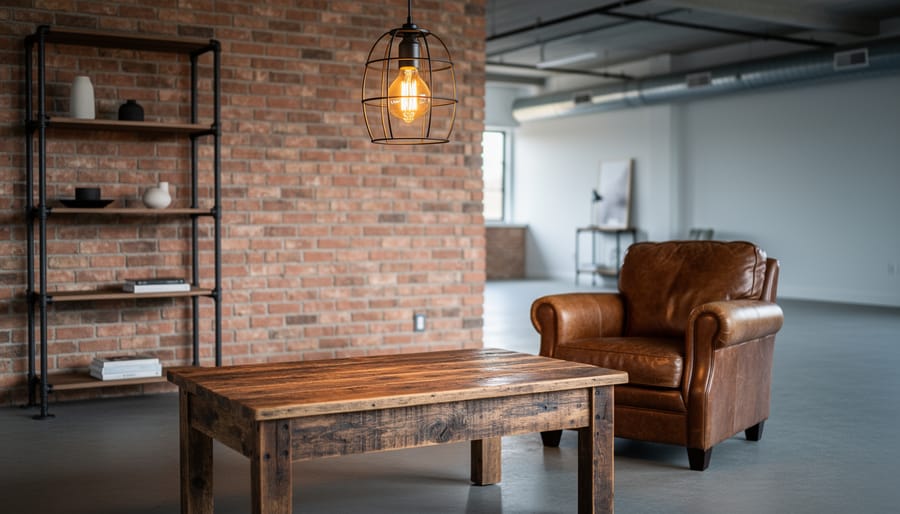
Industrial home decor transforms raw, unfinished elements into sophisticated living spaces by celebrating exposed brick, metal fixtures, and reclaimed wood. This design movement, rooted in converted warehouses and factory lofts of major cities, has evolved into one of 2026’s most accessible and budget-friendly styles for homeowners worldwide.
The appeal lies in its honest approach to materials and structure. Rather than hiding pipes, beams, or concrete, industrial design showcases these architectural bones as focal points. Think open floor plans with visible ductwork, Edison bulb lighting suspended from metal fixtures, and furniture that pairs weathered leather with iron frames. It’s a style that works equally well in urban apartments and suburban homes seeking that authentic edge.
What makes industrial decor particularly practical right now is its alignment with new normal architecture principles. The emphasis on open spaces, durable materials, and multifunctional furniture addresses contemporary living needs while maintaining striking visual impact. Publications like Architectural Digest and Elle Decor have featured this style’s resurgence, noting how it bridges vintage character with modern minimalism.
Budget considerations matter here. You can achieve authentic industrial aesthetics through strategic investments in key pieces like a distressed metal coffee table or vintage factory cart, then balance costs with DIY projects and secondhand finds. The beauty of this aesthetic is that imperfections, wear, and patina actually enhance rather than detract from the overall look, making it forgiving for both novice decorators and seasoned design enthusiasts working within real-world constraints.
What Defines Industrial Style: The Core Elements
Industrial style strips away the facade to reveal the bones of a building. What was once hidden behind drywall and paint now becomes the focal point. This isn’t about adding decorative elements to mimic a warehouse aesthetic. It’s about embracing what already exists and letting structural components tell their story.
Exposed brickwork sits at the heart of authentic industrial design. Whether it’s original brick in a converted loft or a feature wall in a newer home, the texture and imperfection of raw brick anchor the entire space. You’ll notice how each brick carries its own character, small chips and color variations that factory-perfect materials can’t replicate.
Metal surfaces appear throughout industrial interiors, not as polished accents but in their honest state. Steel beams, iron railings, and metal-framed windows showcase the strength and utility these materials provide. The patina on aged metal adds depth that shiny, pristine finishes deliberately avoid.
Pipes and ductwork that most design styles rush to conceal become visual features in industrial spaces. Heating pipes trace paths along ceilings, ventilation ducts remain visible, and electrical conduit runs openly across walls. This transparency celebrates the systems that make buildings function rather than treating them as embarrassing necessities.
Dark wood introduces warmth without softening the aesthetic’s edge. Reclaimed timber beams, thick plank flooring, and heavy wood furniture pieces contrast beautifully with metal and brick. The wood carries history in its grain patterns, nail holes, and weathered surfaces.
The philosophy underlying these elements matters as much as the materials themselves. Industrial style rejects the notion that buildings need decorative masks. A support column doesn’t require covering because its structural purpose holds inherent beauty. Concrete floors need no apology. This honesty creates spaces that feel grounded and unpretentious.
When you walk through an industrial interior, nothing pretends to be something it isn’t. The room shows you exactly how it was built, how it stands, and how it works. That transparency resonates with homeowners tired of keeping up appearances, offering instead a design language built on authenticity and functional integrity.
The Industrial Color Palette and Textures
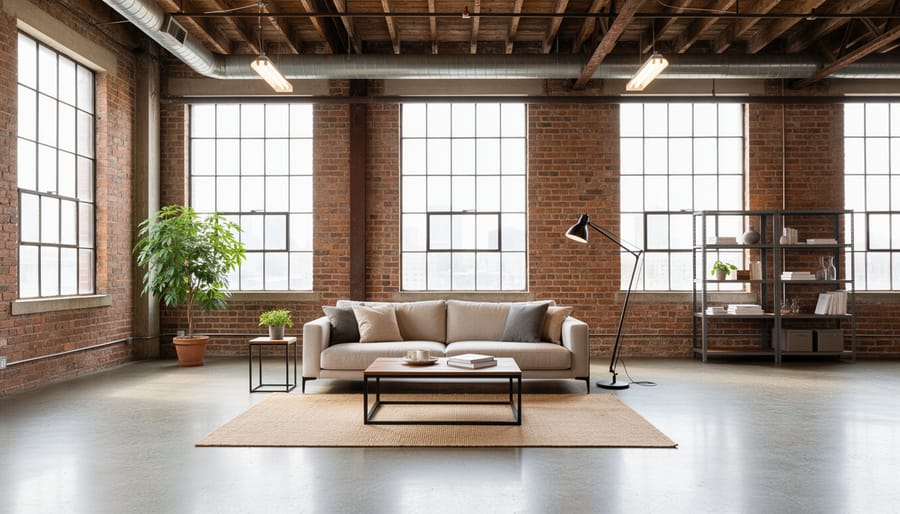
The industrial palette strips away distraction, anchoring spaces in a foundation of grays, blacks, whites, and earthy browns that let raw materials speak. These aren’t flat, lifeless neutrals, they’re layered tones that shift with light and surface, from warm charcoal to cool concrete gray, creating depth without competing for attention. Unlike bolder 2026 decor colors trending elsewhere, industrial schemes embrace restraint, proving that a muted palette can deliver striking impact when paired with honest textures.
The real character comes through texture, not hue. Rough brick catches shadow differently than smooth steel; reclaimed wood grain adds warmth where polished concrete feels cool. This textural contrast prevents monotony and makes neutral spaces feel alive rather than sterile. When you’re selecting paint color ideas think greige, mushroom, slate, and gunmetal, solid colors that serve as backdrop rather than focal point.
Textiles soften the industrial edge without diluting its authenticity. Woven wool rugs in oatmeal or charcoal anchor seating areas, their nubby texture contrasting with hard surfaces underfoot. Throw pillows in canvas, linen, or chunky knit add tactile interest to metal-framed sofas, stick with the same neutral palette but vary the weave and weight. A cable-knit throw in natural cream or a felted wool cushion in slate introduces comfort without pattern or color clash.
The key is maintaining visual discipline while embracing physical texture. Every textile should feel substantial and honest, echoing the industrial philosophy that materials shouldn’t pretend to be something they’re not. Heavy linens, raw cotton, undyed wool, these fabrics bring warmth and human scale to spaces built from brick and steel, proving that industrial style can be inviting without sacrificing its stripped-down integrity.
Industrial Furniture: Function Meets Form
New vs. Reclaimed: The Mix-and-Match Approach
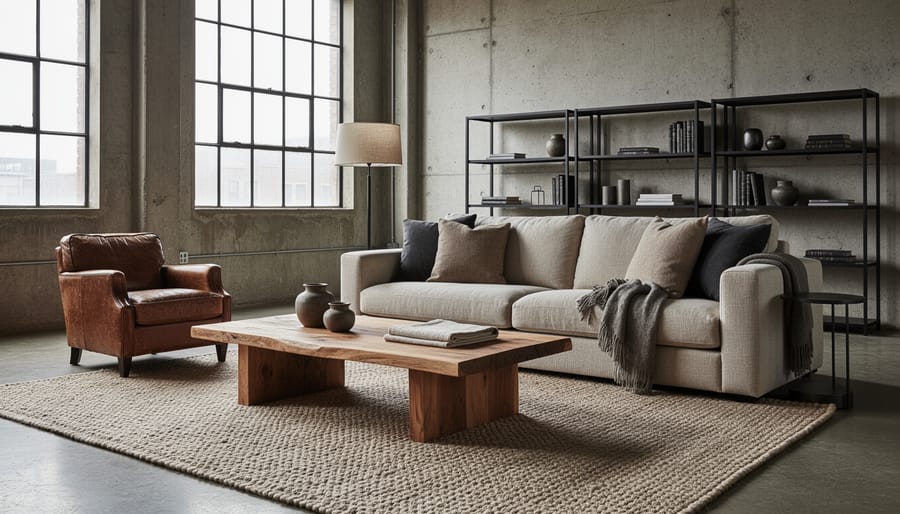
The most compelling industrial spaces aren’t showrooms, they’re collisions of history and function. A salvaged factory cart becomes a coffee table, paired with a brand-new steel-framed sofa. Vintage factory lighting hangs above a sleek industrial dining table you ordered last month. This intentional contrast creates depth that pure vintage or all-new setups simply can’t match.
Start with structural pieces you’ll use daily. A new metal shelving unit offers the clean lines and reliability you need, while a reclaimed wooden workbench brings character and patina no manufacturer can replicate. The key is balance: too much reclaimed feels like a museum, while exclusively new pieces lack soul.
Think of reclaimed items as your accent players. A weathered gear from an old machine becomes wall art. Salvaged lockers provide storage with stories etched into every dent. These pieces ground your space in authenticity while new furniture handles the heavy lifting of comfort and functionality. The mix tells a richer story than either approach alone, creating rooms that feel lived-in from day one rather than styled for a catalogue shoot.
Repurposed Materials as Statement Pieces
The genius of repurposed materials lies in their ability to tell a story while solving a problem. An old wooden ladder becomes open shelving in your bathroom, its rungs holding rolled towels and small plants. Stack vintage wood crates horizontally to create a rustic media console, or mount them vertically on the wall for display shelving that showcases books and collectibles. The weathered patina and visible wear aren’t flaws, they’re the whole point.
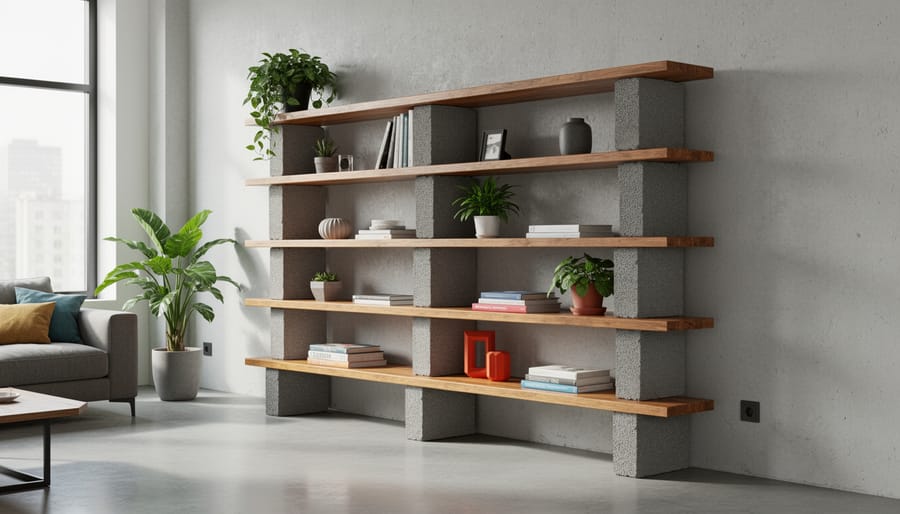
Cinderblocks offer surprising versatility despite their utilitarian origins. Pair them with thick wooden planks to build custom shelving that can be reconfigured as your needs change. Two blocks and a plank create a simple bench or low side table. Paint them matte black or leave them raw; either way, they anchor a space with their honest, no-frills presence.
The beauty of working with repurposed pieces is that mistakes don’t exist, only character. That metal milk crate you find at a flea market? Flip it for a side table, stack three for vertical storage, or mount it to the wall as a mail organizer. Old factory carts with casters become mobile coffee tables. Reclaimed wooden shipping pallets can be disassembled and rebuilt into headboards or room dividers.
Start small if you’re hesitant. One statement piece, a ladder shelf or crate nightstand, grounds your space in industrial authenticity without overwhelming it. These pieces work precisely because they weren’t designed to be decorative, which makes them perfectly industrial.
Budget-Friendly vs. Premium Industrial Decor: What to Expect
Industrial style’s beauty lies in its accessibility, you don’t need a massive budget to achieve authentic raw elegance. The real difference between budget and premium approaches isn’t about authenticity, but about durability, finish quality, and sourcing effort.
Budget-friendly industrial decor relies heavily on resourcefulness and smart hunting. Thrift stores, salvage yards, and online marketplaces become your primary sources for reclaimed pieces that already carry the worn, honest aesthetic this style celebrates. A weathered metal shelf unit from a closed factory costs a fraction of a new piece and brings genuine industrial heritage into your space. Repurposed materials shine here: wood crates stacked as shelving, old factory carts converted to coffee tables, or salvaged pipes assembled into clothing racks deliver character without draining your wallet. The tradeoff is time. Finding these pieces requires patience, regular searching, and sometimes the willingness to sand, clean, or make minor repairs.
| Element Type | Budget Option | Premium Option | Key Considerations |
|---|---|---|---|
| Furniture | Reclaimed pieces, DIY conversions, secondhand finds | Designer industrial lines, custom metalwork | Budget requires more effort; premium offers consistency and warranties |
| Metal Accents | Hardware store pipes, basic steel shelving | Blackened steel, aged brass, artisan finishes | Both achieve the look; premium provides refined details and longevity |
| Wood Elements | Reclaimed pallets, salvaged timber, basic dark stain | Architectural salvage, professionally restored beams | Budget creates authentic patina; premium ensures structural integrity |
| Textiles | Affordable woven wool rugs, basic neutral throws | High-quality natural fibers, handwoven textures | Budget pieces wear faster but maintain neutral aesthetic |
Premium industrial decor focuses on curated pieces with superior craftsmanship and finish work. A custom steel console table with hand-forged details costs considerably more than a basic metal shelving unit, but delivers seamless welds, precise proportions, and a finish that won’t rust or chip. High-end retailers specializing in industrial design offer furniture with clean lines and minimal aesthetics already perfected, eliminating guesswork. Premium pieces often feature better materials, solid hardwoods rather than composites, heavy-gauge metals, and professional powder-coating that ages gracefully.
Where should you invest regardless of budget? Anchor pieces that see heavy use deserve quality investment. A solid wrought iron bed frame or a well-built metal dining table will outlast cheaper alternatives by decades. Conversely, decorative accents and smaller items work beautifully at any price point. A reclaimed wooden crate serves as a side table just as effectively as an expensive reproduction.
Both approaches achieve authentic industrial style when you honor the core principle: celebrate honest materials and functional design. Budget decorators gain character through salvage hunting and creative repurposing. Premium buyers gain refinement and durability through curated pieces. Mix the two strategically, invest in foundational furniture, save on accessories and experimental pieces, and you’ll create a space that feels both genuine and uniquely yours.
Global Influences: Industrial Style Across Cultures
Industrial design speaks a universal language of raw materials and functional beauty, yet it transforms remarkably as it travels across continents and cultures. In European cities, particularly Berlin and Amsterdam, 2026 has seen former factory spaces evolve into residential lofts where original cast-iron columns and aged timber beams anchor modern living areas. These conversions honor industrial heritage while weaving in regional touches like Scandinavian textiles or French mid-century lighting.
Asian interpretations bring a different sensibility to the aesthetic. In Tokyo, Taipei, and Seoul, compact urban apartments adopt industrial elements with precision and restraint. Exposed concrete walls might share space with traditional sliding screens, while metal shelving units display ceramic tableware passed down through generations. The minimal, no-nonsense approach that defines industrial style aligns naturally with Japanese design philosophies, creating spaces that feel both contemporary and deeply rooted in cultural values of simplicity.
International design magazines throughout 2026 have highlighted how Latin American designers incorporate vibrant textiles and handcrafted ceramics into otherwise neutral industrial palettes, proving that exposed brick and dark wood can serve as canvases for cultural expression. Middle Eastern interpretations often feature intricate metalwork alongside bare pipes, merging centuries-old craftsmanship with warehouse aesthetics.
What emerges from these diverse approaches is a reminder that industrial style’s core honesty allows room for personal and cultural identity. The unpretentious nature of the aesthetic makes it adaptable rather than rigid. Whether you’re working with reclaimed factory materials in Manchester or repurposing cinderblocks in Mexico City, the fundamental principles remain constant while the soul of each space reflects its unique context.
Making Industrial Work in Your Space
Industrial style adapts beautifully to any home, regardless of size or architectural period. The key is understanding that this aesthetic thrives on restraint rather than accumulation. In smaller spaces, focus on one or two statement pieces, a metal shelving unit or an exposed pipe clothing rack, instead of trying to incorporate every industrial element. Let your architecture guide you; even in newer builds, you can introduce industrial character through furniture choices and deliberate material contrasts without forcing structural changes that don’t suit your space.
The most common pitfall is making industrial spaces feel cold or warehouse-like. Combat this by layering in warmth through textiles and lighting. A chunky knit throw draped over your metal bed frame or a woven wool rug beneath your reclaimed wood coffee table softens the harder materials without compromising authenticity. If your space lacks natural light, strategic placement of brighten dark rooms techniques like metal floor lamps with Edison bulbs or pendant lights can create ambient warmth while reinforcing the aesthetic.
Personalization matters more than perfection. Your space should reflect how you actually live, not mimic a magazine spread. Display your book collection on open metal shelving, hang family photos in simple black frames against exposed brick, or group plants in galvanized metal containers. These personal touches make industrial decor feel lived-in rather than staged. Carefully selected industrial decor accessories that serve a purpose, vintage factory clocks, metal storage bins, wire baskets, add character without crossing into over-decoration.
Resist the temptation to fill every corner or match everything perfectly. Industrial style celebrates imperfection and functional simplicity. Leave some walls bare, embrace asymmetry, and remember that negative space is part of the design. When something doesn’t work, edit it out. This unpretentious approach is what makes industrial decor both achievable and enduring in real homes.
Industrial style’s enduring appeal lies in its refreshing honesty. This isn’t decor that pretends to be something it isn’t or demands a massive renovation budget to pull off convincingly. Instead, it celebrates the materials already around you, the structural bones of your space, the texture of aged wood, the unapologetic presence of metal and brick.
What makes this approach so accessible in 2026 is its flexibility. You can start small with a single repurposed crate as a side table or go all-in with exposed ductwork and reclaimed furniture. The style adapts to your budget, your space, and your personal story. Mix a vintage factory lamp with a new minimalist sofa. Layer neutral textiles over concrete or hardwood. Let the imperfections show.
The beauty of industrial decor is that it doesn’t require perfection, it thrives on authenticity. Your space should reflect how you actually live, not some airbrushed ideal. Embrace the raw materials, keep the lines clean, and resist the urge to over-style. The result will be a home that feels grounded, genuine, and entirely yours.
