

Contemporary home decor accessories speak the language of now. They’re the sculptural vase on your console, the geometric throw pillow that transforms your sofa, the minimalist wall art that anchors your room. Unlike traditional styles rooted in ornate details or mid-century pieces locked in a specific era, contemporary accessories evolve with our cultural moment, reflecting what designers and homeowners are gravitating toward in 2026.
The beauty of this approach lies in its flexibility. You’re not bound by strict historical rules or rigid color palettes. Instead, you’re working with clean lines, neutral foundations, and intentional pops of texture or color. Think handwoven baskets from Moroccan artisans sitting alongside sleek ceramic pieces inspired by Scandinavian minimalism. This style celebrates global influences while maintaining visual cohesion through simplicity and purpose.
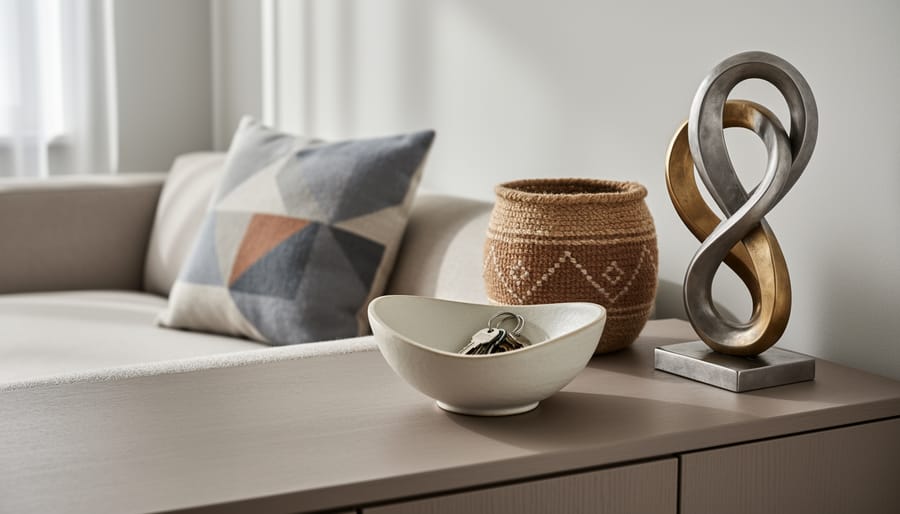
What makes an accessory truly contemporary? Function matters as much as form. That ceramic bowl isn’t just beautiful, it holds your keys. The abstract metal sculpture catches light and creates conversation. Every piece earns its place by doing something, whether that’s solving a practical need or creating an emotional response.
The selection process rewards those who understand proportion and restraint. Major design publications like Architectural Digest and Elle Decor consistently highlight how contemporary spaces succeed through careful editing rather than abundance. Three well-chosen accessories create more impact than a dozen scattered pieces fighting for attention.
Right now, we’re seeing a fascinating blend of organic materials with industrial finishes, sustainable choices that don’t compromise aesthetics, and cultural cross-pollination that brings authentic global craftsmanship into Western homes. The contemporary philosophy welcomes all of it, as long as it serves your vision and your life.
What Makes Contemporary Home Decor Accessories Different in 2026
Contemporary home decor accessories are the pieces that live between furniture and architecture, defining a space through curated objects rather than built-in features. Unlike traditional accessories that lean on ornate detailing and historical references, or minimalist pieces that strip away nearly everything, contemporary accessories embrace a fluid, right-now aesthetic that borrows from multiple influences without committing to a single doctrine. They reflect what feels current and culturally relevant in this moment, which means the category itself evolves as our collective tastes shift.
What sets 2026 apart is how dramatically this category has expanded. The home decor market has seen explosive growth, with contemporary styles driving much of that momentum across North America, including the US and Canada, and internationally. According to the Technavio online home decor outlook published in March 2025, the surge reflects several converging forces: our continued adaptation to new normal homes that serve multiple functions, increased consumer investment in spaces we actually inhabit daily, and a growing appetite for accessories that tell personal stories rather than follow rigid style rules.
The practical difference shows up in material choices and cultural openness. Contemporary accessories in 2026 might pair a handwoven basket from West Africa with a sleek Japanese ceramic vase and an abstract print from a Toronto artist, all sitting together without design friction. They favor natural materials alongside innovative composites, embrace bold geometry as readily as organic forms, and prioritize pieces that spark conversation. Where traditional accessories whisper heritage and minimalist pieces insist on restraint, contemporary accessories invite you to curate your own visual language from a global palette that keeps expanding.
Essential Contemporary Accessories Every Room Needs
Sculptural Lighting That Doubles as Art
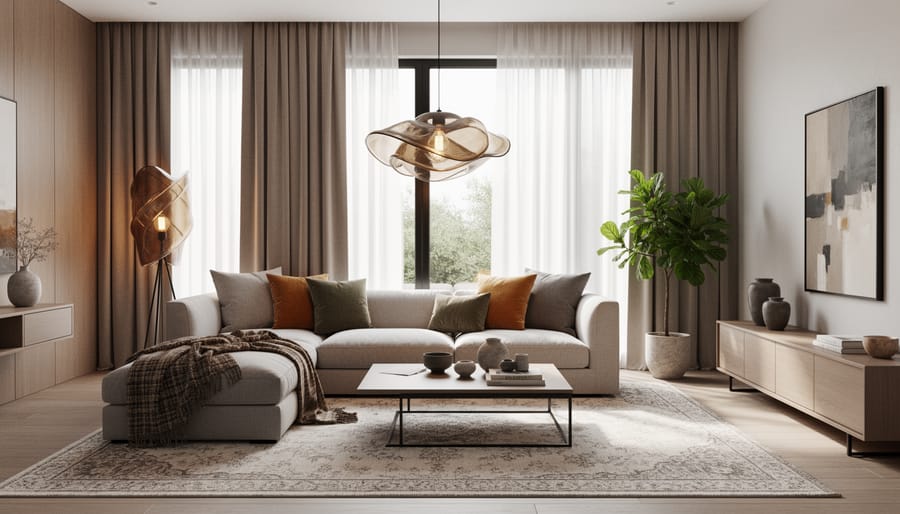
Contemporary lighting has moved far beyond function. Today’s sculptural fixtures are conversation starters that command attention the moment someone enters a room. A geometric pendant floating above your dining table or an organic-shaped floor lamp curving like a piece of bronze sculpture transforms the entire energy of a space.
The beauty of contemporary lighting lies in its dual identity. During daylight hours, these pieces stand as striking sculptures that anchor your design scheme. When darkness falls, they brighten dim rooms while casting dramatic shadows that add another layer of visual interest. Think of lighting not as an afterthought but as the jewelry of your room.
Look for fixtures with unexpected materials. Glass globes suspended at varying heights, matte black metalwork forming angular shapes, or hand-blown vessels that appear weightless despite their sculptural presence. Contemporary lighting embraces asymmetry and bold proportions. A single oversized floor lamp can define an entire reading nook, while a cluster of small pendants creates rhythm above a kitchen island.
The key is choosing pieces that reflect your personality while maintaining clean lines and intentional forms. Your lighting should feel like an art investment that happens to illuminate your life.
Textural Throw Pillows and Textiles
Contemporary textile accessories work because they turn flat, monotonous rooms into spaces with visual weight and tactile interest. A linen throw in charcoal draped over a neutral sofa instantly adds dimension. Velvet pillows clustered with nubby boucle ones create contrast that invites you to actually touch your furniture instead of just look at it.
The contemporary approach layers textures rather than matching patterns. Think chunky knit blankets paired with smooth Belgian linen cushions, or raw silk pillows alongside wool throws. This deliberate mixing creates depth without the fussiness of coordinated sets.
What makes this particularly rich in 2026 is how global textile traditions now intersect with contemporary design. Japanese boro patchwork techniques inform modern quilted throws. West African mudcloth patterns appear on minimalist pillow covers. Peruvian alpaca weaves show up in neutral palettes that feel both ancient and current. These cultural textiles bring stories and craftsmanship into contemporary spaces, transforming accessories from mere decoration into meaningful layers.
The rule is simple: vary your textures within a cohesive color story. Three pillows in cream, taupe and soft grey work when one is chunky weave, another smooth cotton, and the third has subtle embroidery. Texture does the visual work that pattern used to do.
Bold Wall Art and Gallery Walls
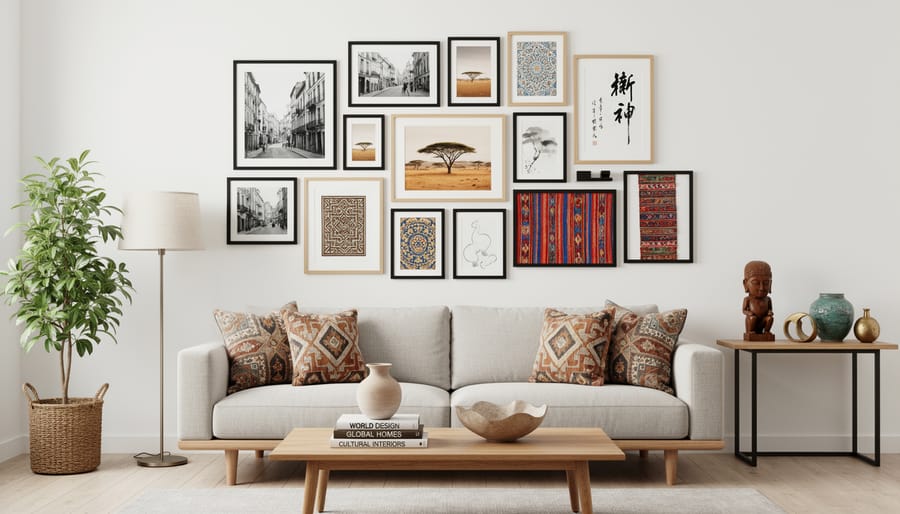
Wall art transforms blank spaces into personal narratives, and contemporary design takes a refreshingly unrestrictive approach. Unlike traditional gallery walls with matching frames and symmetrical layouts, contemporary arrangements embrace asymmetry, mixed media, and unexpected combinations that mirror how we actually live.
Start by selecting pieces that mean something to you rather than chasing a coordinated set. A large-scale abstract painting anchors attention, while smaller photography prints, textile art, or three-dimensional objects create layers of interest. Contemporary curation values the conversation between pieces more than matching their aesthetics perfectly.
Gallery walls work best when they tell a story across cultures and mediums. Pair a geometric print with a handwoven textile piece, or juxtapose black-and-white photography with vibrant contemporary paintings. The same principle applies to dinner party styling where mixing elements creates authenticity.
Skip the tape-and-pencil method. Lay your arrangement on the floor first, photograph it, then recreate it on the wall. Leave generous breathing room between pieces, aim for two to three inches of spacing, and resist filling every inch. Contemporary gallery walls succeed through thoughtful editing, not visual exhaustion.
Functional Decorative Objects
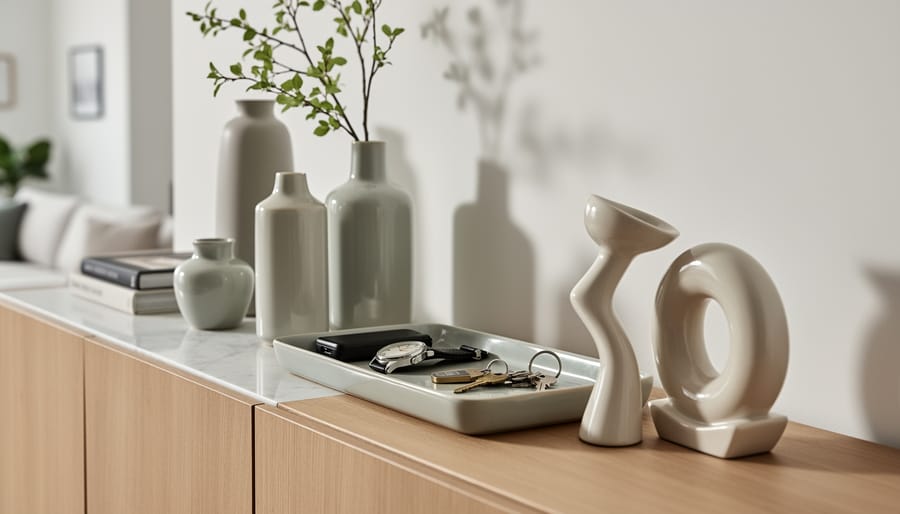
Contemporary decorative objects prove that beauty and utility aren’t opposing forces, they’re partners in creating spaces that feel both curated and livable. The best pieces earn their place by working double duty: a handcrafted ceramic bowl holds your keys by the door while anchoring your console table, a sculptural tray corrals remote controls while adding geometric interest to your coffee table, an oversized vase becomes a focal point even when it’s empty.
This is where contemporary design shows its practical side. Unlike purely decorative accessories that collect dust, functional objects participate in your daily routines. A matte black vessel might store wooden spoons in your kitchen, then transition to bathroom storage when you rearrange. That’s the contemporary approach, flexibility without sacrificing aesthetic impact.
Consider these essential functional objects and how to style them:
- Sculptural vases in varying heights, group three on a sideboard, rotate fresh branches seasonally
- Organic-shaped bowls in natural materials, use for fruit display, jewelry catch-all, or standalone statement
- Geometric trays in metal or lacquered wood, layer over textiles, define zones on larger surfaces
- Abstract bookends, functional support that doubles as mini-sculptures on open shelving
- Designer candle holders, architectural forms that work with or without candles lit
The trick is choosing pieces with clean lines and interesting forms that look intentional when empty. A contemporary ceramic vase with an asymmetrical opening becomes sculptural art whether it holds peonies or stands alone. Your decorative bowl shouldn’t need constant styling, its shape and finish should carry visual weight by themselves.
Think about scale and negative space too. One substantial object often makes a stronger statement than several small ones clustered together. That’s contemporary restraint at work, fewer, better pieces that actually serve your life while elevating your aesthetic.
Where Contemporary Design Meets Global Culture
Contemporary home decor thrives at the intersection of global influences, where a Japanese ceramic vase can share a shelf with a Moroccan woven basket and a Danish candleholder without contradiction. This cultural fluidity isn’t about randomly mixing pieces from different countries, it’s about recognizing how contemporary design speaks a universal language while honoring distinct traditions.
Japanese minimalism brings restraint and negative space, teaching us that fewer accessories, carefully chosen, create more impact than cluttered surfaces. A single ikebana-style arrangement or a hand-thrown stoneware bowl becomes a meditation on form and function. Scandinavian warmth counters this with hygge-inspired textiles, chunky knit throws, wool cushions in muted earth tones, that invite touch and comfort. African patterns inject bold geometry and storytelling through mud cloth pillows, woven wall hangings, or sculptural masks that carry centuries of craftsmanship.
These cultural threads weave together naturally when you focus on shared contemporary principles: clean lines, authentic materials, and purposeful placement. A concept store like QueShow in West Vancouver exemplifies this approach, curating international brands and artisan pieces that speak to each other through quality and intention rather than matching origins. Walking through such spaces reveals how a Swedish glasswork sculpture complements Indonesian rattan accessories when both prioritize craftsmanship over trends.
The real magic happens when these accessories spark conversations. Guests notice the Nigerian indigo textile draped over your sofa, the hand-carved Indian teak tray on your coffee table, the Mexican ceramic planters grouped by your window. Each piece carries a story beyond decoration, where it was made, the technique behind it, why it resonated with you. Contemporary design gives these cultural treasures room to breathe and be seen, turning your home into a gallery of global connections that reflect your curiosity about the world and the people who shape it.
The 2026 Contemporary Accessories Trending Right Now
Walk into any design-forward home right now, and you’ll notice accessories that feel softer, more organic, and surprisingly tactile. The accessories dominating 2026 lean heavily into curves over hard angles, natural materials that show their texture, and pieces that blur the line between functional and sculptural. Design events like the Interior Design Show have showcased collections embracing these sensibilities, with product lines exploring warmth through tactile surfaces and forms that feel hand-shaped rather than machine-precise.
Earthen tones anchor most contemporary accessory palettes this year, working in harmony with the broader 2026 color trends toward clay, terracotta, warm grays, and muted greens. You’ll see these hues in ceramic vases with irregular finishes, woven wall hangings, and throw pillows in linen and bouclé that invite touch. The shift reflects a desire for accessories that ground us, that feel connected to earth and craft rather than slick production.
| Trending Category | Key Characteristics | Best Room Placement |
|---|---|---|
| Organic-Shaped Ceramics | Irregular forms, hand-glazed finishes, neutral earth tones | Living rooms, entryways, dining tables |
| Bouclé Textiles | Nubby texture, creamy neutrals, oversized silhouettes | Bedrooms, reading nooks, sofas |
| Sculptural Wood Objects | Natural grain visible, rounded edges, functional art | Shelving, coffee tables, sideboards |
| Woven Wall Art | Macramé, fiber art, dimensional texture | Bedrooms, offices, hallways |
Sustainability continues pushing accessory trends forward. Reclaimed wood bowls, recycled glass candleholders, and textiles made from natural fibers dominate the pages of design magazines and curated shops. Stores focused on international design, like those blending global styles with contemporary sensibilities, are spotlighting accessories that carry stories of their making, pieces where the material’s origin matters as much as the final form. This isn’t performative eco-consciousness but rather a genuine shift toward accessories built to last, both physically and aesthetically, in spaces that evolve with us.
How to Choose Accessories That Actually Work Together
The difference between a cohesive contemporary space and a cluttered mess often comes down to one skill: knowing how your accessories talk to each other. Instead of buying pieces you love in isolation, think about the conversation happening across your room. Contemporary design thrives on intentional editing, where fewer, better-chosen accessories create more impact than random collections.
Start with a unifying color story. Pick two to three core colors that will anchor your accessory palette, drawing from your existing paint color ideas or foundational furniture. Contemporary spaces often lean on neutrals as a base, then introduce one or two accent colors through accessories. A room might center on warm grays and whites with terracotta accents, for instance. This doesn’t mean everything matches perfectly, contemporary design welcomes tonal variations and subtle contrasts, but your accessories should share a color thread that ties them together visually.
Scale and proportion matter more than most people realize. A common mistake is choosing accessories that are all the same size, creating visual monotony. Mix heights and volumes deliberately. Pair a tall sculptural vase with lower, wider objects. Group items in odd numbers, which naturally feels more balanced. And respect negative space. Contemporary design philosophy celebrates breathing room, so resist filling every surface. One striking object on a console table often communicates more confidence than five small pieces competing for attention.
Texture layering adds depth without adding visual weight. Combine smooth glass or polished metal with natural materials like woven baskets, stone, or wood. The interplay between matte and glossy, rough and refined, creates interest that color alone can’t achieve. This is where contemporary design’s global influences shine, a Japanese ceramic bowl beside a Scandinavian wool throw and an African basket becomes a curated collection rather than random clutter because the textures create dialogue.
Finally, edit ruthlessly. Contemporary spaces work because they show restraint. Before adding a new accessory, consider removing something else. Your room should tell one clear story, not five competing narratives.
Budget-Friendly Ways to Build Your Contemporary Accessory Collection
Building a contemporary accessory collection doesn’t require a designer budget. The key is knowing where to splurge, where to save, and how to add personality through creative sourcing.
Start by scouring thrift stores and estate sales for sculptural vases, ceramic bowls, and vintage brass candlesticks. Contemporary design values organic shapes and quality materials over brand names, so that unmarked ceramic piece from 1970 can hold its own beside a high-end purchase. Look for clean lines, interesting textures, and neutral tones that align with contemporary aesthetics. I’ve found some of my favorite sculptural objects at secondhand shops for under ten dollars, pieces that would cost hundreds new.
Online marketplaces and local buy-and-sell groups often feature people offloading accessories during moves or redecorations. Set alerts for terms like “ceramic vase,” “brass tray,” or “abstract art” to catch listings early. You’ll find gems that others overlook simply because they’re styled poorly in photos.
For DIY projects, consider spray-painting thrifted items in matte black, warm white, or terracotta to instantly contemporize them. Create your own abstract wall art using canvas, acrylic paint, and a palette knife. The imperfect, handmade quality actually enhances contemporary spaces, which celebrate authentic expression over mass-produced perfection.
Invest your budget where it counts: one statement lighting fixture, quality throw pillows with removable covers you can wash, or a single large-scale piece of art. These anchors elevate everything around them. Save on smaller decorative objects, books, and textiles where you can easily swap things out as your taste evolves.
Mix high and low deliberately. That affordable ceramic bowl looks even better beside your splurge pendant lamp, creating the curated-over-time feel that defines genuinely personal contemporary spaces.
Common Mistakes That Ruin the Contemporary Look
The fastest way to sabotage contemporary style is cramming every surface with accessories. I’ve walked into countless beautifully designed rooms that lost their impact because someone couldn’t resist adding just one more vase, one more candle holder, one more decorative object. Contemporary design thrives on breathing room, on the strategic placement of a few carefully chosen pieces rather than a crowded collection. If your coffee table, mantel, and shelves all compete for attention simultaneously, you’ve crossed the line from curated to cluttered.
Scale mistakes happen more often than you’d think. A tiny sculpture on a large console looks lost and insignificant. Oversized accessories in a small room create visual chaos and make the space feel cramped. The contemporary principle here is proportion: your accessories should relate to both the furniture they sit on and the room dimensions. A general rule I follow is that accessories should be roughly one-third to two-thirds the width of the surface beneath them, and grouped items should vary in height to create visual interest without uniformity.
- Edited collections with negative space allow each piece to make a statement
- Varying heights and textures within a limited color palette creates sophisticated cohesion
- Personal items mixed with design pieces tell your unique story
- Quality over quantity investments build a collection that endures beyond trends
- Over-accessorizing every surface destroys the clean lines contemporary style needs
- Ignoring scale makes rooms feel either cluttered or sparse and disconnected
- Following every trend without personal editing results in spaces that lack authenticity
- Perfectly matching everything creates showroom stiffness instead of lived-in warmth
Chasing every trend without considering your personal aesthetic or existing space leads to a disjointed look that screams “Pinterest board” rather than thoughtfully designed home. Contemporary style celebrates current influences, yes, but it filters them through individual perspective. When you see terrazzo accessories everywhere and rush to buy them without considering whether they suit your space or color scheme, you’re decorating for Instagram rather than for yourself. The solution is borrowing elements from trends that genuinely resonate with you, then adapting them to your context.
The biggest mistake, though, might be stripping away all personality in pursuit of contemporary perfection. Rooms that look like they came straight from a catalog lack the soul that makes spaces genuinely inviting. Contemporary design shouldn’t mean sterile or impersonal. Your grandmother’s ceramic bowl, your travel souvenirs, your children’s artwork, these belong in contemporary spaces when displayed with intention. The key is curation: selecting personal items that complement rather than clash with your overall aesthetic, and giving them the same thoughtful placement you’d give a designer piece.
Your home tells your story, and contemporary accessories are the punctuation marks that bring it to life. They’re not about following rigid rules or copying showroom displays. Instead, they evolve as you do, reflecting new experiences, travels, and the cultural threads that weave through your life.
Start with one piece that genuinely speaks to you. Maybe it’s a sculptural vase that reminds you of a gallery visit, or textiles that echo patterns from your heritage. Trust that instinct. Layer gradually, editing as you go, rather than filling every surface at once.
The beauty of contemporary design lies in its flexibility to honor diverse influences. Your space can hold Japanese simplicity alongside vibrant African textiles, Scandinavian warmth next to Mediterranean ceramics. These combinations create rooms that feel authentic, not staged.
Don’t wait for the perfect moment or unlimited budget. Begin where you are. Rearrange what you own, add that one accessory you’ve been eyeing, experiment with unexpected pairings. Your home becomes extraordinary not through perfection, but through the personal choices you make, piece by piece, room by room.
