

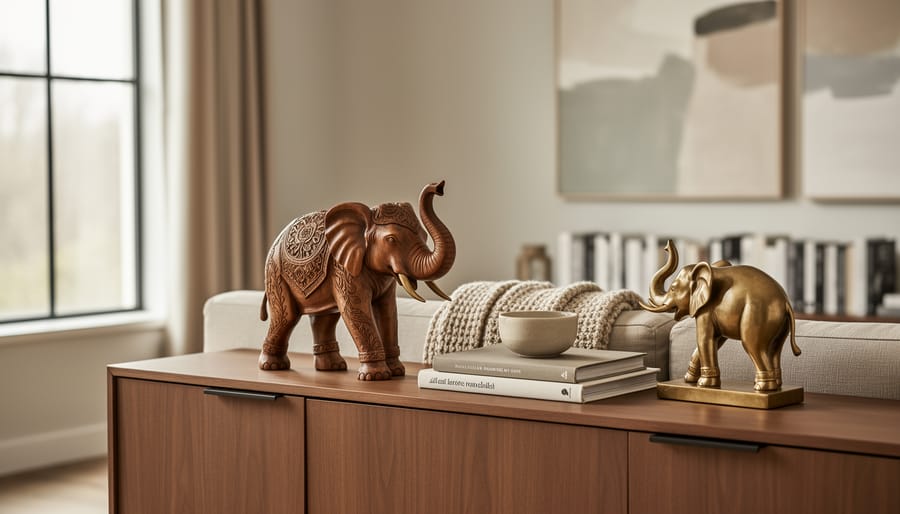
Elephant decor transforms your home into a space that tells a story, one rooted in centuries of symbolism across cultures from India to Africa to Thailand. These majestic creatures represent wisdom, strength, and good fortune in Feng Shui principles, making them more than just decorative accents. They’re intentional choices that add meaning to your rooms.
The real question isn’t whether elephant motifs belong in your home, but how to incorporate them in ways that feel sophisticated rather than souvenir-shop kitsch. The answer lies in selectivity and placement. A single carved wooden elephant on a console table creates impact. Three matching ceramic elephants arranged in descending size on your bookshelf becomes cliché.
In 2026, designers are moving away from literal representations and embracing abstract interpretations. Think elephant-inspired textiles with geometric patterns, minimalist line-art prints, or sculptural pieces that suggest the animal’s form through curves and texture rather than obvious replication. This shift reflects our broader design moment, where meaningful objects with cultural significance matter more than generic mass-produced items.
Your existing style doesn’t need an overhaul to welcome elephant elements. Mid-century modern spaces pair beautifully with sleek brass elephant bookends. Bohemian rooms come alive with embroidered elephant throw pillows in rich jewel tones. Even Scandinavian minimalism accommodates a single carved teak elephant as a focal point.
The key is treating elephant decor as you would any cherished piece: with intention, restraint, and respect for the cultural traditions these symbols carry. Done right, they anchor your rooms with character that guests remember.
The Cultural Soul Behind Elephant Decor
When you place an elephant in your home, you’re not just following a design trend, you’re inviting centuries of cultural wisdom through your door. Across Asia, elephants embody strength tempered with gentleness, representing everything from royal power in Thailand to Ganesha’s ability to remove obstacles in Hindu tradition. In many African cultures, elephants symbolize family bonds and ancestral memory, their matriarchal herds reflecting the importance of community and intergenerational wisdom. Even Western interpretations have embraced elephants as symbols of good fortune, with the superstition that an elephant with its trunk raised brings luck into a space.
This layered symbolism explains why elephant decor fits naturally into 2026’s celebration of diversity and personal expression in design. Today’s homeowners aren’t content with aesthetically pleasing objects that lack deeper meaning. They’re seeking pieces that tell stories, reflect values, and create emotional connections within their spaces. An elephant sculpture becomes more than an accent, it’s a conversation about family, a nod to wisdom, or a daily reminder of strength during challenging times.
The beauty of elephant decor is its flexibility. You can honor specific cultural traditions with carved wooden pieces from Bali or Thai brass work, or embrace a more universal interpretation through contemporary designs that speak to shared human values. This versatility allows you to bring personal significance into your home without appropriating traditions that aren’t yours, making elephant decor a thoughtful choice for the culturally conscious decorator.
From Statement Pieces to Subtle Accents: Choosing Your Elephant Style
Artistic Elephant Statues That Make a Statement
Artist-created elephant statues have evolved from tourist souvenirs into legitimate collectible art. Elephant Parade exemplifies this shift, collaborating with established artists and celebrities to produce limited-edition pieces that transform elephants into canvases for creative expression. Each statue becomes a unique work, ranging from vibrant pop-art interpretations to sophisticated metallic finishes that complement modern interiors.
These statement pieces anchor living rooms and entryways with immediate visual impact. A well-chosen artistic elephant commands attention without requiring additional decor, functioning as both sculpture and conversation catalyst. Guests inevitably ask about the story behind the piece, creating natural opportunities to discuss the artist’s vision or the cultural symbolism you find meaningful.
The investment angle matters too. Limited runs from recognized artists appreciate over time, particularly pieces from collections that sold out quickly. You’re not just decorating; you’re curating a personal gallery that reflects your taste while supporting artistic communities. The key is selecting pieces that genuinely resonate with your aesthetic rather than chasing trends, ensuring the elephant earns its prominent placement for years to come.
Everyday Elephant Touches for Every Room
Not every elephant needs a pedestal. The most versatile pieces in this trend are the small-scale accents that layer personality into your rooms without demanding attention.
Throw pillows with embroidered or printed elephant motifs work in almost any space. Look for cushions that use the elephant as a subtle pattern element rather than a cartoon centerpiece. Geometric interpretations or line-drawn elephants blend particularly well with modern sofas and chairs, while richly embroidered pieces suit traditional settings.
Wall art offers endless flexibility. Framed elephant prints, canvas paintings, or minimalist line drawings create visual interest at any price point. Gallery walls mixing elephant imagery with complementary subjects feel collected and personal rather than theme-heavy.
Smaller functional items integrate the trend effortlessly. Elephant-shaped bookends anchor shelves with character. Ceramic or metal planters in elephant forms add whimsy to greenery displays. Even textile patterns incorporating elephants, from area rugs to table runners, bring the motif into daily life without overwhelming your aesthetic.
The key with these accessible pieces is intentional placement. A single elephant accent per surface or wall section maintains sophistication. Three elephant pillows scattered across your living room creates cohesion without crowding. These everyday touches let you test the trend, adjust as your style evolves, and build a collection that reflects genuine connection rather than design obligation.
Room-by-Room Elephant Styling Ideas
Living Rooms: Where Elephants Command Attention
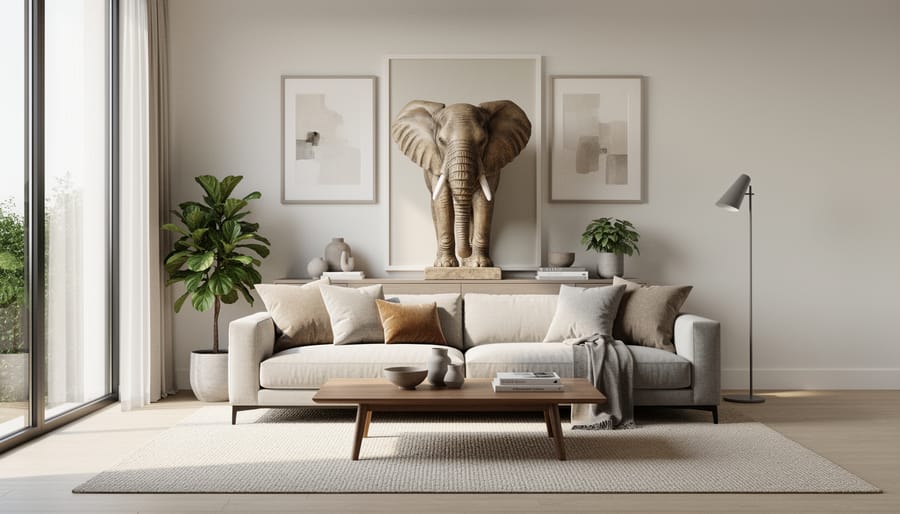
Your living room offers the perfect stage for elephant decor to shine. Start with a single sculptural piece on your coffee table or console, something with enough presence to anchor the space without crowding it. A medium-sized elephant statue works beautifully as a focal point, especially when it picks up on 2026 color trends already present in your textiles or artwork.
For gallery walls, mix elephant-themed prints with complementary pieces rather than creating an all-elephant display. Position a larger elephant artwork at eye level, then build around it with varied frame sizes and subjects that share similar tones or themes. This approach keeps the look curated rather than themed.
Scale matters tremendously in living spaces. If you have high ceilings and substantial furniture, consider a floor-standing sculpture that commands attention from across the room. In cozier spaces, opt for tabletop pieces or wall art that adds character without overwhelming sightlines. Pair elephant decor with natural materials like wood, rattan, or linen to ground the look and prevent it from feeling disconnected from your existing aesthetic.
Bedrooms and Nurseries: Gentle Elephant Presence
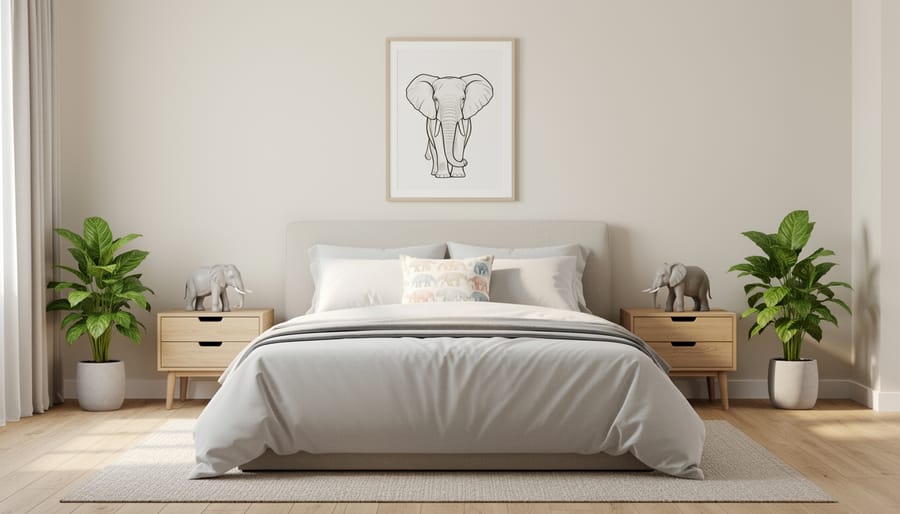
Bedrooms and nurseries call for gentler elephant expressions that soothe rather than stimulate. Start with textiles: linen bedding embroidered with small elephant motifs or quilts featuring watercolor elephant patterns creates visual interest without overwhelming these restful spaces. A single plush elephant on a reading chair or a pair of ceramic elephant bookends holding bedtime stories adds personality while maintaining the calm atmosphere essential for sleep.
Wall decals work beautifully here because you can adjust the scale to your room size and remove them as tastes evolve. Choose muted tones like soft grays, sage greens, or dusty blues rather than bold primaries. In nurseries, consider how elephant-themed decor accessories can grow with your child, transitioning from baby room to toddler space. These same principles apply to kids playroom ideas where slightly bolder elephant pieces can encourage imagination without creating chaos. The goal is presence without dominance, character without clutter.
Entryways and Unexpected Spaces
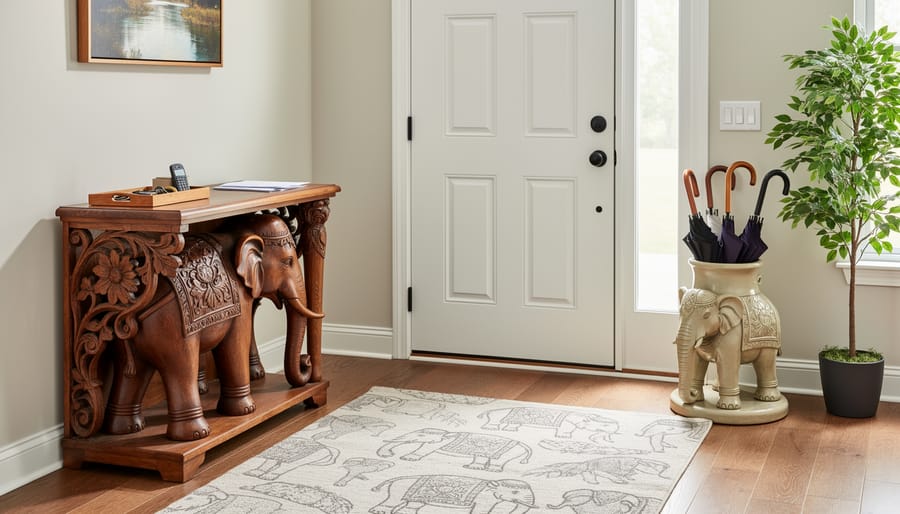
The spaces between your main rooms hold surprising potential for elephant decor. An entryway benefits from a console-sized elephant sculpture that greets visitors without blocking traffic flow, think of it as a welcoming handshake translated into design. Small elephant bookends on a hallway shelf add character to otherwise neglected passageways.
Home offices get personality from desk-sized elephant figurines that double as paperweights or pen holders, bringing a grounding presence to work-from-home spaces. Bathrooms, often overlooked for decorative touches, work beautifully with miniature elephant soap dishes or towel hooks that inject unexpected charm.
Outdoor spaces embrace more weathered finishes. A bronze-look elephant planter near your front door creates an immediate impression, while smaller pieces tucked into garden corners become delightful discoveries. The key is restraint: one thoughtfully placed elephant in these transitional zones creates impact, while multiple pieces risk cluttering spaces that should feel open and functional. These unexpected placements show how elephant decor adapts to your entire home, not just the rooms where guests linger longest.
Mixing Elephant Decor with Your Existing Style
The elephant in your room doesn’t have to match everything else, it just needs to feel intentional. One of the most refreshing aspects of 2026 design is the shift away from rigid style categories toward spaces that reflect actual personalities. Elephant decor adapts surprisingly well across aesthetics because its symbolism transcends any single design movement.
Your existing style determines how you introduce elephants, not whether you can include them at all. In modern spaces, sleek brass or concrete elephant sculptures echo the clean lines and metallic accents already present. Bohemian rooms welcome colorful, textile-based elephant pieces like embroidered pillows or wall hangings that layer naturally with existing patterns. Traditional homes benefit from carved wood elephants or bronze figurines that complement classic furniture and honor the craftsmanship angle.
Minimalist spaces need restraint: a single, well-chosen piece, maybe a white ceramic elephant on a shelf, makes more impact than multiple items fighting for attention. Eclectic interiors, on the other hand, thrive on unexpected combinations, so mixing a vintage elephant figurine with contemporary art feels perfectly at home. Global fusion styles, which blend cultural elements from multiple traditions, naturally accommodate elephants given their significance across Asian, African, and even Western design histories.
| Design Style | Elephant Decor Approach | Key Considerations |
|---|---|---|
| Modern | Geometric, metallic, or monochromatic pieces | Match materials to existing finishes; avoid ornate details |
| Bohemian | Textiles, colorful patterns, handcrafted items | Layer with existing fabrics; embrace imperfection |
| Traditional | Carved wood, bronze, or classic sculptures | Respect scale and proportion; honor craftsmanship quality |
| Minimalist | Single statement piece in neutral tones | Less is more; choose quality over quantity |
| Eclectic | Mix of styles, sizes, and cultural influences | Create visual connections through color or placement |
The trick is matching material and finish to your room’s established palette. If your space features warm woods and natural textures, a carved teak elephant reads as cohesive. If you’ve invested in cool metals and glass, a polished aluminum or mirrored elephant piece speaks the same visual language.
Don’t overthink cultural authenticity unless you’re specifically creating a themed space. A French apartment can absolutely feature an Indian-inspired elephant textile, and a California bungalow works beautifully with African elephant art. The 2026 approach to design celebrates these cross-cultural conversations rather than policing them, as long as the choice feels genuine to you rather than opportunistic.
Decor That Gives Back: The Elephant Parade Movement
In 2026, decorating choices have become deeply personal statements about what matters to us. Elephant decor sits at the intersection of aesthetics and impact, particularly when you choose pieces that give back to the creatures they represent.
Elephant Parade stands out as a model for conscious design purchases. This organization commissions artists and celebrities to create unique elephant statues and figurines, transforming each piece into functional art. But what sets them apart isn’t just the design pedigree. They commit to donating 20% net profits donated to elephant welfare and conservation projects worldwide, with minimum annual pledges of €25,000 each to organizations like Elephant Family and Friends of the Asian Elephant.
This model reflects the broader shift toward meaningful consumption. When you bring home an elephant sculpture or figurine, you’re not just filling a spot on your shelf. You’re participating in a conservation effort that protects the animals your decor celebrates.
The beauty of this approach is that it doesn’t compromise on style. These pieces function as striking design elements that happen to carry purpose beyond decoration. It’s the kind of dual-layer value that resonates with homeowners who want their spaces to reflect both their aesthetic preferences and their values. Your living room becomes a conversation starter about wildlife conservation, your entryway a reminder that beautiful things can do beautiful work in the world.
Where to Find Quality Elephant Decor in 2026
Finding quality elephant decor in 2026 means knowing where to look and what to prioritize. Start with established names that combine artistry with purpose. Elephant Parade offers artist-created pieces designed by celebrated artists and celebrities, transforming functional decor into conversation-worthy sculpture. Their commitment to conservation (donating 20% of net profits to organizations like Elephant Family and Friends of the Asian Elephant) means your purchase supports elephant welfare. For modern luxury pieces that lean minimalist, Jonathan Adler delivers sophisticated interpretations that work in contemporary spaces.
Beyond these sources, seek out artisan markets and craft fairs where you can meet makers directly and understand the story behind each piece. Look for ethical retailers who can verify the origins of their items, particularly important when buying pieces with cultural significance. Estate sales and vintage shops often yield unique finds with character that mass-produced items lack.
When shopping anywhere, examine craftsmanship carefully. Quality pieces show attention to detail in the finish, proportions that feel balanced, and materials that suit their intended space. Ask about sourcing, particularly for wooden or metal pieces. The best elephant decor reflects both artistic vision and respect for the cultural traditions it represents, creating pieces you’ll value for years rather than discarding when the next trend arrives.
Common Elephant Decor Mistakes to Avoid
Even the most beautiful elephant piece can fall flat if you commit one of these common styling errors. The good news? They’re all easy to fix once you know what to watch for.
- Overcrowding your space with too many elephant items transforms a thoughtful accent into visual chaos. Stick to one or two statement pieces per room, or several small accents grouped intentionally.
- Mixing clashing cultural representations without cohesion creates confusion rather than eclectic charm. Choose pieces from similar traditions or create distinct zones for different cultural styles.
- Ignoring scale proportions makes rooms feel off-balance. A tiny elephant figurine gets lost on a massive console table, while an oversized sculpture overwhelms a small entryway.
- Choosing pieces solely because they’re trendy, without personal connection, leaves your space feeling hollow. Pick elephants that genuinely resonate with your story or values.
- Placing dark elephant decor in already dim corners compounds the problem rather than adding interest. Instead, use elephant pieces to brighten a room by positioning them where natural light hits or pairing them with lighter surrounding elements.
The simplest fix? Step back and assess whether each elephant piece serves a purpose beyond following the trend. Does it spark conversation, hold personal meaning, or genuinely enhance your space’s character? If the answer is no, it probably doesn’t belong there. Your home should reflect your identity, not just what’s popular in 2026.
Elephant decor in 2026 isn’t just another design trend cycling through Pinterest boards. It represents something deeper: a desire to fill our homes with pieces that carry meaning, tell stories, and reflect who we are. Whether you’re drawn to the cultural symbolism, the artistry of handcrafted pieces, or simply the gentle presence these creatures bring to a space, choosing elephant decor is about creating rooms that feel authentically yours.
The beauty of this movement lies in its flexibility. A single sculptural piece can anchor a modern living room. A collection of smaller accents can weave personality throughout your home. The key is selecting items that genuinely resonate with your values and aesthetic, not just checking a trend box.
As we blend tradition with contemporary design, elephant decor proves that meaningful spaces transcend fleeting styles. They prioritize comfort, connection, and character over whatever’s momentarily popular. Your home should tell your story, and if that story includes elephants, make sure every piece earns its place not through obligation to a trend, but through genuine connection to the space you’re building.
