

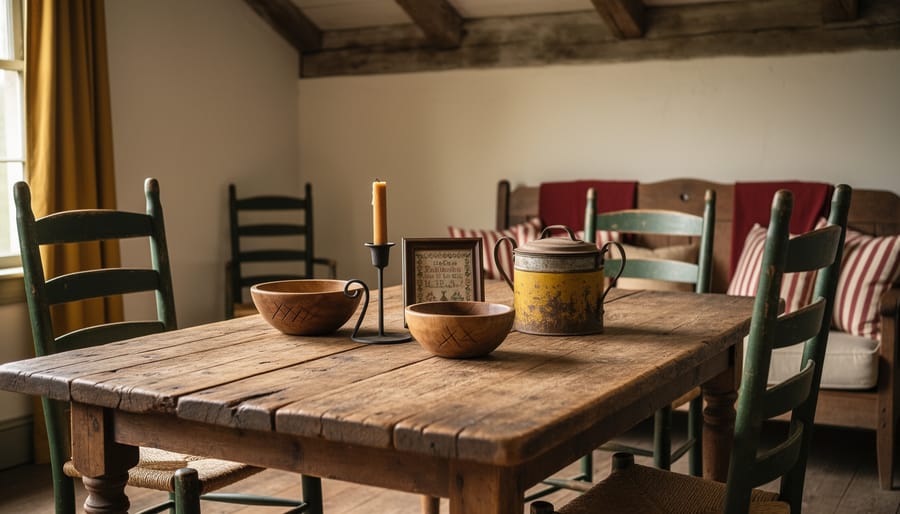
Primitive home decor tells the story of early American settlers and colonial life through handcrafted pieces, weathered textures, and a deliberately rustic aesthetic that feels worlds apart from modern minimalism. This style celebrates imperfection, incorporating antique wooden furnishings, hand-forged iron accents, and folk art that carries the patina of age and authentic craftsmanship. As we move through 2026, primitive decor has experienced a remarkable resurgence among homeowners craving warmth and character in their spaces, particularly those who appreciate the connection to heritage and simpler times.
Think of primitive style as your home’s bridge to the 18th and 19th centuries. You’ll recognize it through muted color palettes of mustard yellow, barn red, and deep greens, alongside natural materials like reclaimed wood, tin, and hand-woven textiles. The beauty lies in those deliberate “flaws”: uneven paint finishes, visible wood grain, and handmade items that show the maker’s touch.
What sets primitive decor apart from farmhouse or country styles is its stricter historical focus and embrace of truly aged or aged-looking pieces. While farmhouse incorporates modern conveniences with vintage charm, primitive stays committed to recreating early American homesteads. You won’t find sleek subway tiles or industrial lighting here.
Whether you’re drawn to the craftsmanship of hand-carved bowls, the charm of reproduction samplers, or the grounding presence of a weathered harvest table, primitive decor offers an antidote to disposable design trends. This approach works beautifully across room types and can be adapted to fit apartments and contemporary homes, not just rural cottages.
What Makes Primitive Home Decor Different from Farmhouse or Rustic Style
Primitive home decor draws its soul from early American colonial life and folk art traditions, when every object in a home served a purpose and bore the marks of its maker’s hands. This style emerged from necessity in the 1700s and 1800s, when settlers crafted furniture, textiles, and household items from whatever materials they could find, creating pieces that were deliberately simple, functional, and built to last generations. What distinguishes primitive from its country cousins is this profound connection to handcraft and the visible passage of time.
While farmhouse style leans toward light, airy spaces with white shiplap and vintage-inspired reproductions, primitive embraces darker, earthier tones and genuinely aged pieces. Rustic decor celebrates raw, natural materials in their current state, but primitive goes further, valuing the worn surfaces, faded paint, and honest repairs that tell stories of decades of use. Country style might incorporate pretty florals and polished wood, but primitive stays grounded in the utilitarian and the handmade, where beauty emerges from imperfection rather than decoration.
- Patina
- The natural aging and weathering on surfaces that creates character through oxidation, wear, and the layering of time. In primitive decor, patina is prized rather than refinished away.
- Functionality
- Every piece served a clear purpose in daily life, from wooden dough bowls to wrought iron hooks. Decoration was secondary to usefulness, which is why primitive items feel honest and grounded.
- Folk Art
- Hand-painted motifs, simple carvings, and naive artistic expressions created by untrained craftspeople. These imperfect, charming designs distinguish primitive from more formal antique styles.
- Handcrafted Elements
- Visible tool marks, irregular edges, and the slight asymmetry that proves human hands shaped each piece. This authenticity cannot be replicated by modern manufacturing.
This emphasis on authenticity extends across cultures. Scandinavian primitive traditions feature similar weathered wood and handwoven textiles but incorporate lighter pine and simpler geometric patterns. Japanese wabi-sabi shares primitive’s appreciation for imperfection and age, while Mexican rustic decor brings vibrant folk art to similar handcrafted furniture forms. Each culture’s primitive aesthetic reflects what materials were locally available and what craft traditions were passed down, but all share that reverence for objects shaped by human hands and improved by years of honest use.
The Core Elements That Define Primitive Style
Color Palettes That Capture the Primitive Spirit
The color palette of primitive decor draws from nature and the passage of time, creating spaces that feel instantly comforting. Think mustard yellows softened by age, barn reds that have weathered countless seasons, deep greens reminiscent of old milk paint, rich blacks from cast iron and soot, and creamy whites that have yellowed gently over decades. These aren’t the vibrant shades you’ll find in contemporary paint color ideas but rather their ancestors, colors that look like they’ve lived a full life.
What makes these hues so appealing is their inherent warmth and lack of harshness. Primitive colors never compete for attention. A mustard-toned wall becomes a backdrop that makes handcrafted pieces glow, while barn red accents ground a room without overwhelming it. The beauty lies in their imperfection: slight variations in tone, faded patches, and dusty undertones that suggest authenticity. These colors evoke candlelight, wood smoke, and generations of hands that crafted homes with care, connecting us to a slower, more deliberate way of living.
Materials and Textures That Tell a Story
The tactile quality of primitive pieces sets them apart from mass-produced decor. Distressed wood carries the marks of decades of use: splits from seasonal moisture changes, worn edges where hands gripped, and patina that darkens with age. These imperfections aren’t flaws but proof of a piece’s journey through time.
Metals like pewter and copper develop their own stories through oxidation. Pewter dulls to a soft gray, while copper blooms with green verdigris that collectors prize. Wrought iron gains a textured rust that speaks to years spent in barns or workshops before finding new purpose as candleholders or wall hooks.
Homespun fabrics bring warmth through their irregular weave. Linen tea towels with hand-stitched hems, woolen blankets with visible variations in thickness, and cotton ticking with faded stripes all carry the subtle irregularities of handwork. Unlike today’s perfect textiles, these pieces show the rhythm of the hands that made them.
The beauty lies in surfaces that look lived with rather than new. Milk paint that’s chipped to reveal earlier layers, tabletops worn smooth by use, and crockery with crazing in the glaze all tell stories without words, creating depth that new items simply can’t replicate.
Where to Find Authentic Primitive Pieces in 2026
Finding authentic primitive pieces requires equal parts patience and knowing where to look. The hunt itself becomes part of the story behind each piece you bring home.
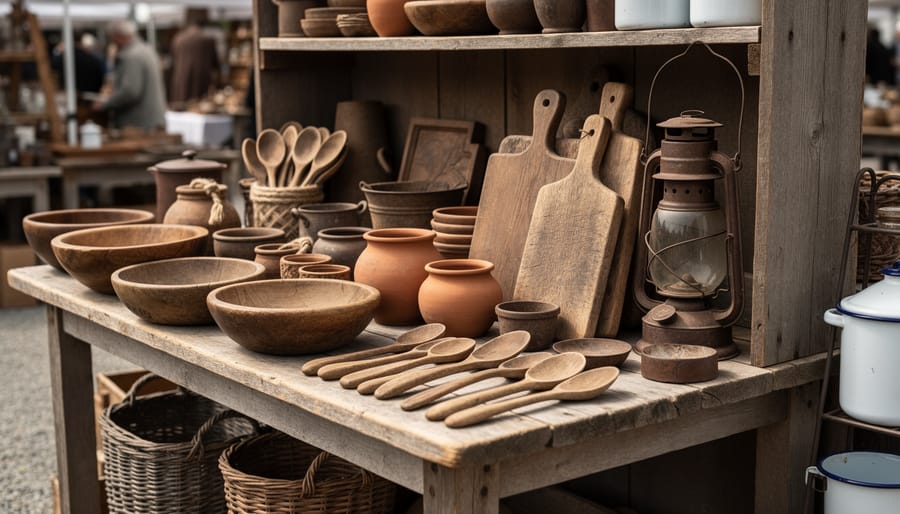
Estate sales remain one of the best sources for genuine vintage primitive decor. Arrive early to spot true finds before they disappear, and don’t be afraid to ask about the history of pieces that catch your eye. These sales often yield handcrafted items from previous generations, weathered benches, antique crocks, and folk art that can’t be replicated. Similarly, local antique malls and flea markets offer rotating inventory where you can build relationships with dealers who’ll watch for specific items you’re seeking.
Artisan makers who specialize in traditional crafts are experiencing renewed demand in 2026. Look for woodworkers who use reclaimed barn wood, blacksmiths creating reproduction iron hardware, and fiber artists weaving on traditional looms. Many maintain Instagram shops or Etsy storefronts where they document their process, connecting you directly to the maker’s story.
Markets like the Franklin event demonstrate how the primitive decor community is thriving through in-person gatherings where you can touch fabrics, inspect finishes, and discover one-of-a-kind pieces. These venues bring together multiple vendors, giving you concentrated browsing time with curated vintage and handmade selections.
For broader searches, online platforms like Chairish, 1stDibs, and Facebook Marketplace expand your geographic reach. International options matter too: European brocantes offer continental farmhouse pieces, while Japanese boro textiles and Mexican folk art bring cross-cultural primitive aesthetics into the style. Auction sites occasionally feature estate lots with primitive pieces grouped together, sometimes at better value than individual sales.
The key is diversifying your sources and visiting regularly. The best primitive pieces often surface when you least expect them.
Room-by-Room: Bringing Primitive Decor Into Your Home
Creating a Welcoming Primitive Living Room
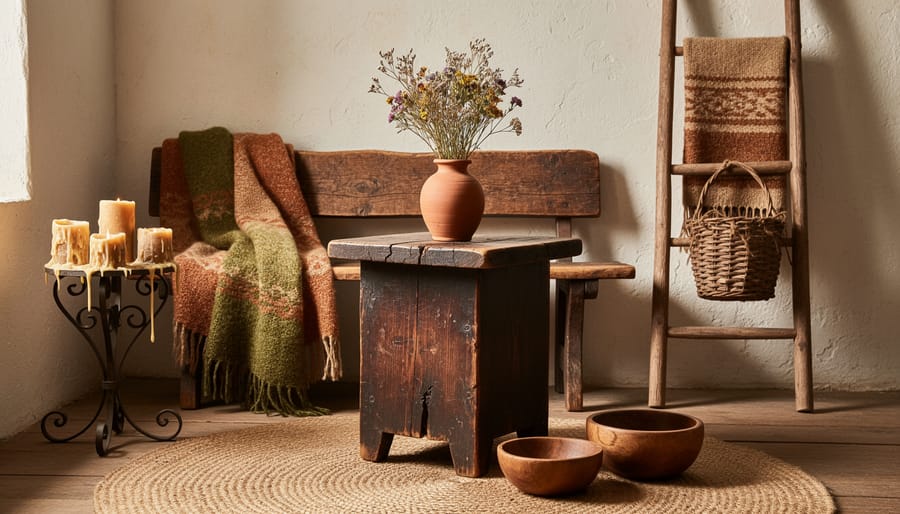
The living room anchors your home’s primitive aesthetic, so start with a statement piece that sets the tone. A weathered wooden bench works beautifully as seating or a coffee table alternative, its worn surface telling decades of stories. Layer it with a handwoven throw in muted mustard or barn red to add warmth without sacrificing authenticity.
Folk art becomes your focal point here. Hang a primitive portrait or hand-painted sign above the fireplace, or arrange vintage wooden bowls and redware pottery on open shelves. These aren’t just decorations; they’re conversation pieces that ground the room in heritage.
The secret to making primitive work in 2026 is balancing character with livability. Place a comfortable linen sofa in cream or oatmeal alongside your antique pieces. Modern comfort doesn’t betray the aesthetic when colors stay muted and fabrics remain natural. Lighting matters too: swap harsh overhead fixtures for pewter candlesticks or a simple wrought iron chandelier that casts a softer glow.
Keep surfaces uncluttered. Three well-chosen primitive pieces create more impact than a crowded shelf. Let each weathered item breathe, and your living room will feel intentionally curated rather than accidentally cluttered.
The Primitive Kitchen: Function Meets Heritage
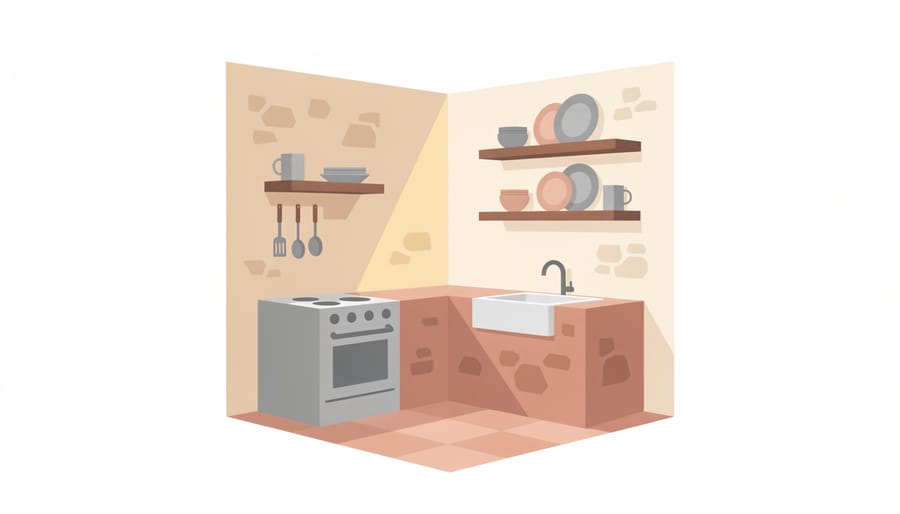
The primitive kitchen proves that function and beauty aren’t mutually exclusive. Remove those cabinet doors and embrace open shelving stocked with stoneware crocks in graduated sizes, their salt-glaze finishes catching natural light. These aren’t just decorative, they’re perfect for storing flour, sugar, and pasta, just as they were centuries ago.
Wooden bowls deserve counter space, not cupboards. A collection of hand-turned or hand-carved bowls in varying sizes adds warmth while staying within arm’s reach for daily use. Hang cast iron skillets and Dutch ovens directly on the wall using simple hooks, creating a working gallery that honors these tools’ longevity and craftsmanship.
Herb-drying racks suspended from exposed beams or mounted to walls bring the garden indoors. Bundle fresh rosemary, thyme, and lavender with twine and let them age naturally, filling your kitchen with scent while creating an ever-changing visual display. This approach to kitchen design celebrates the everyday rituals of cooking and preserving, turning necessary tasks into moments of beauty that connect us to generations of home cooks who valued both utility and simplicity.
Bedrooms and Personal Spaces with Primitive Charm
Your bedroom is the one space where primitive decor truly shines, creating a sanctuary that feels removed from the rush of modern life. Start with the bed itself: a simple wooden frame in dark stain or weathered pine sets the foundation. Layer it with handmade quilts in traditional patterns like log cabin or nine-patch, mixing faded florals with checks and stripes rather than matching everything perfectly. The worn fabrics and slight color variations add depth and history.
Lighting should be understated. A tin or pewter candlestick lamp on the bedside table, or a simple wrought iron fixture overhead, provides just enough illumination without feeling stark. Consider repurposing old lanterns as decorative pieces that double as ambient light sources.
Storage becomes part of the aesthetic: a weathered wooden trunk at the foot of the bed, a ladder hung on the wall displaying throws, or simple pegs for hanging nightclothes. Keep surfaces minimal, perhaps a wooden bowl holding small treasures or a framed piece of cross-stitch.
The goal is creating a cocoon that feels intentionally simple, where the absence of clutter and the presence of well-loved, handcrafted pieces invite genuine rest.
DIY Primitive Projects for Every Skill Level
The beauty of primitive decor lies in its forgiving nature. Unlike sleek modern styles where every line must be perfect, primitive pieces celebrate the marks of time and handwork. A wonky edge or uneven finish isn’t a mistake here; it’s character. That makes DIY projects in this style wonderfully accessible, whether you’re picking up a paintbrush for the first time or you’ve been crafting for years.
Start with aging new wood, one of the most transformative techniques for primitive projects. Pick up an inexpensive pine board from any hardware store and turn it into something that looks like it came from a 19th-century barn. Here’s how to create a simple primitive candle board:
- Sand your board lightly with coarse-grit sandpaper, focusing on the edges and corners to round them slightly.
- Mix black or dark brown acrylic paint with water (about 1:1 ratio) and brush it liberally over the entire surface, letting it pool in any grooves.
- Immediately wipe most of the paint away with a rag, leaving residue in the grain and around knots to simulate decades of accumulated grime.
- Once dry, apply a base coat in a muted color like mustard yellow or barn red, using rough brushstrokes that don’t cover completely.
- Lightly sand the dried paint, removing color from the high points and edges to reveal the wood beneath, as if from years of handling.
- Finish with a coat of furniture wax or diluted tea (yes, tea) to add a subtle aged patina.
For folk art signs, embrace simple stencils or freehand lettering. Choose period-appropriate phrases or motifs like stars, hearts, or pine trees. The slightly irregular hand-painted look is exactly what you want. Drill a hole for hanging, thread it with jute twine, and you’ve created an authentic primitive piece for under ten dollars.
Fabric projects work beautifully too. Age muslin or linen by soaking it in strong tea or coffee, then use it to cover lampshades, create simple table runners, or stuff into glass jars as rustic filler. Stitch simple cross-stitch samplers with folk motifs, intentionally keeping your stitches a bit loose and uneven.
Remember, primitive craftspeople worked with what they had, by candlelight, often while managing a household. Your imperfections honor that history rather than detract from it.
Blending Primitive Decor with Modern Living
The secret to successfully blending primitive decor with modern living lies in restraint and intention. Rather than transforming your entire space into a colonial homestead, think of primitive pieces as accents that add soul and texture to contemporary rooms. Start by selecting one or two statement pieces per room, a weathered ladder holding throws in the living room, a primitive cupboard displaying ceramics in the dining area, and let them anchor the space while your modern furniture provides comfort and function.
Balance works best when you honor both eras equally. In an antique-decorated apartment you might pair a sleek sectional with a primitive blanket chest as a coffee table, or hang folk art above minimalist consoles. The contrast actually highlights what’s special about each piece. Your iPhone belongs on the primitive desk, your espresso machine sits perfectly beside the redware crocks. This juxtaposition feels honest and livable, not staged.
Cultural traditions offer brilliant examples of this balance. Scandinavian homes have long mixed clean-lined modern furniture with handwoven textiles and wooden folk pieces, creating warmth without clutter. Japanese interiors combine ancient ceramics with contemporary simplicity, proving that heritage objects enhance rather than compete with modern design. Mexican designers layer traditional crafts into streamlined spaces, letting colorful folk art energize neutral walls.
When incorporating primitive elements into spaces like your trending kitchen design focus on functional pieces that earn their place. Open shelving with vintage stoneware, a weathered cutting board collection, or iron hooks holding copper pots blend seamlessly with stainless appliances. The key is editing ruthlessly. Choose pieces that genuinely speak to you rather than filling every surface, and your home will feel curated, not cluttered.
The resurgence of primitive home decor in 2026 reflects something deeper than a passing trend. In our hyper-connected, increasingly digital world, we’re craving tangible connections to history, authenticity we can touch, and the grounding presence of handcrafted objects that carry stories. Primitive style answers this yearning by celebrating imperfection, honoring heritage, and transforming sustainability through repurposing into something beautiful rather than obligatory.
Whether you’re drawn to the weathered patina of colonial craftsmanship or the clean lines of industrial home decor the principle remains the same: your space should reflect genuine living, not magazine-perfect staging. Start small, a single folk art piece, a handwoven textile, a distressed wooden bowl. Trust your instincts about what speaks to you, because primitive decor isn’t about rules or achieving a museum display.
These imperfect, time-worn pieces remind us that true beauty accumulates through use and love. Your home becomes a gathering place for stories, both inherited and newly created, where every worn edge and faded color tells of hands that crafted, meals shared, and lives genuinely lived.
