

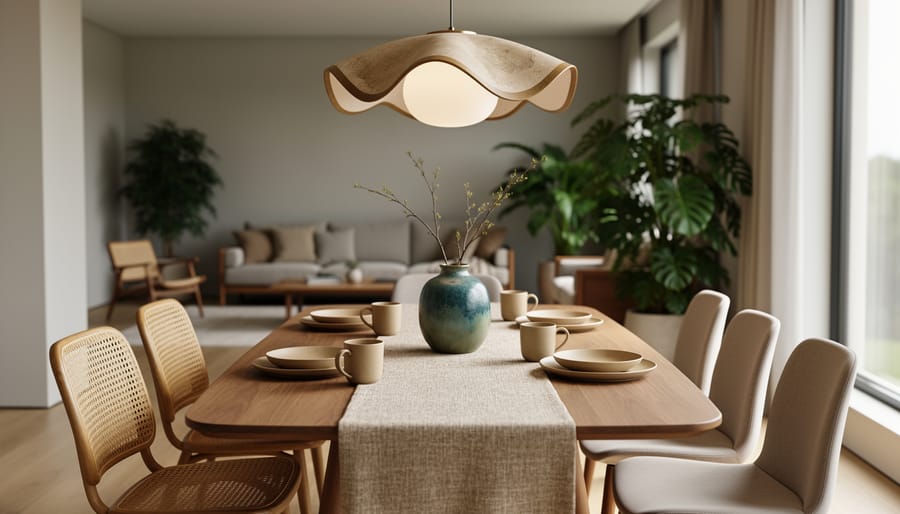
Modern dining room decor in 2026 centers on warmth, sustainability, and flexible spaces that flow between formal dinners and everyday life. The 12 ideas ahead reflect what’s resonating right now: curved furniture that softens hard edges, natural materials that ground a room, and bold color choices inspired by global design traditions from Scandinavian minimalism to Mediterranean exuberance.
You’ll find options here for every budget and skill level. Some require nothing more than swapping textiles or rearranging lighting, while others invite you to rethink your layout entirely. What ties them together is a move away from the cold, austere modernism of the past decade. Today’s dining rooms embrace texture, personality, and a sense that people actually gather here.
We selected each idea based on three factors: how widely it’s being adopted by designers and tastemakers, how adaptable it is to different home layouts, and whether it delivers visible impact without demanding a full renovation. Expect a mix of quick updates and longer-term investments, all grounded in what real homes need. Whether you’re drawn to sculptural pendant lights, vintage-modern mashups, or earthy palettes that nod to Japanese and North African interiors, you’ll leave with a clear vision and the confidence to start today.
How We Curated These Modern Dining Room Ideas
We built this collection by diving into what’s actually shaping dining spaces right now. Our research drew from leading international design publications, Architectural Digest, Elle Decor, Dezeen, and regional magazines from Asia, Europe, and Latin America, to capture what designers are creating in 2026, not what was trending two years ago. We prioritized ideas that honor diverse cultural traditions rather than defaulting to a single aesthetic, whether that’s Scandinavian minimalism, Mediterranean warmth, or industrial elegance.
Budget diversity mattered too. Some concepts work with thrifted finds and paint, while others involve investment pieces, we’ve included both because modern doesn’t mean expensive. Most importantly, we focused on practical implementation. These aren’t aspirational concepts that only work in magazine shoots. They’re ideas you can actually execute in real homes with real constraints, adapted to your space, timeline, and resources.
1. Organic Minimalism with Natural Materials
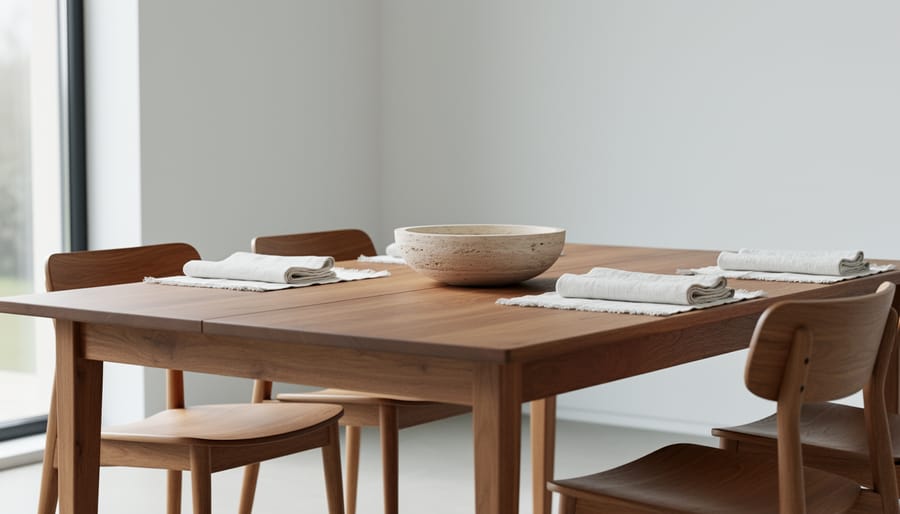
Organic minimalism strips away the unnecessary, leaving only what serves a purpose or brings beauty. In dining rooms, this means raw wood tables with visible grain, stone accents that anchor the space, and natural fiber textiles that soften hard surfaces. The result is a room that breathes calm while remaining undeniably sophisticated.
This aesthetic has roots in Scandinavian hygge and Japanese wabi-sabi, both philosophies that honor imperfection and connection to nature. A dining table crafted from reclaimed oak tells a story through its knots and variations. Linen curtains filter light gently. A jute rug grounds the space without competing for attention. Stone serving pieces and wooden bowls become functional sculpture.
The appeal spans cultures because it taps into something universal: our need for spaces that feel grounded rather than cluttered. The palette stays neutral, cream, taupe, warm grays, soft browns, but the textures do the talking. Smooth plaster walls meet rough-hewn beams. Polished stone sits beside woven placemats.
Start with one anchor piece in natural material and build around it. The simplicity makes it surprisingly adaptable to any dining room size or budget.
2. Bold Architectural Lighting as the Centerpiece
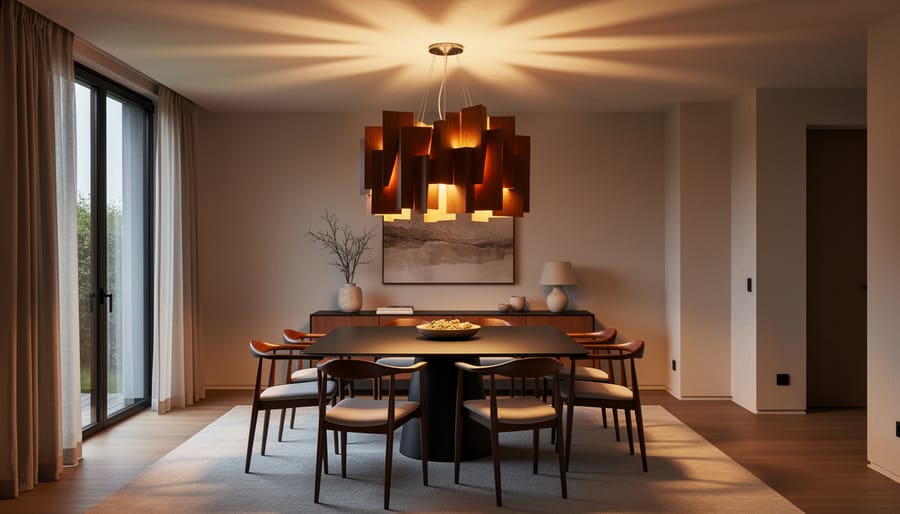
Nothing announces “modern dining room” quite like a show-stopping light fixture suspended over your table. In 2026, we’re seeing designers treat lighting less as an afterthought and more as sculptural art, think oversized geometric pendants, asymmetrical chandeliers with exposed bulbs, and organic forms that look like they’ve been pulled from a contemporary gallery.
The key is scale. Your fixture should be roughly one-half to two-thirds the width of your table, hung 30-36 inches above the surface to create intimacy without blocking sightlines. Go bold with materials: brushed brass that picks up warm tones from earthy color trends sculptural concrete that adds industrial edge, or handblown glass in amber and smoke finishes.
This approach works across budgets, from accessible statement pieces at mid-range retailers to investment fixtures from lighting ateliers. The impact is immediate: your dining room gains a focal point that draws the eye up, defines the space, and sets the tone before anyone even sits down.
3. Curved Furniture for Softer Silhouettes
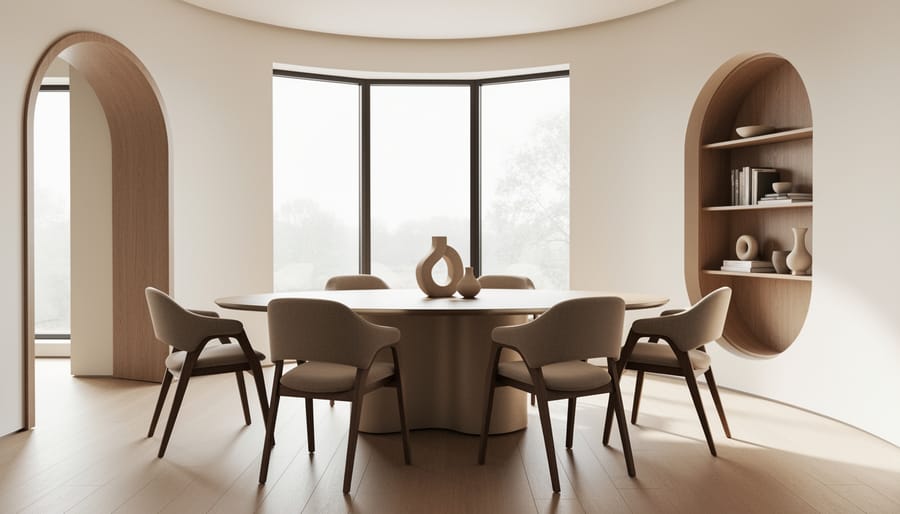
Curved furniture is reshaping modern dining rooms by replacing rigid, angular pieces with softer, more organic forms. Rounded dining tables, whether fully circular or with gently curved edges, create a more inviting atmosphere and improve traffic flow around the space. These shapes naturally encourage conversation by eliminating the hierarchy of traditional head-and-foot seating arrangements.
Arched mirrors have become particularly popular accent pieces, their curved frames adding architectural interest while visually expanding smaller dining areas. When positioned to reflect natural light, they amplify brightness without the harsh lines of rectangular counterparts.
Seating follows this fluid trend with barrel-back chairs, rounded bench ends, and sculptural stools that prioritize both comfort and visual softness. The absence of sharp corners makes spaces feel more approachable and less formal, which aligns perfectly with how we actually use dining rooms today, not just for meals, but as gathering spots for work, homework, and casual conversation.
This shift toward curves reflects broader design psychology: our brains perceive rounded forms as safer and more welcoming than angular ones. In practical terms, curved furniture also works beautifully in open-plan homes where dining areas flow into living spaces, creating visual continuity without abrupt transitions.
4. Earthy Neutral Palettes with Warm Undertones
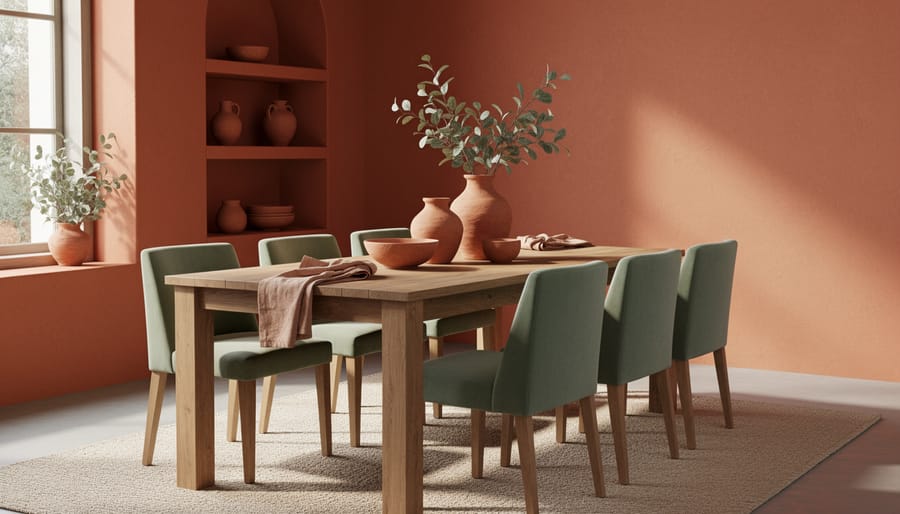
The color revolution happening in modern dining rooms right now centers on warmth. Cool grays and stark whites are stepping back, making room for terracotta, clay rose, sage green, and warm beige tones that ground a space without overwhelming it. These earthy neutrals create dining environments that feel genuinely welcoming, the kind of room where you want to linger over dinner rather than rush through.
This palette draws heavily from Mediterranean villas and desert landscapes, where natural pigments have colored homes for centuries. Think sun-baked clay walls in Moroccan riads, the soft plaster finishes of Italian farmhouses, or the dusty sage of American Southwest interiors. These aren’t trendy accent colors; they’re foundational hues that bring instant warmth and a lived-in quality that pairs beautifully with natural materials and modern furnishings alike.
The practical advantage? Warm neutrals are incredibly forgiving. They hide everyday wear better than stark whites, photograph beautifully in any light, and create the same inviting atmosphere as luxury resort style design without requiring a complete overhaul. Start with one wall in terracotta or swap in warm beige linen curtains to test the shift.
5. Mix-and-Match Seating for Personality
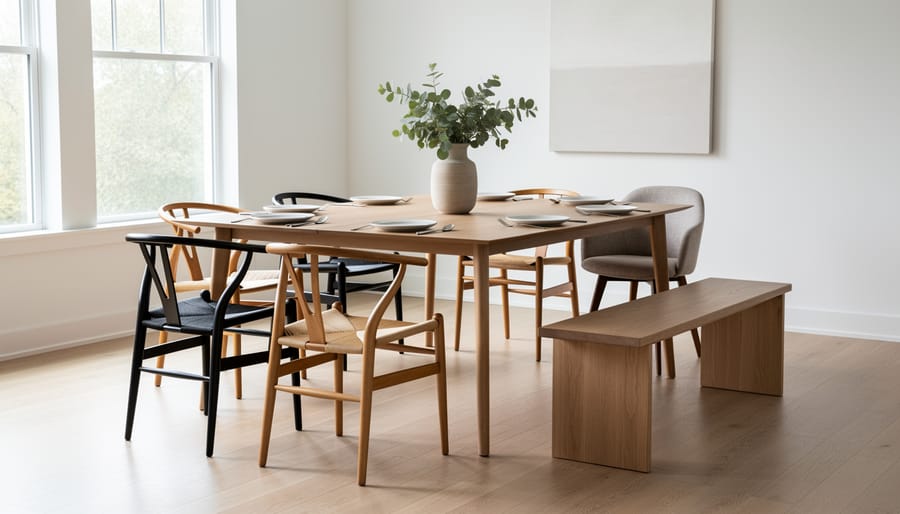
The traditional matched dining set is giving way to a more personal, collected-over-time aesthetic. Mixing different seating styles around your table creates visual interest and tells a story about your taste rather than announcing you bought everything in one trip.
Start with a cohesive element, perhaps all wood tones, similar seat heights, or a unifying color palette, then vary the chair styles. Pair two upholstered end chairs with simpler side chairs. Add a bench on one side for casual flexibility. Incorporate a vintage find alongside modern pieces. The key is intentional variety, not randomness.
This approach works across budgets and spaces. You might combine affordable finds from different sources or gradually upgrade pieces over time. The result feels curated rather than catalog-perfect, with room for conversation-starting pieces like a rattan chair, a velvet accent seat, or a sculptural stool.
The beauty lies in flexibility too. Mix-and-match seating adapts as your needs change, swap in an extra stool for unexpected guests or rotate pieces between rooms. Your dining space becomes a reflection of your evolving style rather than a static showroom display.
6. Textured Walls and Statement Finishes
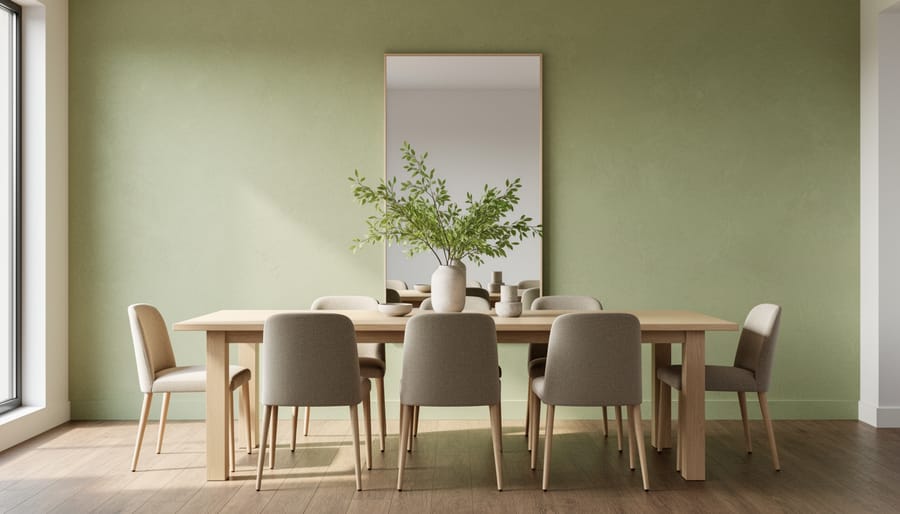
Flat walls feel anonymous. Texture, on the other hand, makes a room memorable before anyone sits down to eat.
In 2026, textured wall treatments have become the sophisticated alternative to accent paint colors in modern dining rooms. Venetian plaster creates subtle luminosity that shifts with natural light throughout the day, while limewash finishes bring an organic, lived-in quality that works beautifully in both Mediterranean-inspired spaces and urban lofts. These artisanal surfaces add tactile depth without pattern or color, allowing furniture and lighting to remain the visual focus.
Three-dimensional wall panels offer geometric drama for those seeking bolder impact. Fluted designs echo Art Deco elegance, while wavy panels introduce movement and shadow play that changes as guests move through the space. Natural stone accent walls, think travertine, slate, or textured limestone, anchor dining rooms with material honesty that feels both ancient and contemporary.
The key is restraint. Choose one wall, typically behind a buffet or the primary seating area, rather than treating the entire room. This approach creates a backdrop that enhances the dining experience without competing for attention, letting the texture emerge as a sophisticated supporting player rather than the main act.
7. Open Shelving and Display Moments
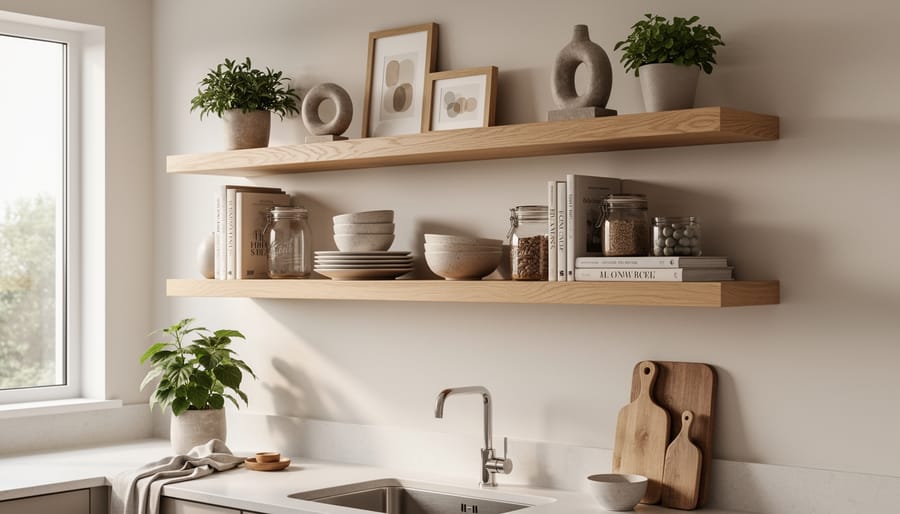
Open shelving transforms dining rooms from closed-off storage zones into living galleries. Floating wooden shelves display your favorite ceramics, glassware, and serving pieces where you can see and reach them daily. Glass-front cabinets offer the same visibility with a bit more protection from dust, perfect for treasured heirloom china or colorful collections that tell your story.
The appeal goes beyond practicality. Curated displays let you rotate seasonal pieces, showcase handmade pottery from local artisans, or arrange budget-friendly decor finds alongside investment pieces. This approach works especially well in open-plan homes where living dining ideas merge, creating visual continuity between spaces.
Keep displays intentional rather than crowded. Group items by color, vary heights, and leave breathing room. Mix functional pieces like everyday plates with purely decorative objects such as small sculptures or vintage bottles. The goal is accessible storage that doubles as personal expression, turning your dining essentials into part of the room’s design story.
8. Biophilic Design with Indoor Plants
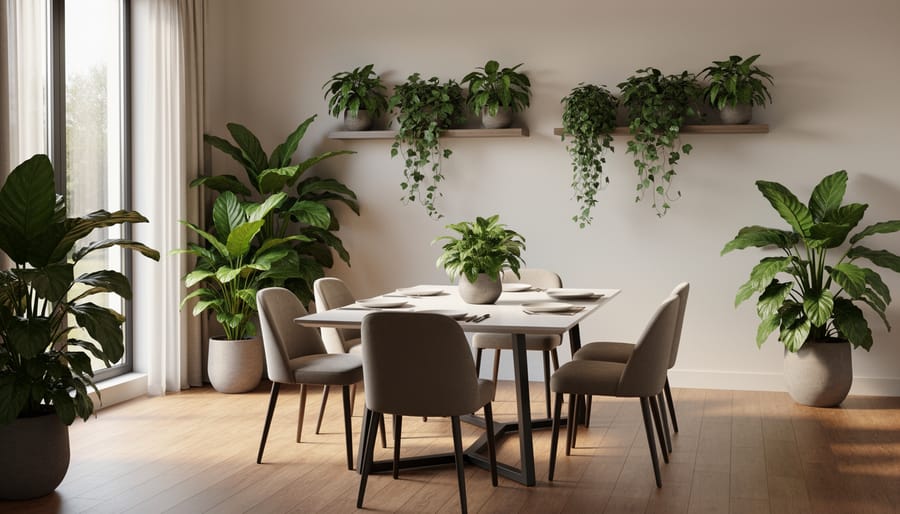
Bringing nature indoors isn’t just trendy, it’s a proven mood booster that makes dining spaces feel alive and welcoming. Strategic plant placement transforms a modern dining room from sterile to sanctuary, layering in texture, color variation, and that indefinable quality of organic life that no decor object can replicate.
Start with scale that matches your room’s proportions. A tall fiddle-leaf fig or bird of paradise anchors a corner with architectural presence, while trailing pothos or philodendron cascading from floating shelves softens hard edges overhead. For dining tables, opt for low-maintenance varieties like succulents or air plants that won’t obstruct sightlines during meals, nobody wants to peer around a jungle to make conversation.
Living walls deserve special mention for their dramatic impact. Mounted vertical gardens filled with ferns, moss, or mixed foliage create stunning focal points while improving air quality, particularly valuable in rooms where cooking aromas drift in. They work brilliantly behind buffets or as alternatives to traditional artwork.
Beyond plants themselves, natural elements like wood branches in ceramic vessels, stone planters, or woven baskets holding greenery reinforce the biophilic connection. The goal is creating visual moments that remind you of being outdoors, making every meal feel slightly more restorative than the last.
9. Multifunctional Furniture for Flexible Living
Modern dining rooms increasingly serve multiple roles beyond hosting meals, making adaptable furniture essential for 2026 living. Extendable tables lead this movement, offering intimate settings for daily use that expand seamlessly when guests arrive. Look for designs with hidden leaves or butterfly mechanisms that maintain clean lines while providing flexibility.
Convertible credenzas prove equally valuable, transforming from buffet storage to home bar to workspace depending on need. Many contemporary pieces feature adjustable shelving, fold-out surfaces, and concealed compartments that keep technology and work materials hidden during dinner service. This dual-purpose approach maximizes square footage without sacrificing style.
Storage benches with lift-top seats provide dining seating while concealing linens, serving pieces, or seasonal decor. Nesting side tables offer surface area when entertaining, then tuck away to preserve floor space. The key is selecting pieces with thoughtful engineering that doesn’t compromise aesthetic quality, smooth mechanisms, solid construction, and finishes that work across different functions. This furniture philosophy reflects how we actually live, creating dining spaces that adapt throughout the day rather than sitting idle between meals.
10. Art Walls and Gallery Moments
Art transforms a dining room from purely functional to emotionally resonant. In 2026, we’re seeing homeowners treat the dining room wall as a legitimate gallery space, not an afterthought for leftover pieces.
The most immediate impact comes from a single oversized work. A six-foot canvas or large-format photograph commands attention without competing with the dining experience. Position it on the wall your guests naturally face when seated, typically opposite the room’s entry or behind the head of the table. This creates a focal point that draws the eye upward and makes the room feel intentionally designed.
Gallery walls work differently. They invite closer inspection and conversation, making them ideal for walls adjacent to the table rather than directly behind seating. Mix frame sizes and orientations, but maintain consistent matting or frame finish to avoid visual chaos. Leave 2-3 inches between frames, and plan the arrangement on the floor first.
Select art that can coexist with dinner conversation and occasional food aromas. Abstract pieces, landscapes, and non-representational photography age better in dining spaces than delicate works on paper. The art should complement your palette, not match it exactly, but share an undertone or emotional temperature that feels cohesive with your overall scheme.
11. Global Textiles and Cultural Accents
Global textiles carry stories that transform dining rooms from merely modern to meaningfully personal. A Moroccan wedding blanket draped over bench seating, West African mudcloth cushions lining chairs, or a handwoven Mexican table runner creates immediate visual warmth while honoring craft traditions that span generations.
The key is sourcing authentically. Seek textiles from fair-trade cooperatives, artisan marketplaces, or small businesses run by makers from the cultures they represent. A Guatemalan ikat pattern or Indian kantha quilt becomes conversation-worthy when you know its origin story and can share how it was made.
Layer textures and patterns strategically. Pair geometric African prints with solid linen napkins, or balance intricate Turkish embroidery with simple ceramic dishes. The contrast keeps spaces feeling modern rather than costume-like.
Mix cultural references without creating a chaotic collision. Choose one dominant textile tradition as your anchor, perhaps Indonesian batik, then add complementary neutral pieces that let it shine. This approach respects the artistry while maintaining the clean lines that define modern design. The result is a dining room that reflects global citizenship without appropriation, where every meal sits within a richer cultural narrative.
12. Smart Integration Without the Tech Clutter
Modern dining rooms can embrace technology without sacrificing style by weaving smart features into the design rather than displaying them. The goal is convenience that remains invisible until you need it.
Start with dimmable smart bulbs in your overhead fixtures and sconces. They let you adjust brightness and warmth from your phone or voice assistant, creating the perfect ambiance for everything from bright family breakfasts to intimate dinner parties. Look for systems that integrate with your existing fixtures rather than requiring special hardware.
Hidden charging stations keep devices powered without cluttering your table. Install pop-up outlets in credenzas or side tables, or add USB ports inside drawers. Some modern dining tables now feature discrete wireless charging pads built into the surface.
Voice-controlled speakers can be tucked into built-in shelving or disguised as decorative objects. Choose compact models in neutral tones that blend with your decor rather than demanding attention.
Motorized window treatments offer another subtle upgrade, letting you control natural light with a tap or schedule. When tech enhances your dining experience without announcing itself, you get the best of both worlds.
Bringing It All Together
Modern dining room decor isn’t about following every trend, it’s about choosing the ideas that resonate with your lifestyle and blending them into a cohesive space that feels authentically yours. You might combine organic minimalism with bold lighting, or pair earthy neutrals with global textiles. The beauty of these twelve concepts is their flexibility: each works independently, yet they layer beautifully together.
Start small if the full transformation feels overwhelming. Swap in curved furniture, add a statement light fixture, or introduce plants and textured elements. These individual changes create immediate impact while you develop your broader vision. Modern doesn’t mean starting from scratch, it means intentionally shaping your dining room into a space where meals become moments and gatherings feel elevated.
Can I create a modern dining room on a tight budget?
Absolutely. Focus on high-impact, lower-cost changes like paint in earthy neutrals, thrifted mix-and-match seating, or DIY textured walls. Plants and rearranged furniture cost little but transform the feel immediately.
How do I adapt modern dining room ideas for small spaces?
Choose multifunctional furniture like extendable tables, use vertical space with open shelving, and opt for curved pieces that improve flow. Light colors and strategic mirrors also make compact dining areas feel larger.
Can I mix modern decor with my traditional dining furniture?
Yes, and the contrast often creates visual interest. Pair a traditional wooden table with modern curved chairs, or balance classic furniture with contemporary lighting and art. The key is maintaining a unifying color palette.
Where should I look for modern dining room inspiration?
International design magazines, platforms like Pinterest and Instagram, museum exhibitions, and travels to different regions all offer fresh perspectives. Notice how restaurants and hotels style their dining spaces too.
The dining rooms that feel most alive combine current design thinking with personal history and cultural touchstones. Trust your instincts, experiment with what excites you, and remember that the most modern space is one that evolves as you do.
