

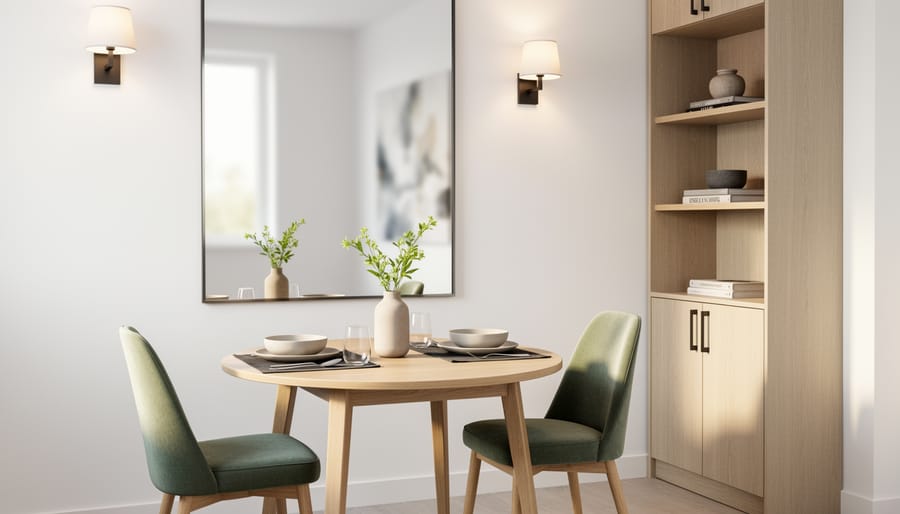
A small dining room can be every bit as inviting and stylish as a grand one when you apply the right design strategies. The key is choosing furniture that maximizes function without crowding the space, then layering in smart lighting, reflective surfaces, and vertical storage to create an illusion of openness. Think round tables that improve flow, wall-mounted lighting that frees up surface area, and mirrors that double your visual square footage.
The challenge with compact dining spaces goes beyond simple furniture arrangement. You’re balancing the need for comfortable seating with breathing room, adequate storage with visual lightness, and personal style with practical constraints. The good news? Small dining rooms force you to edit ruthlessly, which often results in more cohesive, intentional design than their sprawling counterparts.
This guide draws from modern dining ideas tested in urban apartments from Tokyo to Copenhagen, where space comes at a premium and every square foot must earn its place. You’ll find 12 concrete strategies that address everything from furniture scale to color psychology, each one selected because it delivers measurable impact in tight quarters. Some solutions are instant (swapping a rectangular table for a round one), while others build atmosphere over time (curating a gallery wall that draws the eye upward).
Whether you’re working with a dedicated dining room that’s simply undersized or carving out a dining zone within an open-plan layout, these ideas will help you create a space that feels generous, not cramped.
How We Selected These Small Dining Room Ideas
We didn’t just throw together a random list of decorating tricks. Every idea here meets three essential standards: it had to genuinely solve a space problem, create meaningful visual impact, and be achievable whether you’re a seasoned decorator or a weekend DIY enthusiast tackling your first project.
We drew insights from leading design publications like Architectural Digest and Elle Decor, tracking what actually works in real small-space homes across different cultures and climates. The ideas blend Scandinavian minimalism, Japanese efficiency, Mediterranean warmth, and modern American practicality because good design doesn’t respect geographic boundaries. We also prioritized solutions aligned with 2026’s sustainability focus and preference for multi-functional, adaptable pieces over single-purpose furniture. Finally, every recommendation had to pass the “does this make the room feel bigger or just differently decorated?” test, because visual expansion matters as much as physical function when you’re working with limited square footage.
1. Install a Wall-Mounted Drop-Leaf Table for Ultimate Flexibility
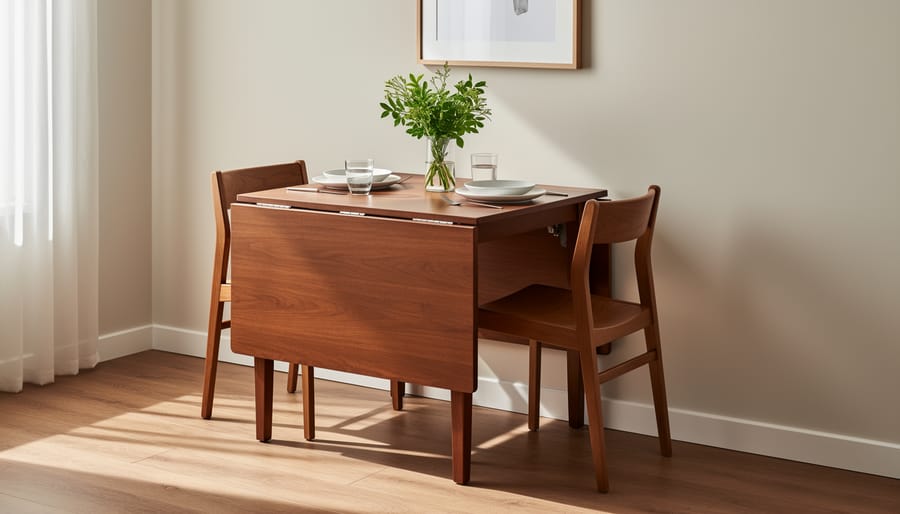
A wall-mounted drop-leaf table transforms your small dining room into a chameleon of space. When it’s just you, fold it down flat against the wall and reclaim your floor, suddenly there’s room to move, practice yoga, or simply breathe. When friends arrive, flip the leaf out, lock the support leg into place, and you’ve got a proper dining surface for four.
This setup shines in studio apartments where every square foot counts. You’re not dragging furniture around or living with a permanent obstacle course. The table stays anchored, stable, and ready.
Style-wise, you’ve got options. A sleek white lacquer drop-leaf suits modern minimalist spaces, while reclaimed wood with visible grain brings warmth to rustic or farmhouse vibes. Scandinavian designs split the difference with light birch or ash finishes and clean lines that feel unfussy.
Most fold-down tables install with basic brackets and a few screws into wall studs, a manageable weekend DIY if you’re handy, or an hour’s work for a professional. Either way, you’re investing in flexibility that never goes out of style.
2. Use Mirrors to Create the Illusion of More Space
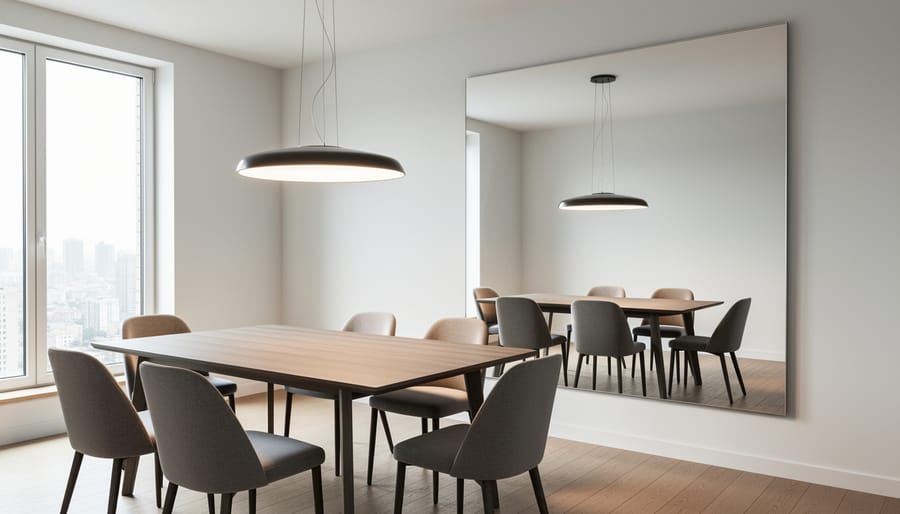
Mirrors rank among the most effective tools for opening up a cramped dining room. A large, frameless mirror leaning against one wall instantly reflects natural light and creates the perception of depth, while a gallery arrangement of vintage-framed mirrors in varying sizes adds character without the visual weight of solid artwork. Position mirrors opposite windows to maximize daylight, or place them adjacent to light fixtures, the reflected glow amplifies ambient lighting after dark.
European interiors often feature ornate gilded mirrors that double as statement pieces, lending Old World elegance even in tight quarters. Asian design traditions take a subtler approach, using mirrors with minimal frames or integrating them into shoji-inspired panels that blend seamlessly with walls. For a contemporary twist, try a mirror with a brass or blackened metal frame that complements industrial decor elements like exposed brick or metal chairs. The key is strategic placement, mount mirrors where they reflect something beautiful, not clutter, to genuinely expand your space rather than simply doubling the mess.
3. Choose Transparent or Lucite Dining Chairs
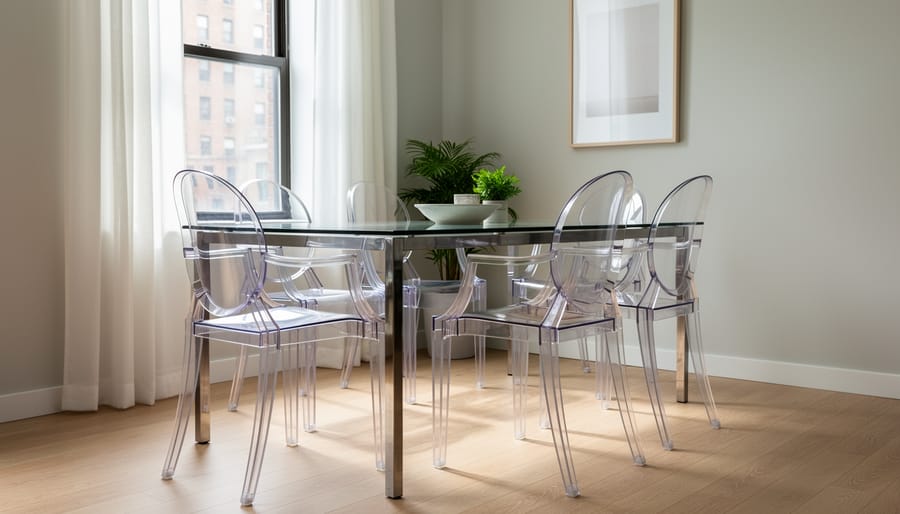
Clear acrylic or lucite chairs have revolutionized small dining room design by quite literally disappearing into the background. Unlike solid wood or upholstered seating, these transparent pieces allow light to pass through and maintain unobstructed sightlines across the room, creating an airy, open feel that’s essential in compact spaces.
The beauty of ghost chairs lies in their chameleon-like versatility. Pair them with a rustic farmhouse table for an unexpected modern twist, or complement a sleek glass-top table for a cohesive contemporary look. They work equally well with marble, wood, or metal surfaces because they don’t compete visually, they simply enhance whatever style you’ve chosen.
Over the past few years, these chairs have evolved from a designer secret to a mainstream solution for urban apartments and small homes worldwide. They’re particularly popular in minimalist Scandinavian interiors and modern Asian design schemes, where visual lightness is paramount.
Maintenance is straightforward: a quick wipe keeps them crystal-clear. While they may show fingerprints more readily than opaque chairs, the trade-off in spatial perception makes them worth the occasional polish.
4. Embrace a Built-In Banquette with Hidden Storage
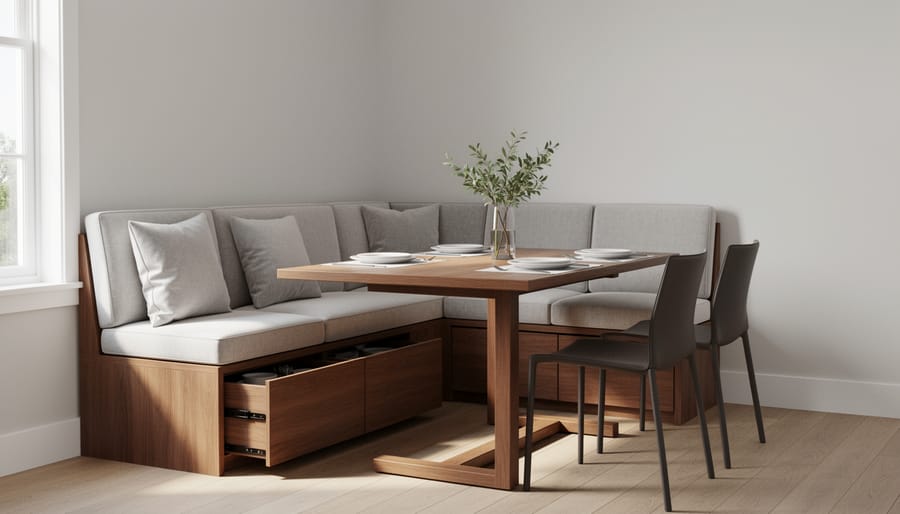
A built-in banquette transforms an underused corner or wall into a cozy dining spot while solving two major small-space challenges at once. The seating itself eliminates the need for bulky chairs that stick out, and the hollow base becomes prime real estate for storing table linens, seasonal dishware, or anything else you’d rather keep out of sight.
The magic lies in customization. You can tailor the depth and length to fit your exact space, wrapping around corners in L-shapes or hugging a single wall. Lift-up bench tops or pull-out drawers make accessing storage simple without disrupting the dining setup.
For Mediterranean-inspired rooms, consider cushions in warm terracotta, sun-bleached blues, or natural linen with textured weaves. Farmhouse aesthetics call for painted wood bases in soft whites or grays, topped with ticking stripe or gingham fabrics that feel relaxed and welcoming. Mix in throw pillows with varying patterns to add personality without overwhelming the space.
Choose upholstery that’s durable and easy to clean, performance fabrics handle daily use beautifully. The banquette’s fixed position means you’re committing to a layout, so measure carefully and think about traffic flow before installation. Done right, it creates an intimate dining nook that feels custom and intentional.
5. Opt for a Round or Oval Table to Improve Flow
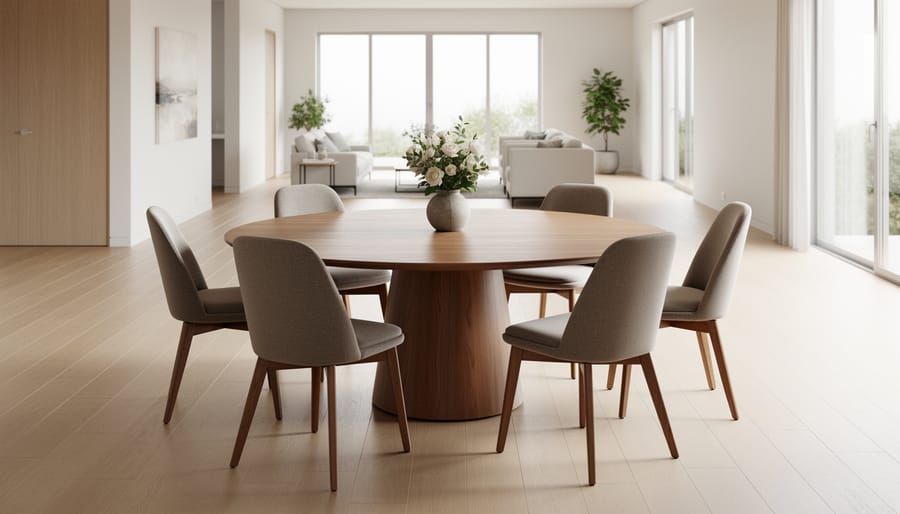
Sharp corners and cramped pathways can make a small dining room feel even tighter than it actually is. A round or oval table solves this problem by eliminating those jutting edges, allowing you and your guests to move around the space more comfortably. You won’t bump into pointed table corners when squeezing past chairs, and the circular shape naturally creates better flow in tight quarters.
Beyond the practical benefit, round and oval tables foster a more intimate dining atmosphere. Everyone sits at an equal distance from the center, which encourages conversation and eye contact far better than a long rectangular setup where people at opposite ends feel miles apart. This works beautifully whether your style leans contemporary with a sleek marble top and sculptural pedestal base, or traditional with a classic wood finish and turned legs. The gentle curves also pair nicely with 2026 color trends that emphasize softer, organic palettes, helping your small dining room feel cohesive and thoughtfully designed rather than forced into a boxy footprint.
6. Layer Lighting with Pendant Fixtures and Dimmers
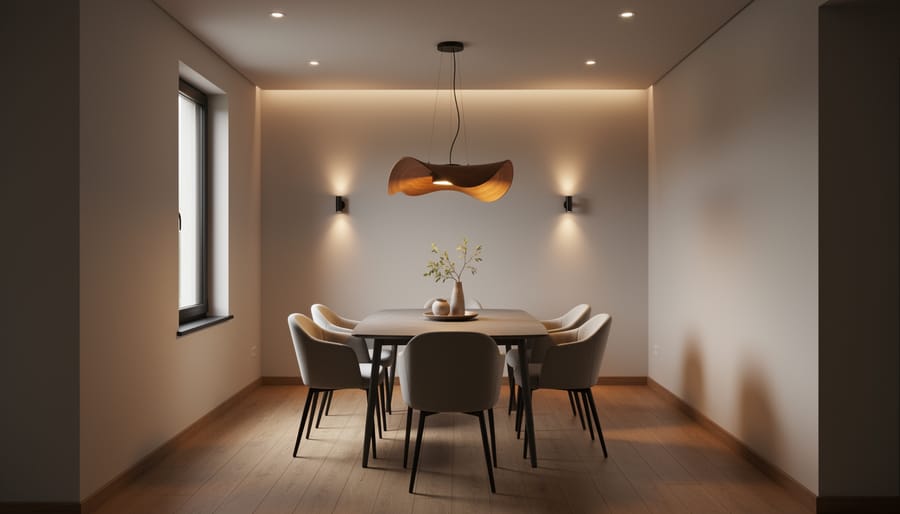
A well-chosen pendant light does more than illuminate your table, it becomes a vertical focal point that pulls the eye up, instantly making a low ceiling feel taller and a cramped room feel airier. In 2026, sculptural pendant fixtures crafted from sustainable materials like reclaimed wood, bamboo, and recycled metal are dominating design magazines, blending environmental responsibility with striking visual impact.
Pair your pendant with a dimmer switch to transform the mood from bright and energetic for family meals to soft and intimate for evening gatherings. This flexibility lets one fixture serve multiple purposes, eliminating the need for bulky floor lamps that eat up precious square footage. Position the pendant roughly 30 to 36 inches above the table surface for optimal light distribution without blocking sightlines across the table.
Consider layering in subtle accent lighting, a slim wall sconce or discreet LED strips under floating shelves, to add depth and prevent harsh shadows. The interplay between overhead drama and ambient glow creates dimension that makes small dining spaces feel intentionally designed rather than simply small.
7. Paint Walls in Light, Reflective Colors
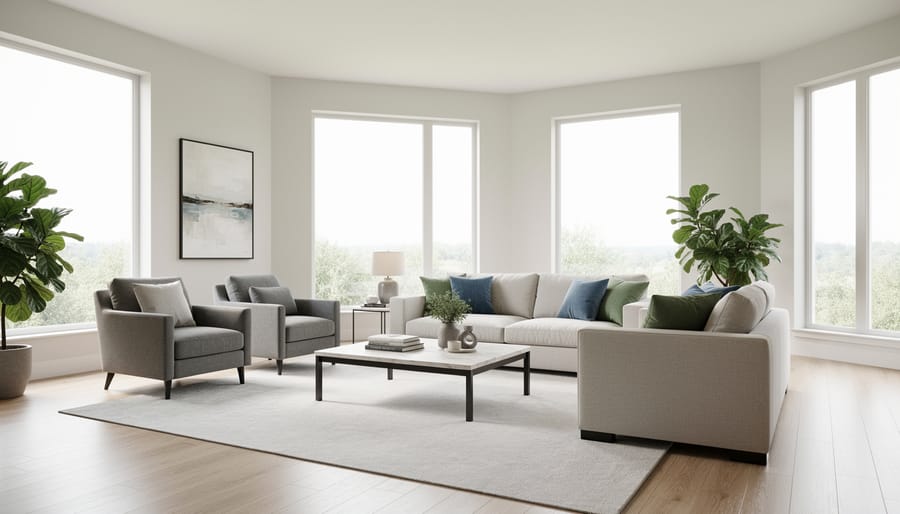
Light, reflective wall colors work like architectural magic in small dining rooms. Soft whites, creams, pale grays, and gentle pastels don’t just make the space feel larger, they actively bounce natural and artificial light around the room, creating an airy, open atmosphere that darker shades can’t achieve. When light hits these surfaces, it reflects rather than absorbs, effectively multiplying your light sources and making walls feel like they’re receding rather than closing in.
The psychology behind light colors reinforces this effect. Our brains interpret bright, neutral tones as spacious and calming, which transforms a compact dining area into a more comfortable gathering spot. Scandinavian design has long championed crisp whites and pale grays for exactly this reason, creating bright sanctuaries during long, dark winters. Japanese interiors favor warm naturals like soft beige and clay tones that bring warmth without weight.
For 2026, warm whites with subtle undertones, think linen white or almond, are trending over stark, cool whites. These shades feel inviting rather than clinical and pair beautifully with wood tones and natural textures. If pure neutrals feel too safe, consider barely-there pastels like blush pink, sage green, or powder blue on a single accent wall to add personality while maintaining that light-bouncing quality.
8. Incorporate Vertical Storage with Open Shelving or Tall Cabinets
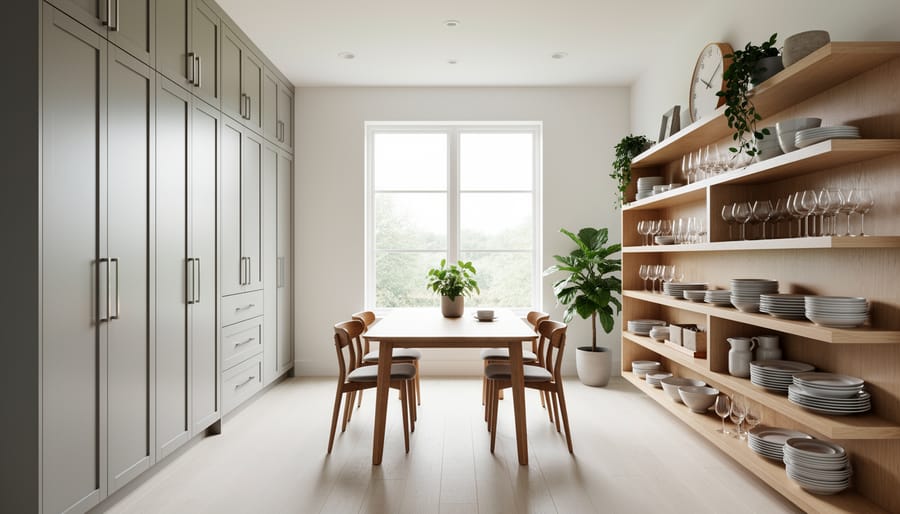
When floor space is tight, the solution is simple: look up. Vertical storage transforms blank walls into hardworking display and storage zones without sacrificing precious square footage. Floating shelves mounted above eye level draw attention upward, making ceilings appear higher while keeping everyday essentials within reach. Tall, narrow cabinets tuck neatly into corners or flanking doorways, offering enclosed storage that doesn’t dominate the room visually.
The key is curation over clutter. Display your most beautiful dishware, hand-painted ceramics, vintage glassware, or a collection of white serving pieces, in groups of three or five for visual balance. Mix in a small potted plant, a stack of design books, or a single sculptural object to break up rows of plates and bowls. Choose open shelving in materials that complement your table and chairs, whether that’s reclaimed wood for warmth or sleek metal brackets for a contemporary edge. This approach works seamlessly whether you’re styling a standalone dining area or coordinating living dining decor in an open-plan space, where vertical lines help define zones without physical barriers.
9. Anchor the Space with a Bold, Compact Rug
A well-chosen area rug transforms a small dining room from a cramped corner into a defined, intentional space. The key is proportion: your rug should be large enough that all chair legs remain on it even when pulled out, typically extending 24 inches beyond the table edge. In a compact room, this prevents the space from feeling chopped up while anchoring the dining zone visually.
Don’t shy away from pattern or color. A bold geometric kilim or a richly patterned Persian rug can actually make a small room feel more curated and interesting, drawing attention to the floor as a design element rather than the room’s limited square footage. Moroccan rugs with their abstract motifs and warm tones add texture without visual weight, while flat-weave styles keep the profile low and movement easy.
Choose rugs with clear borders or central medallions that frame the table, reinforcing the dining area as a destination within your home.
10. Hang Artwork or a Statement Wall Feature to Draw the Eye
A single striking piece of artwork or an intentional wall feature can completely shift the focus in a small dining room, making the dimensions feel less relevant. When you hang a large-scale painting, a bold textile wall hanging, or an oversized mirror as art, you create a visual anchor that draws attention and gives the space personality. Design experts consistently recommend going bigger rather than safer, think one statement piece rather than a scattering of small frames that can make walls feel busy and crowded.
If you prefer a gallery wall, keep it tightly curated and use consistent framing or matting to maintain visual cohesion. Arrange pieces in a geometric grid or a salon-style cluster that feels purposeful, not random. Placement matters tremendously: hang artwork at eye level (typically 57-60 inches to the center) and ensure it’s proportionate to your table and wall size. A piece that’s too small will disappear, while one that commands the space elevates the entire room, an approach that works beautifully whether you’re channeling minimalist Scandinavian aesthetics or a more layered luxury resort style.
11. Use Multi-Functional Furniture, Like a Bar Cart or Console
Multi-functional furniture is your secret weapon when square footage is at a premium. A rolling bar cart instantly transforms from beverage station to mobile prep space, then tucks into a corner or slides under a console when not needed. The wheels give you flexibility, roll it out for dinner parties, use it as a serving sideboard during meals, or position it near the kitchen for quick access to dishes and utensils.
Console tables behind banquettes or against walls offer similar versatility. Choose one with drawers or lower shelves to stash linens, extra flatware, or table settings, while the top becomes a staging area for serving dishes or a display surface for candles and décor. Slim sideboards work the same way, providing enclosed storage without the bulk of traditional buffets.
The key is choosing pieces that earn their place through multiple uses. A well-styled bar cart doubles as a decorative element, arrange glassware, bottles, and a small plant to create visual interest even when it’s not in service mode. This approach maximizes utility without sacrificing style, making every piece in your small dining room work harder for you.
12. Bring in Natural Elements with Plants and Organic Textures
Nature has a remarkable way of making any space feel more inviting, and small dining rooms are no exception. Incorporating plants and organic textures transforms a compact area into a warm, breathing environment without demanding precious square footage.
Start with vertical solutions if floor space is tight. Wall-mounted planters, hanging macramé plant holders, or a living wall installation bring greenery to eye level while keeping surfaces clear. Trailing pothos or string of pearls cascading from shelves add visual movement that draws the eye upward, making walls feel taller. In 2026, biophilic design, connecting indoor spaces to the natural world, has moved from trend to standard practice, with designers emphasizing not just aesthetics but the mood-lifting benefits of living plants.
Beyond greenery, layer in organic materials through your existing furniture and accents. A jute table runner, linen napkins, or rattan placemats introduce subtle texture that feels collected rather than cluttered. Wood tones in chairs, shelving, or serving pieces ground the space with warmth. Japanese and Scandinavian design traditions have long embraced this natural palette, proving that simplicity and organic materials create lasting appeal in small spaces where every element needs to earn its place.
Quick Tips for Styling Your Small Dining Room
Beyond the twelve ideas we’ve explored, a few universal styling principles can elevate any small dining room. Think of these as the finishing touches that tie your design together and keep the space feeling open, intentional, and personal.
- Keep surfaces clear, clutter visually shrinks a room, so limit what you display on the table and sideboard to a few curated pieces.
- Use vertical lines with tall candlesticks, narrow vases, or vertical artwork to draw the eye upward and create the illusion of height.
- Choose furniture with exposed legs rather than solid bases to allow light and sightlines to flow beneath, making the room feel less crowded.
- Edit your decor ruthlessly, each item should earn its place through beauty, function, or personal meaning.
- Stick to a cohesive color palette of two or three main tones to create visual harmony and prevent the space from feeling chaotic.
- Incorporate reflective surfaces like glass tabletops, metallic accents, or lacquered finishes to bounce light around the room.
The common thread? Intentionality. Every choice in a small dining room carries more weight, so be deliberate about what stays and what goes. A well-edited space with breathing room between pieces will always feel more sophisticated than one packed with furniture and accessories, no matter how lovely they are individually. Trust your instincts, and remember that less truly is more when you’re working with limited square footage.
Common Questions About Small Dining Room Decor
How do I make a small dining room look bigger?
Use mirrors to reflect light and create visual depth, choose furniture with exposed legs to maintain sightlines to the floor, and stick with a light color palette on walls and larger pieces. Vertical elements like tall shelving and upward-drawing pendant lights also help ceilings feel higher.
What size table fits a small dining room?
Aim for at least 36 inches of clearance around the table for comfortable movement. A round table between 36-44 inches works well for tight spaces, while rectangular tables should be proportioned so diners can pull out chairs without hitting walls.
Can I use dark colors in a small dining space?
Yes, but apply them strategically. A single dark accent wall can add drama and depth without closing in the room, especially when paired with light furniture and ample lighting. Balance is everything.
How do I balance style and function in a compact dining area?
Choose pieces that do double duty, like a banquette with storage or a drop-leaf table that expands when needed. Prioritize what you actually use daily, and let one or two statement pieces carry the visual weight instead of crowding the room with decor.
These questions come up constantly because small dining rooms present real design challenges. The key is remembering that limitations often spark creativity. When you’re forced to edit ruthlessly, every choice becomes more intentional. That banquette isn’t just seating, it’s storage, style, and space efficiency rolled into one. That carefully chosen mirror does the work of an entire wall of windows. Treat your small dining room as an editing exercise rather than a compromise, and you’ll end up with a space that feels curated, not cramped.
Working with a small dining room isn’t a design compromise, it’s a creative invitation. When space is limited, every choice carries more weight, pushing you to be intentional about color, furniture, lighting, and layout. The twelve ideas we’ve explored show that compact doesn’t mean cramped, and small certainly doesn’t mean settling for less style. Whether you’re drawn to Scandinavian minimalism, Mediterranean warmth, or mid-century modern lines, your small dining area can reflect your taste just as boldly as any grand dining hall.
The beauty of a smaller dining room is how quickly it responds to thoughtful design decisions. A well-placed mirror shifts the entire mood. A round table transforms awkward corners into intimate gathering spots. A statement light fixture becomes the room’s personality. Don’t be afraid to borrow ideas across cultures, mix textures, or break conventional rules if they don’t serve your space. Your dining room, no matter its size, deserves to feel welcoming, personal, and entirely yours, a place where meals taste better because the setting feels just right.
