

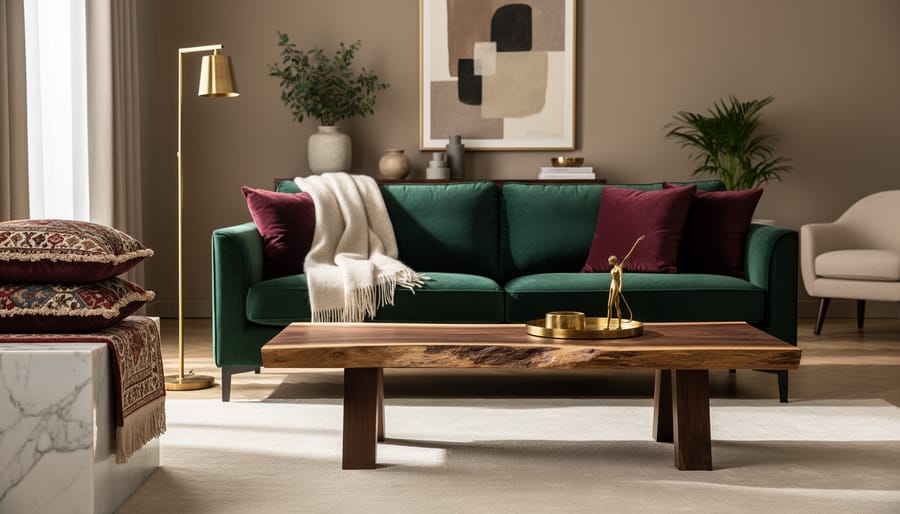
Luxury home decor is achieved through three core principles: investing in quality materials, creating intentional focal points, and layering textures to add depth. Rather than filling every corner with expensive items, true luxury comes from thoughtful curation where each piece serves a purpose and tells a story. This approach makes high-end aesthetics accessible across different budgets and living spaces.
The foundation of luxurious interiors lies in understanding that opulence isn’t about price tags alone. A velvet sofa in jewel tones can transform a modest living room more effectively than multiple mid-range pieces, while natural materials like marble, brass, and solid wood instantly communicate refinement. The secret is knowing where to splurge and where to save, a balance that professional decorators have mastered over decades of creating elevated spaces for clients worldwide.
What makes 2026 an exciting time for luxury home design is the fusion of global influences. Scandinavian minimalism meets Moroccan textiles, Japanese wabi-sabi philosophy blends with Italian craftsmanship, and these cultural intersections create spaces that feel both worldly and deeply personal. Publications like Architectural Digest and Elle Decor continue showcasing how international designers bring these elements together, proving that luxury transcends geographic boundaries.
The journey to a sophisticated home begins with understanding proportion, scale, and the art of restraint. Whether you’re refreshing a single room or reimagining your entire space, the principles remain constant: choose pieces you genuinely love, invest in craftsmanship that lasts, and create an environment that reflects your unique aesthetic vision.
What Actually Makes a Space Feel Luxurious
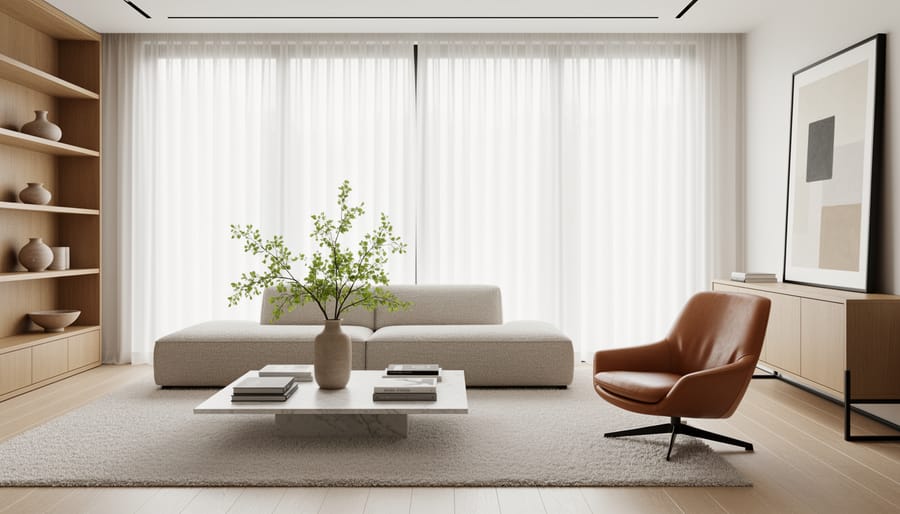
The gap between a luxury space and an ordinary one rarely comes down to price tags. Walk into a truly luxurious room and you’ll notice something immediate, a sense of calm, cohesion, and intentionality that has nothing to do with how much was spent. That feeling stems from a few fundamental principles that designers across cultures, from Milanese showrooms to Tokyo apartments, consistently apply.
Quality always trumps quantity. A single well-crafted linen sofa makes a stronger impression than three trendy pieces that feel flimsy. Luxury spaces feature fewer items, but each one carries weight, literally and figuratively. The hand of a skilled craftsman shows in dovetail joints, in stone cut to reveal its natural veining, in textiles with substance you can feel. These materials age gracefully rather than looking worn, which creates a sense of permanence that disposable decor never achieves.
Thoughtful layout matters as much as what fills the space. Luxury rooms breathe. Furniture floats away from walls, creating conversation groupings that feel deliberate rather than pushed to the perimeter. Traffic flows naturally without awkward navigation around obstacles. This approach to spatial planning, deeply rooted in Scandinavian and Japanese design traditions, proves that emptiness can be as valuable as fullness.
Color palettes in luxurious spaces tell a coherent story. You won’t find seven competing hues fighting for attention. Instead, a base of two or three colors anchors the room, with one accent creating visual interest. This restraint applies whether you’re working with the warm terracottas of Mediterranean design or the serene grays of contemporary minimalism. The colors feel considered, not accidental.
Negative space does the heavy lifting that ornament used to do. Where excess once signaled wealth, restraint now communicates sophistication. A single sculptural vase on a console commands more attention than three smaller accessories. Clear surfaces, uncluttered walls, and strategic emptiness let your eye rest and allow standout pieces to shine. This editing process separates luxury from merely expensive, knowing what to leave out matters more than what to include.
Investment Pieces That Transform Any Room
Where to Splurge and Where to Save
Smart luxury decorating isn’t about spending lavishly on everything. It’s about strategic choices that maximize impact while keeping costs manageable.
Splurge on what touches your body daily. Your mattress, bed linens, and bath towels deserve premium investment. A quality mattress ($1,500-$3,000) transforms sleep quality, while 400-thread-count Egyptian cotton sheets ($150-$300) feel genuinely luxurious against skin. These items affect your daily comfort in ways no one sees but you definitely feel.
Invest in lighting fixtures. A stunning chandelier or sculptural floor lamp ($300-$1,500) commands attention and sets the room’s tone. Lighting creates atmosphere in ways that budget alternatives simply can’t replicate. This is where visible luxury lives.
Save on trend-driven decor. Throw pillows, vases, seasonal accessories, and artwork can come from affordable sources without diminishing luxury. Many budget-friendly finds look remarkably high-end when styled thoughtfully alongside investment pieces. Replace a $15 Target throw pillow easily, but you’ll live with that $2,000 sofa for years.
Splurge on your sofa and dining table. These anchor pieces endure heavy use and define room layouts. Expect $1,500-$4,000 for quality construction that lasts decades. Meanwhile, save on side tables and console tables, which you can find beautifully at thrift stores or budget retailers for under $200.
Invest in window treatments. Custom drapes or quality blinds ($500-$2,000 per room) frame views and control light professionally. Save on decorative hardware, $30 curtain rods can look stunning when the fabric quality speaks for itself.
The formula works: spend where quality affects function and daily experience, economize where aesthetics alone matter.
Luxury Textures and Materials That Make the Difference
Touch tells the truth about luxury. Run your hand across a velvet sofa versus polyester upholstery, your fingers know the difference before your brain catches up. The materials you choose set the baseline for how luxurious a space genuinely feels, and layering them strategically creates the depth that photographs can hint at but only physical presence confirms.
Natural stone stands as the ultimate luxury signal. Marble countertops, travertine floors, or a single statement slab behind a bathroom vanity instantly elevate a room’s register. The veining patterns, cool temperature, and weight communicate permanence and quality. If budget constraints make full installations unrealistic, consider marble-look porcelain tiles (technology has dramatically improved their realism) or reserve genuine stone for a single focal point, a coffee table top or kitchen island edge detail.
Hardwoods bring warmth that engineered alternatives struggle to match. Wide-plank oak flooring, walnut furniture pieces, or teak accent tables age beautifully rather than just deteriorating. European design traditions favor lighter woods like ash and beech for their subtle grain, while Asian aesthetics lean into rich rosewood and bamboo. The investment pays dividends in longevity and tactile satisfaction.
| Material | Best Application | Maintenance | Budget Alternative |
|---|---|---|---|
| Marble | Bathroom vanities, accent tables | High (sealing required) | Porcelain marble-look tiles |
| Velvet | Upholstery, curtains | Medium (professional cleaning) | Cotton-velvet blends |
| Brass | Hardware, lighting fixtures | Medium (patina develops naturally) | Brushed gold-tone finishes |
| Linen | Bedding, slipcovers | Low (improves with washing) | Linen-cotton blends |
Textile choices separate hotel-generic from truly luxurious. Velvet brings instant richness, a single velvet accent chair transforms a room’s perceived value. Linen offers a different luxury language, one rooted in European coastal aesthetics where relaxed sophistication trumps formal perfection. Its natural wrinkles signal authenticity rather than carelessness. Layer these fabrics strategically: velvet pillows against linen upholstery, silk throws over cotton sofas.
Metal finishes deserve careful consideration. Unlacquered brass develops a living patina that screams quality and age (in a good way). Brushed nickel offers cooler restraint. Mixing metals works when you commit to it deliberately rather than accidentally, a technique borrowed from industrial elegance where raw materials interact purposefully.
The layering strategy matters as much as individual material choices. Pair rough with smooth: a chunky wool throw against leather seating, polished marble beside raw wood. Asian design wisdom teaches restraint here, three textures per room create interest, seven create chaos. Let each material breathe rather than competing for attention.
The Color Palettes Designers Use for High-End Looks
The most luxurious spaces share a secret: their color palettes are never accidental. Designers working at the high end understand that color creates the emotional foundation of a room, and they approach it with the same precision an artist brings to a canvas.
Serene neutrals remain the backbone of luxury design, but not the builder-grade beige that flattens a space. Think warm greiges, soft taupes with subtle pink undertones, and creamy whites that shift throughout the day. These colors create a sophisticated backdrop that lets architectural details and furnishings shine. Scandinavian designers have mastered this approach, layering shades of white and gray to create depth without visual noise. The key is using multiple tones of the same color family rather than a single flat shade.
Moody jewel tones deliver instant drama and richness when used intentionally. Deep emerald greens, sapphire blues, and burgundy create cocoon-like intimacy in dining rooms, libraries, and bedrooms. These saturated colors work best on a single accent wall or in smaller spaces where the intensity feels embracing rather than overwhelming. Pair them with brass fixtures and natural wood to balance the boldness.
Mediterranean color palettes bring warmth through sun-baked terracottas, ochres, and dusty blues that reference sea and sky. These earthy tones create inviting spaces that feel lived-in yet refined. The trick is keeping the tones slightly muted rather than bright, think aged fresco rather than fresh paint.
Asian design traditions offer a different path to luxury through nature-inspired palettes. Japanese interiors favor subtle greens, warm browns, and charcoal grays that ground a space in natural harmony. Chinese design incorporates lacquer reds and jade greens as sophisticated accents against neutral backgrounds.
The real luxury move? Committing to a cohesive palette throughout your home rather than treating each room as a separate project. Designers limit themselves to three to five core colors that flow from space to space, creating a sense of intentionality that instantly elevates the entire home. This restraint, more than any single color choice, signals true design confidence.
Lighting Strategies That Create Instant Elegance
Walk into any five-star hotel and you’ll immediately notice what makes the space feel so different from your average room: the lighting. It’s never harsh, never flat, always layered to create dimension and warmth. The difference between ordinary and luxurious often comes down to how many light sources you’re using and where you’re placing them.
The three-layer approach transforms any space. Ambient lighting provides overall illumination, think recessed ceiling lights or a central chandelier. Task lighting serves specific functions like reading lamps or under-cabinet kitchen strips. Accent lighting adds drama by highlighting artwork, architectural details, or creating pools of light in unexpected corners. When these layers work together, they create depth that single overhead fixtures can’t match.
Statement fixtures act as jewelry for your rooms. A sculptural chandelier or an oversized pendant becomes both functional lighting and art. Look for pieces with raw elegance mixed materials like brass and glass, organic shapes, or unexpected finishes that catch the eye during daylight hours too.
Dimmer switches are non-negotiable in luxury design. They let you adjust the mood throughout the day, from bright and energizing mornings to intimate evenings. Install them on every possible circuit, including table lamps if you’re willing to invest in smart bulbs.
Color temperature matters more than most people realize. Luxury spaces typically use warm white bulbs (2700-3000K) rather than the cool, bluish tones common in offices. Warmer light flatters skin tones, makes textiles look richer, and creates the cozy sophistication that cold lighting can’t deliver. Place uplights behind plants or architectural columns to create dramatic shadows on walls, and use picture lights or track lighting to showcase artwork, these targeted beams signal that every element in your space has been thoughtfully considered.
Small Details That Reveal True Luxury
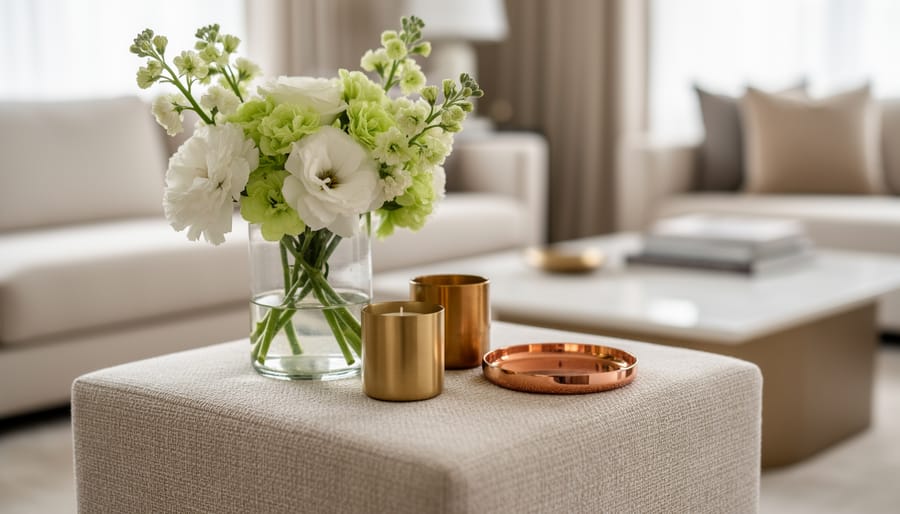
True luxury lives in the details most people overlook. While grand furniture and beautiful paint colors set the stage, it’s the finishing touches that make a space feel genuinely elevated rather than merely decorated.
Start with hardware, the jewelry of your home. Swapping builder-grade knobs and pulls for solid brass or matte black fixtures transforms cabinetry and doors instantly. Quality hardware has weight and substance; you feel the difference every time you open a drawer. The same principle applies to switch plates, curtain rods, and bathroom accessories. These small upgrades cost relatively little but signal attention to quality throughout your space.
Window treatments deserve special consideration. Custom drapery with proper lining and professional installation creates architectural impact that ready-made curtains can’t match. Floor-to-ceiling panels hung close to the ceiling make rooms appear taller and more refined. The fabric drapes beautifully, and the tailored fit eliminates that awkward gap between curtain and floor that screams budget compromise.
Fresh flowers and greenery bring life and luxury into any room. A single statement arrangement in the entry makes a stronger impression than scattered bud vases. Choose vessels carefully, a sculptural ceramic vase or vintage brass urn becomes part of the display. Even simple grocery store blooms look expensive when arranged thoughtfully in quality containers.
Books function as both decor and conversation starters. Curate your visible collection intentionally, beautiful spines arranged by color or topic, stacked on coffee tables with a decorative object on top. This approach works whether you’re displaying art books, design magazines, or thoughtfully chosen elephant decor alongside travel volumes.
Scent creates invisible luxury. High-end hotels know this, their signature fragrances make spaces memorable. Invest in quality candles or reed diffusers rather than synthetic air fresheners. Place them strategically in entryways and bathrooms where guests notice them first.
Finally, master the art of display. Luxury spaces show restraint, fewer objects, more breathing room. Group items in odd numbers, vary heights, and leave surfaces mostly clear. One beautiful tray holding selected items looks more expensive than a cluttered countertop, even if the items themselves cost less.
Room-by-Room Luxury Decor Applications
Creating a Five-Star Bedroom Retreat
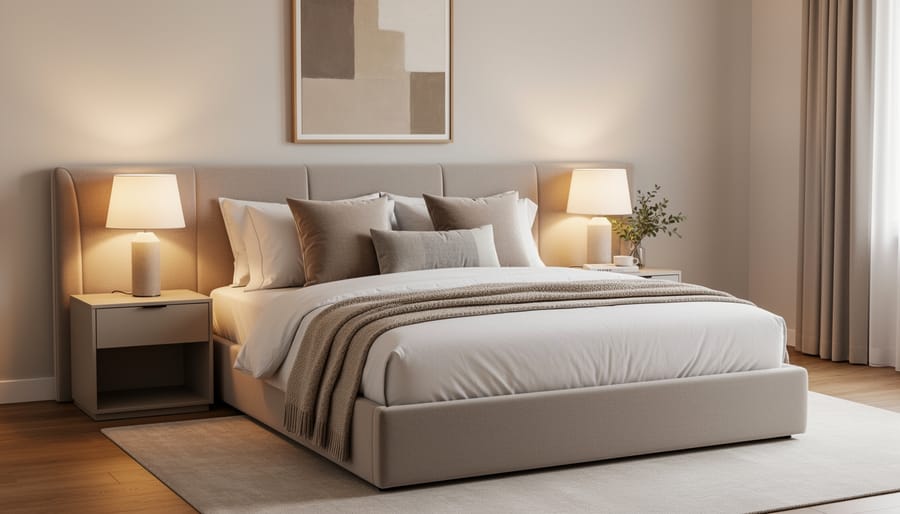
The secret to a five-star bedroom lies in treating it as a sanctuary first, showpiece second. Start with the foundation, a quality mattress transforms sleep and signals luxury more than any decorative flourish. Layer your bedding hotel-style: crisp cotton sheets (at least 300 thread count), a duvet with cover, and a lightweight blanket for texture. Add two sleeping pillows plus two decorative Euro shams to create that signature plush headboard moment.
Complete darkness matters as much as comfort. Studies confirm blackout curtains improve sleep quality, making them worth the investment. Choose lined drapes in a neutral tone that puddle slightly on the floor, that extra fabric length reads luxury.
Clear surfaces ruthlessly. Five-star hotels keep nightstands sparse: one lamp, perhaps a small tray for jewelry, nothing more. Move books to a dedicated reading chair, banish electronics, and store daily clutter in closed storage. This visual calm signals sophistication and helps your mind transition to rest mode. A single statement piece, an upholstered headboard or a piece of art above the bed, provides elegance without competing for attention in your retreat.
Spa-Like Bathroom Transformations
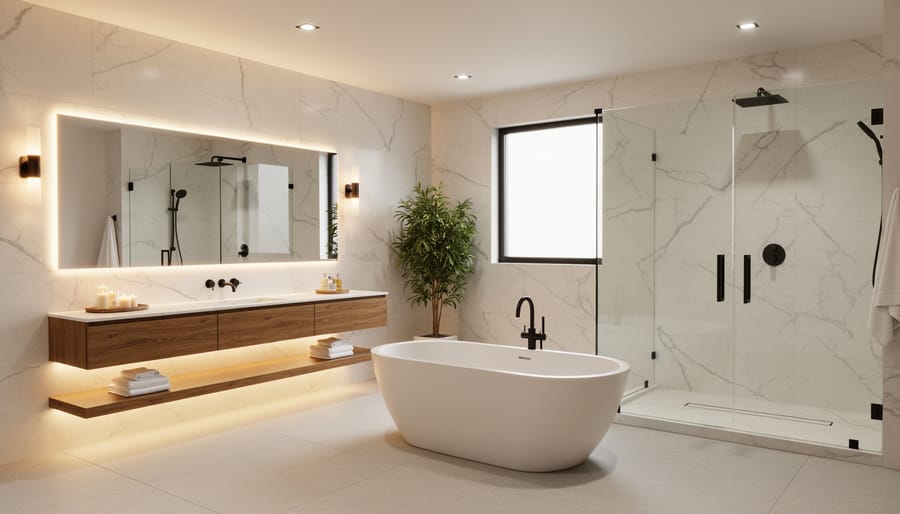
A luxurious bathroom doesn’t require a complete gut renovation. Start with the shower experience, a rainfall showerhead (available for under $100) transforms your daily routine into a spa ritual. Pair it with plush, hotel-weight towels in neutral tones; the tactile difference between standard and premium cotton is immediately noticeable.
Lighting sets the spa atmosphere. Install a dimmer switch on your existing fixtures, or add battery-operated LED strips under floating vanities for soft, ambient glow. Candles remain the ultimate affordable luxury their warm light and subtle scent create instant serenity.
Consider upgrading hardware to brushed brass or matte black for a cohesive, high-end look. Add a bamboo bath tray, glass storage containers for cotton balls and bath salts, and a small potted orchid. If budget allows, heated towel racks or underfloor heating elevate the experience dramatically, but even a simple bath mat upgrade makes a difference. The key is creating a clutter-free environment where every element feels intentional and indulgent.
Elevated Living Spaces for Entertaining
When guests arrive, your living and dining areas set the tone for the entire visit. The secret to luxury entertaining spaces isn’t cramming in more furniture, it’s creating intentional zones that encourage connection while maintaining visual breathing room.
Start by arranging seating in intimate conversation clusters rather than lining furniture against walls. Position sofas and chairs to face each other at comfortable distances (about eight feet works best), anchoring each grouping with a substantial coffee table or ottoman. This setup mimics high-end hotels where every seating area feels like its own destination.
Your dining space deserves equal attention to atmosphere. A statement chandelier positioned 30-36 inches above the table creates drama while defining the room’s focal point. Swap basic dining chairs for upholstered versions, even mixing two armchairs at the table ends with simpler side chairs achieves an expensive, collected look.
Art placement elevates these spaces dramatically. Hang pieces at eye level (around 57-60 inches to the center), and don’t be afraid of scale, one large piece makes more impact than a scattered gallery wall. In dining areas, art behind the buffet or sideboard creates a sophisticated backdrop for serving.
Finally, layer your lighting. Combine overhead fixtures with table lamps and subtle wall sconces to create adjustable ambiance. Dimmers transform any gathering from bright and energetic to intimate within seconds, perhaps the single best investment for versatile entertaining.
Creating a home that feels luxurious isn’t about how much you spend, it’s about how thoughtfully you spend it. Throughout this guide, we’ve explored the principles that professional designers use to craft elevated spaces: quality over quantity, intentional material choices, sophisticated color palettes, and those small details that make all the difference.
The beauty of this approach is that you don’t need to transform your entire home overnight. Start with a single room that matters most to you. Perhaps it’s your bedroom, where investing in exceptional bedding and layered lighting can create an immediate retreat. Or maybe it’s your living room, where one statement piece and a curated color scheme shift the entire atmosphere.
As you apply these strategies, you’ll notice something remarkable: luxury becomes less about individual items and more about the cohesive experience you’re creating. Each intentional choice builds upon the last, whether you’re selecting textiles that layer beautifully or arranging furniture to maximize light and space.
Your home should be more than just where you live, it should be a sanctuary that restores and inspires you. By understanding these design principles and applying them with intention, you’re not just decorating. You’re crafting spaces that honor both your aesthetic vision and your daily well-being. That’s the truest form of luxury, and it’s absolutely within your reach.
