

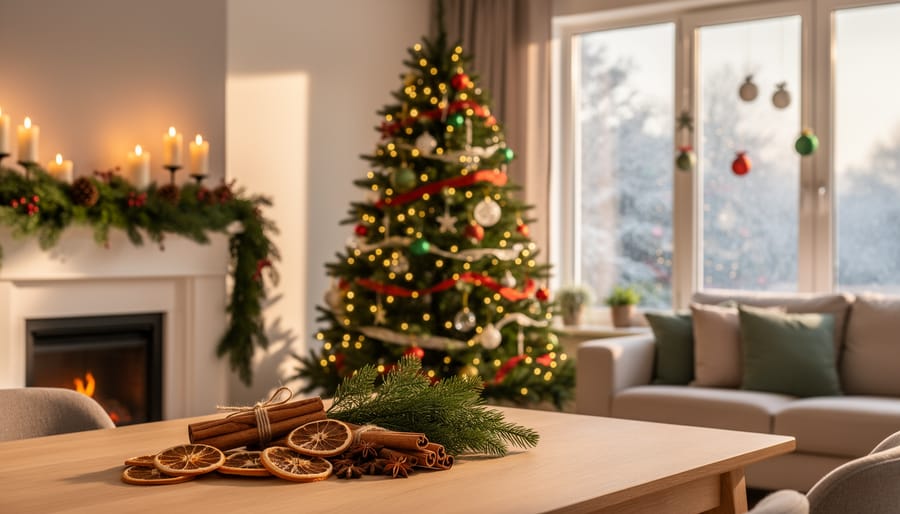
Decorating your home for Christmas takes one weekend and a simple plan: pick a single style, gather your materials, and work from the biggest focal point outward. Start with the tree, then the mantel or main surface, then doorways and tables, and finish with lighting. Do it in that order and the room pulls together without a pile of mismatched pieces. Most households can finish a full living room in four to six hours, and no special skills are required.
Why does it work? A defined style acts like a filter. When you decide on warm Scandinavian neutrals, a classic red and green, or a handmade look with dried orange slices and cinnamon bundles, every decision gets easier. Design magazines have long pointed to restraint and repetition as the secret behind rooms that feel polished rather than crowded: repeat two or three colors, mix textures, and leave some surfaces bare.
The traditions behind the season add real depth, too. Think of German evergreen wreaths, Mexican poinsettias and farolitos, or Swedish straw ornaments. Borrowing one meaningful touch from a culture you love, or your own family’s, makes a space feel personal instead of staged.
This guide covers choosing your style, the tools and materials worth having, safety basics for lights and candles, and a clear step-by-step order of work. You’ll also find a quick checklist to confirm everything looks right before you switch the lights on.
Start With a Vision: Choosing Your Christmas Home Decor Style
Borrowing Traditions From Around the World
Every culture has its own way of making winter feel bright, and borrowing from them can give your home a story all its own. The trick is to adapt with curiosity and respect rather than copying a whole look wholesale. Pick one or two ideas that speak to you and let them sit comfortably beside your own traditions.
In Scandinavia, simple straw ornaments (himmeli and little Yule goats) bring a warm, golden texture to a tree or window, and candles glow in nearly every pane to chase away the long dark evenings. Mexico offers poinsettias, known as flor de Nochebuena, and farolitos, small paper-bag lanterns lit with a tea light, that line steps and entryways with a soft, welcoming shimmer. From Germany, a wooden Christmas pyramid turns on the heat of its candles, and layered paper stars cast pretty patterns across a room. In the Philippines, the parol, a star lantern traditionally made from bamboo and paper, becomes a cheerful focal point in a window or hallway.
Design magazines have been leaning into exactly this: heritage-inspired, handmade holiday looks that feel personal rather than showroom-perfect. Try making a paper star with your family, or hang one parol where it can be seen from the street. Share the story behind each piece with guests, and the decoration becomes a conversation.
Picking a Palette and a Focal Point for Each Room
Think of your palette as the quiet rule that makes everything else feel intentional. Limit the scheme to two or three main colors, then add one natural accent like pine, rattan, dried orange slices or raw wood. Classic red and cream with greenery works beautifully. So do soft sage with brass, or deep navy with silver and white. If you want a starting point, browse some Christmas palette ideas and pick the combination that already echoes your sofa, rug or wall color.
Next, give every space one hero element. A single star performer lets the eye rest, and everything nearby simply supports it.
– Living room: the tree.
– Fireplace wall: the mantel garland.
– Dining room: the table centerpiece.
– Entryway: the front door wreath or a styled console.
Keep supporting decor smaller and calmer than the hero. If a room already has a strong focal point, like a big window or an art wall, let that be the star and keep the decorating light. A hallway might need only a ribbon on a mirror. When you feel tempted to add more, ask whether it helps the hero or competes with it.
Tools and Materials to Gather Before You Decorate
Gathering everything in one go saves you from mid-decorating store runs, and it keeps the scheme cohesive. Before you buy anything, shop your own storage first. Last year’s ribbon, a few glass jars, and that bag of pinecones from a fall walk can anchor a lovely look. If you’re short on ideas for what to pick up, our Christmas decor buying guide walks through the basics in more detail.
Here’s a simple checklist, grouped so you can tick things off category by category:
- Lighting: warm-white string lights, a plug-in timer, and a few outdoor-rated extension cords where needed.
- Hanging and fastening: removable adhesive hooks, floral wire, ribbon, and natural twine.
- Greenery and natural elements: garland, loose branches, dried orange slices, and pinecones.
- Finishing touches: ornaments, candles or LED candles, and cozy textiles like a wool throw or linen runner.
A few smart choices keep costs down and waste low. Warm-white lights flatter nearly every palette, so they’re a safe buy that you’ll reuse for years. Choose neutral ribbon in a single color, and you can recycle it across the tree, mantel, and gift wrapping. For a handmade, budget-friendly layer, slice and dry oranges in a low oven, then thread them with twine; they smell wonderful and look straight out of a Scandinavian-inspired magazine spread.
If you have little ones or pets, LED candles are a worry-free swap for real flames. Keep a small basket of spare bulbs, fuses, and extra hooks nearby, too. With the kit assembled and everything within arm’s reach, the decorating itself becomes the fun part.
Safety First: Lights, Candles, Trees and Little Ones
A little safety habit now keeps the season calm later, and most of it takes only a few minutes. Think of it as part of the decorating, not a chore that interrupts it.
Start with the lights. Before anything goes on the tree or mantel, plug each strand in and check lights for damage looking for cracked sockets, bare wire or loose bulbs. Retire anything that looks tired. Check the label too: indoor-only sets stay inside, and outdoor-rated ones are the right choice for porches and windows that face the weather. Reading the seasonal lighting safety characteristics is a handy way to understand what a well-made set should offer. Spread your plugs across several outlets instead of daisy-chaining one power strip, and switch everything off when you leave or go to bed.
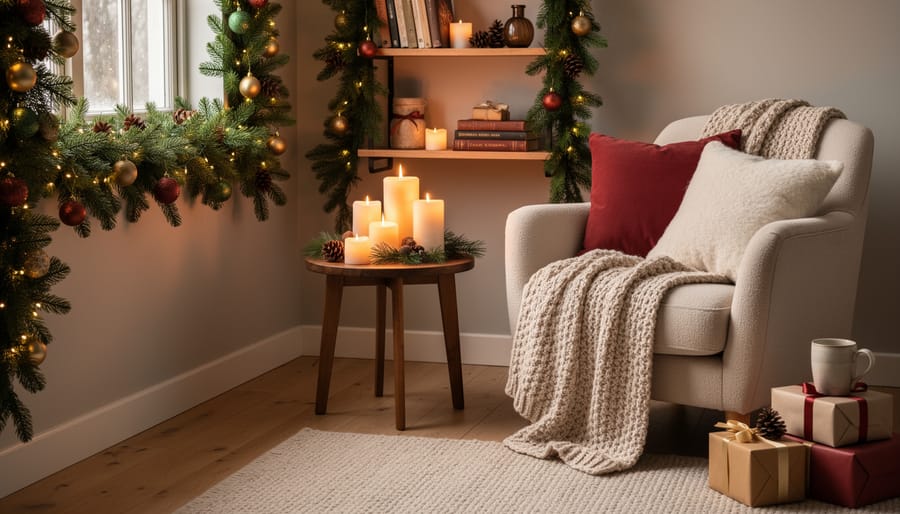
Candles deserve the same thoughtful placement. Keep real flames well away from garlands, paper stars and tree branches, set them on stable, heat-safe surfaces, and never leave them burning in an empty room. Flameless LED candles give the same candlelit glow with none of the worry, which is why so many stylists lean on them.
Finally, secure the tree in a sturdy stand and keep it watered if it’s real. Place fragile glass ornaments higher up, and keep plants like poinsettia, holly and mistletoe out of reach of curious children and pets.

Step-by-Step: Decorating Your Home for Christmas, Room by Room
Layering the Tree: Lights, Ribbon, Ornaments
A full-looking tree comes down to order. Start with the lights, because they’re the hardest layer to fix once everything else is on. Work from the trunk outward, weaving strands deep into the branches rather than just wrapping the surface. Plan on about 100 bulbs per foot of tree for a glowing, cozy effect.
Here’s the sequence that keeps things balanced:
- Fluff every branch, bending the tips upward and outward to fill gaps.
- Add lights first, tucking them toward the trunk, then along the tips.
- Drape ribbon or garland in loose, swooping waves, anchoring it with floral wire.
- Hang your largest ornaments deep inside, close to the trunk, for depth.
- Fill in with medium baubles, then finish with small ornaments at the branch tips.
- Top with a star, bow or bunch of dried stems, and tuck in a few picks to hide any bare spots.
Mix finishes as you go. Pair matte with shiny, smooth glass with woven straw or wood, and vary sizes so the eye keeps moving. Repeat each color or texture at least three times around the tree so it feels deliberate.
Short on space? A branch tree works beautifully. Stand a few bare branches in a tall vase and hang lightweight ornaments from them. You can also make a wall tree by arranging string lights, a garland or even washi tape in a triangle, then clipping ornaments and cards onto it. Both options feel fresh and modern.
Styling the Mantel, Table and Entryway
Start with the mantel and think in simple formulas. Drape a garland across the front, then add a candle grouping on each end and one taller piece off-center. Odd numbers are your friend here: three candles of different heights look relaxed and intentional, while pairs can feel stiff. Mix pillar candles with a couple of small votives (flameless ones if little hands or pets are around) and tuck in a few pine sprigs or pinecones to fill the gaps.
On the table, keep the centerpiece low enough that guests can still see each other across it. A long runner of greenery with three clusters (a lantern, a bowl of ornaments, a few candles) works in almost any room. If your dining area flows into your lounge, the living dining decor ideas we shared are a handy guide for keeping both zones feeling connected.
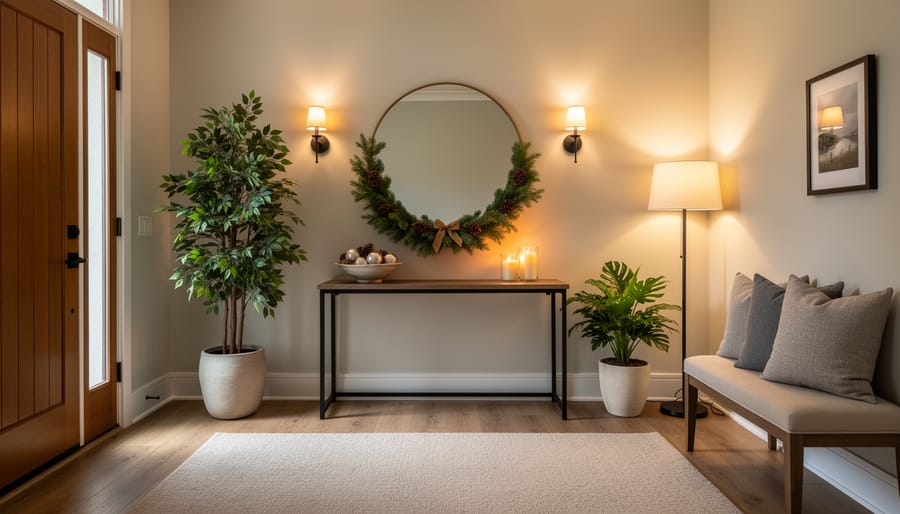
For the entryway, aim for welcome rather than a full show. A wreath on the door, a small bench with a wool throw, and a basket of pinecones or a lantern on the floor say “come in” without crowding the space. Vary heights again: something tall, something mid-level, something low.
Easy handmade touch: dried citrus garland
1. Slice oranges into rounds about a quarter-inch thick and pat them dry.
2. Bake on a rack at 200°F (95°C) for two to three hours, flipping once, until the slices are dry and slightly translucent.
3. Let them cool, then thread them onto twine with a needle, alternating with cinnamon sticks or bay leaves.
4. Hang across the mantel or window and enjoy the soft, spicy scent.
Check Your Work and Plan the Next Steps
Once the last ornament is hung, resist the urge to call it done. Wait until dusk, switch off the overhead lights, and walk through the house the way a guest would. This is when the scheme really shows itself.
Start with the glow. Look for lights that feel too harsh or too dim, and notice whether warm tones match from room to room. If one window blazes while the next is dark, move a lamp or add a string of fairy lights to balance things out. Then scan for gaps: a bare stretch on the tree, a mantel that feels crowded, a table where the centerpiece swallows everything else. Step back, remove one item from any busy spot, and tuck a few extra branches or ornaments into sparse ones.
Next, run a quick safety pass. Check that cords aren’t pinched under furniture, outlets aren’t overloaded, candles sit well clear of greenery, and the tree is stable. Keep fragile or toxic decor out of reach of little hands and curious pets.
Finally, take photos from the doorway of each room. They show you what your eye has stopped noticing, and they make a handy reference for next year.
To keep the magic going through January, swap red accents for winter whites, leave the lights and greenery up, and add candles or pinecones. When it’s time to pack away, wrap ornaments in tissue, coil lights around cardboard, and label each box by room so next year’s decorating starts with ease.
Home Christmas Decoration FAQs
When should I start decorating?
There’s no single right date, so start when it feels joyful to you. Many people begin after their local holiday kickoff, whether that’s the first weekend of December or earlier. Starting with one corner lets you ease in without pressure.
How do I decorate a small apartment?
Pick one hero element, such as a tabletop tree, a branch tree in a vase, or a garland over a doorway. Use vertical space with wall wreaths and hanging stars. Keeping the palette to two or three colors helps a compact space feel calm instead of crowded.
How can I decorate on a budget?
Lean on natural, low-cost materials like pinecones, evergreen clippings, and dried citrus slices. Reuse ornaments you already own in a new color grouping. Thrift stores and handmade paper stars add charm without the price tag.
How do I make decor feel personal rather than store-bought?
Mix in pieces with a story, such as family ornaments, heritage-inspired crafts, or handmade garlands. Even one or two meaningful items among simpler basics make the whole scheme feel like yours.
Pet-friendly decorating comes down to placement. Keep fragile ornaments and tinsel higher up, secure the tree base, and choose pet-safe greenery so the whole household can enjoy the season together.
At the end of the day, Christmas home decor is about warmth, not perfection. A slightly crooked ornament or a garland that droops on one side is often the detail your family remembers years from now.
So start small. Pick one corner, maybe the mantel or the front entryway, and give it your palette, a few natural textures, and a soft string of lights. Once that spot feels right, let the rest of the house follow at its own pace.
Add the touches that tell your story: a handmade ornament, a tradition borrowed from your family’s heritage, or a candle in the window. If you need extra pieces without overspending, a few budget-friendly decor finds can fill the gaps beautifully.
When you’re happy with how it looks, snap a photo and share it with the Decoration Trend community. We’d love to see your home glow.
