

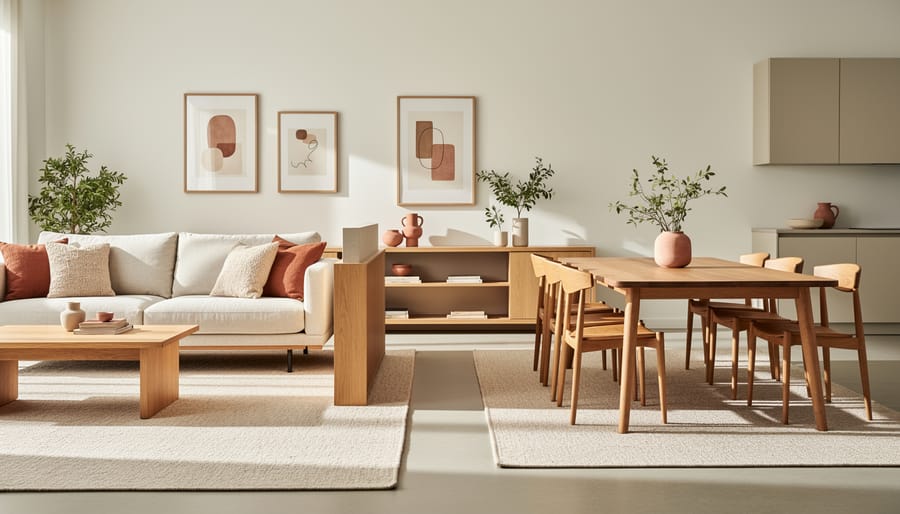
The fastest way to make a living and dining room feel like one thoughtful space is to give each zone its own identity while tying them together with a shared thread. Anchor each area with a rug, soften the line between them with a console or open shelf, and repeat a color palette, a few materials, and some greenery across both sides. That’s the whole formula, and it works whether you’re in a studio in Lisbon or a family home in Lagos.
Design magazines like Elle Decor and Architectural Digest have long championed this approach for open-plan living. The Scandinavian habit of layering textiles, the Japanese preference for quiet, uncluttered dividers, and the Mediterranean love of a warm, shared color story all point the same direction: connection without clutter.
These eight ideas were curated from those enduring principles, not lab-tested. Each one is visual, doable in a weekend, and friendly to small footprints. Think of them as a starting menu. Pick two or three that speak to your space, and you’ll feel the difference by the time the kettle boils.
How These Living Dining Room Ideas Were Chosen
Choosing eight ideas out of hundreds meant being picky about what earns a spot. This list is curated, not tested in my own home. I leaned on patterns that keep showing up in respected design magazines, then filtered them through a few practical questions:
- Flexibility: does it work in a tiny apartment and a spacious open-plan room?
- Budget: can you do it for a little or a lot?
- Renter-friendly: does it skip drilling, painting walls, or permanent changes?
- Cohesion: does it help the living and dining zones feel like one story?
- Cultural range: does it draw on traditions from around the world, so you can find your own style?
Not every idea scores perfectly on every point, and that’s fine. Some lean budget-friendly, others lean dramatic, and a few borrow from Scandinavian restraint or the layered warmth of Moroccan and Middle Eastern homes. Think of the list as a menu, not a rulebook. Whatever your layout looks like, whether it’s long and narrow, square, or tucked into a corner, at least a few of these ideas will fit. Pick the ones that feel like you and skip the rest.
8 Ways to Make a Living Dining Room Feel Connected but Distinct
1. Define Each Zone with an Area Rug
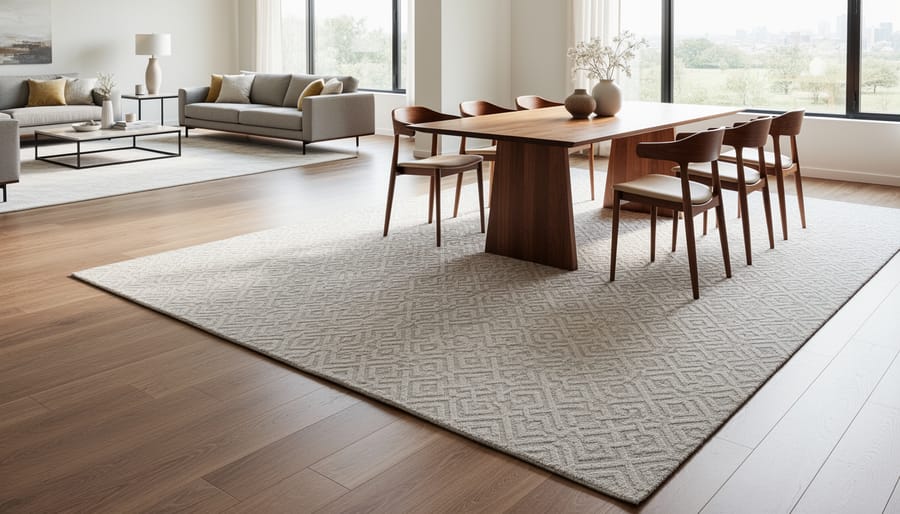
A rug under the dining table is one of the quickest ways to make a combined room feel like two. It works like a visual boundary: the sofa zone gets its own softness, and the eating area gets a clear anchor, all without moving a single wall.
Size is where most people go wrong. Choose a rug large enough that every chair stays on it, even when pulled out for someone to sit down. As a rule of thumb, aim for about 60 to 90 centimeters (two to three feet) of rug beyond the table on every side. A rug that’s too small makes chairs wobble at the edge and the whole area feel unsettled.
Pattern is your chance to add personality. A faded kilim, a Moroccan-style rug with its geometric diamonds, or a flat-woven runner layered over jute all bring in textile traditions with real history. Pick colors that echo your sofa zone, and the two areas will feel related but distinct.
2. Let a Console or Open Shelf Act as a Soft Divider
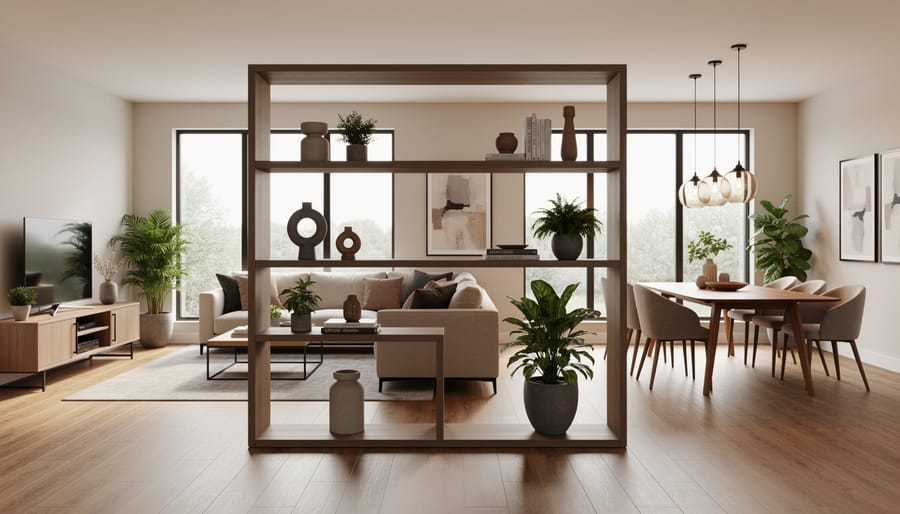
Not every combined room needs a hard line between the sofa and the table. A low console or open bookshelf placed right behind the sofa does the job quietly. It marks where the lounge ends and the dining area begins, yet light and sightlines still travel straight through the room.
Keep the height at or just below the sofa back so the space never feels boxed in. An open shelf with no solid back panel works especially well in small rooms, since you can still see the window from the dining chairs.
For styling, think in layers. Stack a few books horizontally, add a woven basket for throws or remotes, and set a small lamp on top so the divider glows at dinnertime.
If you love a Scandinavian or Japandi look, edit hard. Choose pale oak or ash, leave generous empty space, and limit yourself to a single ceramic vase, one lamp, and one or two natural-fiber baskets. The restraint is the whole point.
3. Build a Shared Color Palette with One Accent for Dining
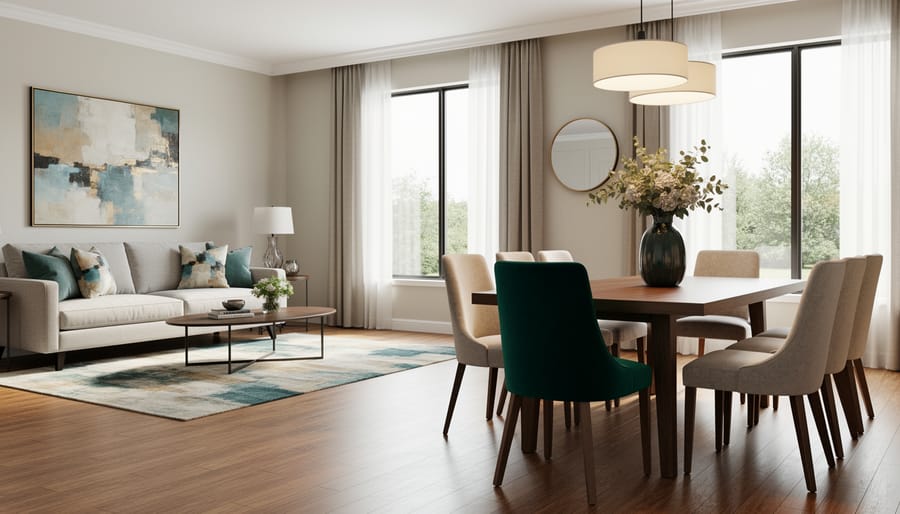
Pick two or three colors and let them run through both zones: perhaps a warm cream on the walls, a soft oatmeal sofa, and charcoal in the cushions and the table legs. That shared base is what makes color cohesion across rooms feel effortless, even when the space is open-plan.
Then give the dining area one distinct accent so it gets its own personality. A deep green wall, a set of terracotta chairs, or a painted ceiling does the job beautifully. Design magazines return to this move again and again because it adds drama without breaking the story.
If you want fresh inspiration, browse color trends 2026 for palettes worth borrowing, and see how modern dining decor uses a single bold accent to anchor the table.
4. Hang a Statement Light Over the Dining Table
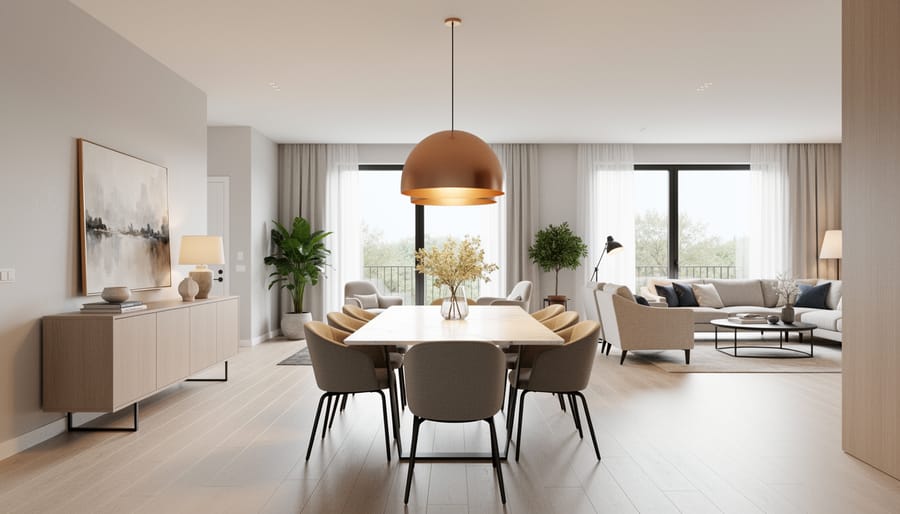
A pendant or chandelier is the easiest way to say “this is where we eat” without sacrificing an inch of floor space. Because it hangs in the air, it defines the dining zone even in a tight open-plan room.
Two rules keep it looking right. Hang the bottom of the fixture about 30 to 36 inches above the tabletop, so it feels intimate without blocking sightlines across the table. For scale, aim for a fixture roughly one-half to two-thirds the width of the table. Long tables can take two or three smaller pendants in a row.
Style is where you can bring in your own story. A woven rattan pendant nods to tropical and Southeast Asian craft, while a sculptural paper lantern echoes Japanese washi tradition and Scandinavian simplicity. A brass chandelier brings classic European warmth. Renters can swap in a plug-in swag kit with a ceiling hook, no wiring required.
5. Repeat Materials Across Both Spaces
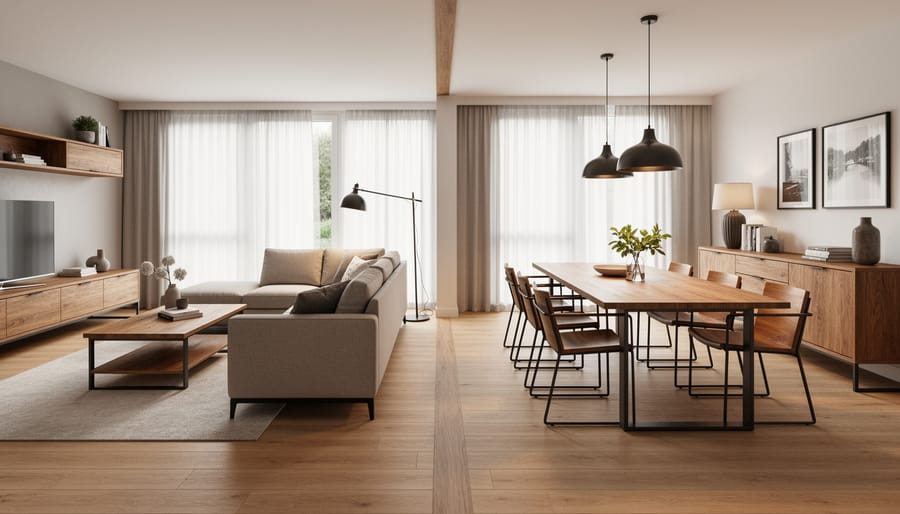
When a room has to be both living space and dining space, repeating a few materials does more than any wall could. Pick two or three, like warm walnut, brushed brass, or woven rattan, and let them show up on both sides of the room. The dining table’s wood tone can return in the coffee table legs. Brass on a pendant light can echo in a picture frame or a lamp base near the sofa.
My aunt did this beautifully with her grandmother’s carved oak sideboard. Instead of hiding it, she paired it with a sleek, pale-wood dining table and a modern leather sofa, then added oak accents to the shelving. The old piece suddenly felt intentional, like the anchor of the whole story.
To try it yourself, choose one material you already own and find two small ways to repeat it across the room.
6. Choose Flexible Seating That Moves Between Zones
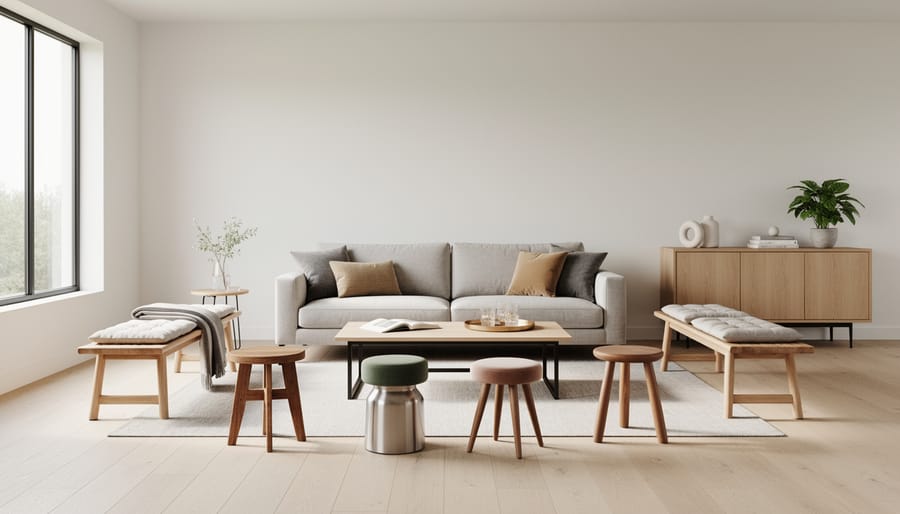
Furniture that only does one job is a luxury a shared room rarely affords. A bench tucked along the dining table seats three at dinner, then slides over to the sofa zone as an extra perch during movie night. Lightweight chairs, like rattan or bentwood styles, are easy to carry wherever the conversation drifts.
Look to dining customs that embrace low seating for more ideas. In Japan and across parts of the Middle East and South Asia, floor cushions, poufs, and low platforms turn a meal into a relaxed gathering. A stack of oversized cushions beside a low table works for dinner, then doubles as lounging space when the plates are cleared.
For a snug corner, a banquette-style bench with storage underneath keeps the room tidy. In truly small rooms, choose nesting stools or folding chairs that tuck behind a door or under a console when not in use.
7. Use Mirrors and Art to Stretch the Space
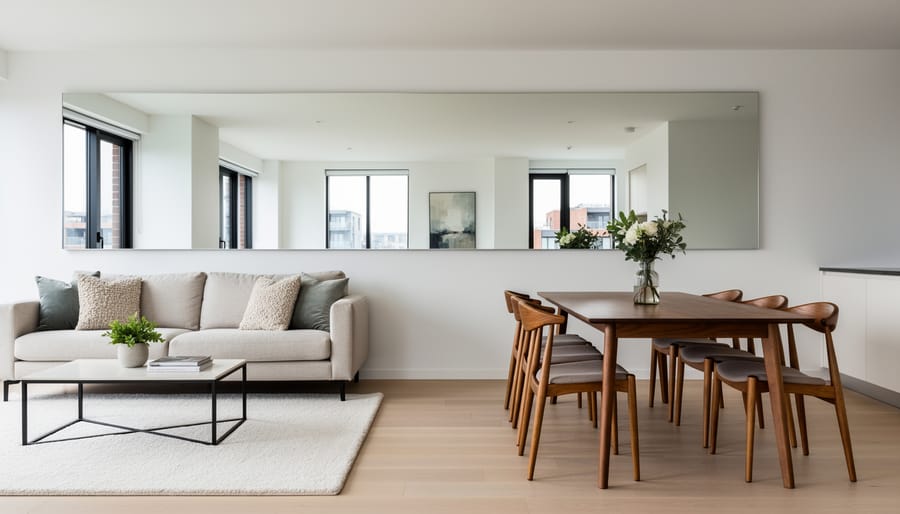
A big mirror is the easiest way to make a combined room feel larger. Hang or lean one opposite a window, and it catches daylight and sends it across both the living and dining zones. Even on a gray afternoon, the whole room looks brighter. Renting? Skip the drill. A tall floor mirror leaning against the wall does the same job, and you can move it whenever you rearrange.
Then give the dining side its own focal point. A single oversized piece of art works well, and so does a loose gallery wall of prints, photographs, or family keepsakes. Picture ledges are a renter’s best friend here, since you can swap pieces without new holes. Keep frames in a similar finish so the grouping feels deliberate, and let the art pick up one or two colors from your shared palette.
8. Bring in Plants and Textiles for Warmth
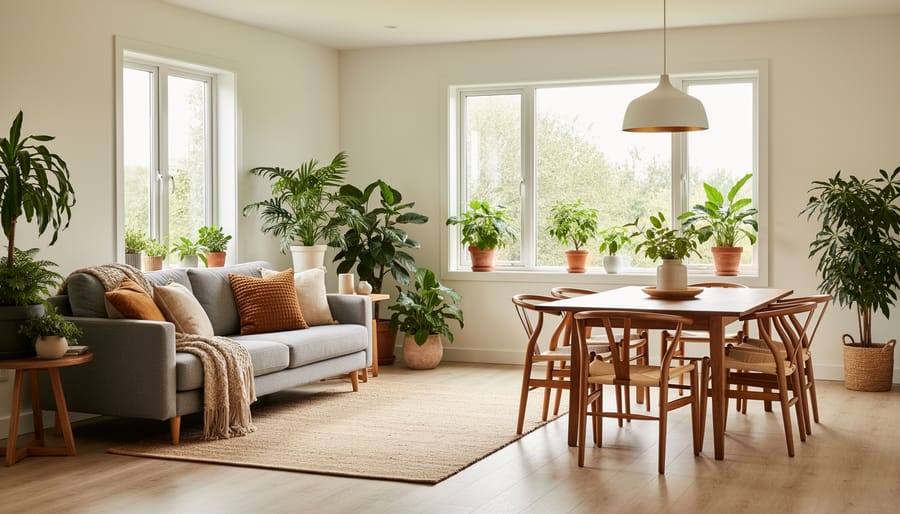
A few plants and some well-chosen fabric are the quickest way to make a combined room feel finished. Start with greenery that forgives neglect: a snake plant, a pothos trailing from a shelf, or a ZZ plant can handle dim corners and the occasional missed watering. Put one near the sofa and one on or near the dining table so the green carries across both zones.
Then think in fabric. Hang curtains across the entire wall, not just the window in one zone, and the eye reads the whole room as one calm backdrop. Repeat a pattern or color between a table runner and a few cushions, say a soft stripe or a block-printed motif, so the dining and lounging areas quietly talk to each other.
To keep things fresh, rotate rather than replace. Swap linen covers and light runners in summer for wool throws and deeper tones in winter, and tuck the off-season pieces in a basket under the console.
Living Dining Room Decor: Your Questions Answered
How do I decorate a small living dining room?
Lean on a single shared palette and let a mirror do some of the heavy lifting. A rug under the table and flexible seating that moves between zones keep things open without crowding the floor.
Does the dining table need to match the sofa?
Not at all. Repeating one material, like wood tone or a metal finish, is enough to make mismatched pieces feel like a family.
What works in a long, narrow layout?
Treat the room as two shorter rooms. A rug under the table sets the dining end, and a console or open shelf can soften the line between them without blocking light.
How do I keep it tidy day to day?
Baskets on an open shelf and lightweight stools that tuck away give clutter a home. Keep the table surface nearly bare and your eye will read the whole room as calm.
Whichever question sounds most like your own room, remember that these ideas are meant to be mixed. You don’t need all eight, and one thoughtful change often shifts the whole feel of a space.
Start Small and Make the Room Your Own
A combined living and dining room feels intentional when a few simple choices work together: a shared palette with one clear dining anchor, furniture that moves between zones, and personal touches like a family bowl or a favorite print. You don’t need to do everything at once, and you don’t need a big budget to see a difference.
So pick one idea this weekend. Slide a rug under the table, hang a new light, or lean a mirror against the wall. Then tell other readers how it turned out, because a small before-and-after story can spark someone else’s next project. If you want to keep exploring, the Dining Room Decor Ideas theme is a good path, and you’ll find more living dining ideas to try whenever you’re ready for round two.
