

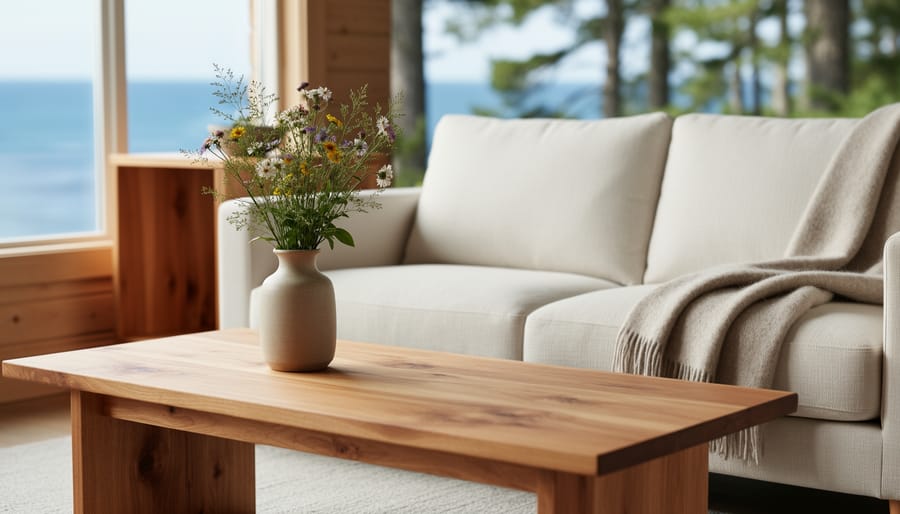
Canadian home decor blends natural materials, functional minimalism, and cultural diversity into a distinctive aesthetic that celebrates the country’s vast landscapes and multicultural identity. Think warm wood tones reminiscent of cabin retreats, clean lines borrowed from Scandinavian design, and thoughtful touches that nod to Indigenous craftsmanship and global influences brought by Canada’s diverse population.
The style has gained serious momentum, with Canada’s home decor market valued at USD 16.3 billion in 2025 and projected to reach USD 22.8 billion by 2034. This growth reflects a broader shift toward interiors that feel both grounded and aspirational, spaces where organic textures meet contemporary sophistication.
What sets Canadian decor apart is its embrace of contradiction. Cozy doesn’t mean cluttered. Modern doesn’t mean cold. The aesthetic draws from the country’s regional identities: West Coast homes might feature cedar accents and ocean-inspired palettes, while Prairie interiors lean into open spaces and wheat-toned neutrals. Eastern homes often incorporate European elegance softened by rustic elements.
You’ll find this style accessible, too. Events like the Open Home by Homesense Canada have demonstrated that achieving the look doesn’t require luxury budgets. Instead, it’s about selecting pieces that tell a story, layering textures like linen and wool, and honoring the natural world through materials and color choices.
Whether you’re furnishing a city condo or a countryside home, Canadian decor offers a framework that’s as practical as it is beautiful. The approach prioritizes longevity over trends, comfort over formality, and authenticity over perfection.
What Makes Canadian Home Decor Different
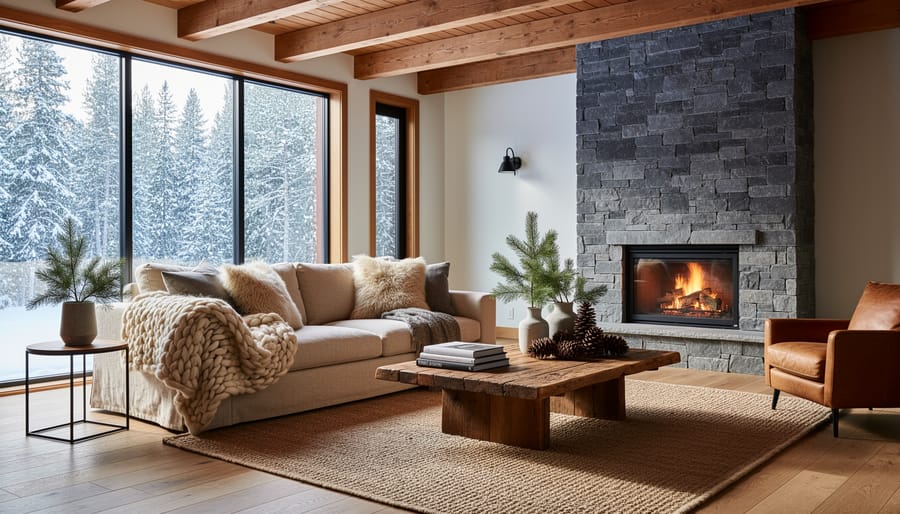
Canadian home decor isn’t trying to be Scandinavian minimalism or American farmhouse, it’s carved out its own identity by necessity and geography. The result is a design language that feels both familiar and refreshingly distinct, shaped by a country where winter lasts half the year and wilderness starts where the suburbs end.
The foundation resembles minimalist Canadian decor in its clean lines and functional approach, but there’s a crucial difference: Canadian spaces reject the austerity that sometimes plagues Scandinavian interiors. Instead, they layer in warmth through texture, rich wood tones, and pieces that tell stories. A Toronto loft might feature the restraint of Nordic design but anchor it with a reclaimed barn wood table and indigenous wool blankets, function meets soul.
Climate dictates much of what works. When you’re facing minus-twenty temperatures and limited daylight for months, your home becomes a refuge rather than just a backdrop. This reality pushes Canadian design toward tactile comfort: chunky knits, sheepskin throws, and materials that invite touch. Fireplaces aren’t decorative, they’re gathering points. Windows maximize precious natural light while heavy textiles keep the cold at bay.
What truly sets Canadian decor apart is its cultural layering. You’ll find French-Canadian heritage pieces, antique armoires and folk art, sitting comfortably alongside indigenous beadwork and contemporary multicultural influences from the country’s diverse population. This isn’t forced eclecticism; it reflects the reality of Canadian identity itself.
The defining characteristics include:
- Scandinavian-inspired simplicity warmed by wilderness elements and natural textures
- Extensive use of local materials, Canadian maple, birch, granite, and limestone
- French-Canadian antique influences blended with indigenous art and craft traditions
- Design choices driven by extreme weather, insulation, light maximization, cozy layering
- Multicultural touches reflecting Canada’s diverse population and design sensibilities
The vast landscape influences scale and palette. Canadian interiors embrace space rather than fighting it, using open floor plans that mirror the country’s geography. Color schemes pull directly from surroundings, deep evergreen forests, granite rock faces, frozen lake blues, and the warm amber of autumn maple leaves. These aren’t decorative choices but visual connections to place, creating homes that feel grounded in their environment rather than dropped in from a catalog.
The Canadian Color Palette That Transforms Spaces
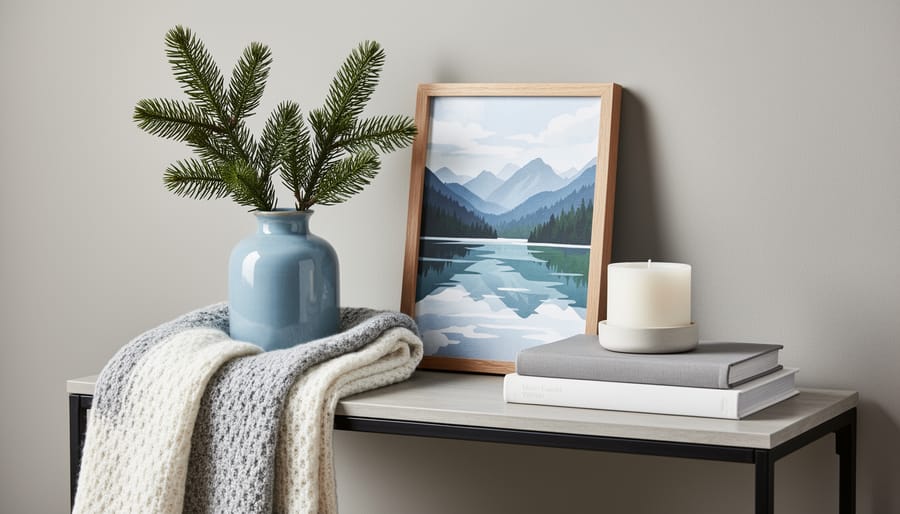
Step outside any major Canadian city and you’ll understand the palette immediately. The landscape doesn’t whisper, it dominates. Dense evergreen forests stretch endlessly, punctuated by granite outcroppings and lakes so blue they look photoshopped. Come winter, everything softens under layers of pristine snow. These aren’t just pretty views; they’re the foundation of a color story that’s resonating well beyond Canada’s borders and influencing 2026 color trends internationally.
The core palette revolves around five landscape-driven anchors. Deep forest green brings the grounding presence of pine and spruce, think moody accent walls or velvet upholstery that adds weight without darkness. Lake blue ranges from soft morning mist shades to the saturated cerulean of alpine waters at midday, working beautifully in everything from textiles to tile. Snow white isn’t stark builder-grade; it’s the warm, slightly creamy white of natural wool and fresh powder that reflects light without feeling cold.
Granite gray provides the neutral backbone, cooler than beige, warmer than true gray, echoing the Canadian Shield’s ancient rock. It pairs effortlessly with bolder choices while standing strong on its own. Finally, warm wood tones from maple, birch, and cedar add the organic honey and amber notes that prevent the palette from skewing too cool.
What makes this combination work across climates is its inherent balance. The cool tones create breathing room and sophistication, while the warm woods and creamy whites add coziness. You’re not decorating a ski lodge, you’re capturing the feeling of standing at a lake’s edge where water meets forest meets sky, then translating that layered, harmonious complexity into livable spaces that feel both grounded and elevated.
Essential Elements to Bring Canadian Style Home
Natural Materials That Ground Your Space
Canadian design’s obsession with natural materials isn’t just aesthetic, it’s survival instinct turned artful. When winter temperatures regularly drop to minus 30, you learn which materials actually warm a space versus those that look pretty but leave you shivering. Wood, stone, and leather aren’t decor choices here; they’re foundational elements that create thermal mass, acoustic warmth, and tactile comfort that synthetic alternatives can’t replicate.
Start with reclaimed wood as your anchor material. Canadian designers favor white oak, maple, and Douglas fir with visible grain patterns and natural imperfections, knots, cracks, and weathering that tell a story. A single live-edge shelf or a chunky wood coffee table grounds a room without overwhelming it. The key is restraint: one substantial piece makes a statement, while wood-clad walls tip into ski lodge territory fast.
Stone brings the landscape indoors through granite countertops, slate tiles, or river rock accents. Think functional placement, a stone fireplace surround or bathroom feature wall, rather than decorative scatter. The texture contrast between smooth wood and rough stone creates visual interest that feels intentional, not themed.
Leather adds warmth through seating, throw pillows, or drawer pulls. Choose pieces with natural patina that ages gracefully rather than distressed finishes trying too hard to look rustic. A cognac leather chair paired with linen softens the harder materials without sacrificing durability.
This approach to budget-friendly Canadian style works because these materials mature beautifully, they’re investments that improve with time rather than trends that date your space.
Textiles That Add Warmth Without the Weight
Canadian textiles tell stories of survival and craftsmanship, where every weave and knit served a purpose before becoming decorative. The iconic Hudson’s Bay Point Blanket with its distinctive stripes, remains a cornerstone piece that anchors a room while carrying centuries of trading history. Layer it over a sofa or bed, and you’ve introduced both warmth and heritage in one move.
Indigenous weavings bring geometric patterns and natural dyes that machine production can’t replicate. Look for pieces from First Nations artists that use traditional techniques passed through generations. These aren’t just accent pieces, they’re cultural artifacts that ground your space in authenticity.
Chunky knits and sheepskin throws add texture without bulk. Drape a thick wool throw over an armchair or place sheepskin on a modern bench to bridge rustic and contemporary. The key is mixing weights and textures, rough linen with soft merino, smooth leather with fuzzy wool, creating tactile interest that invites you to settle in and stay.
Lighting for Long Winter Nights
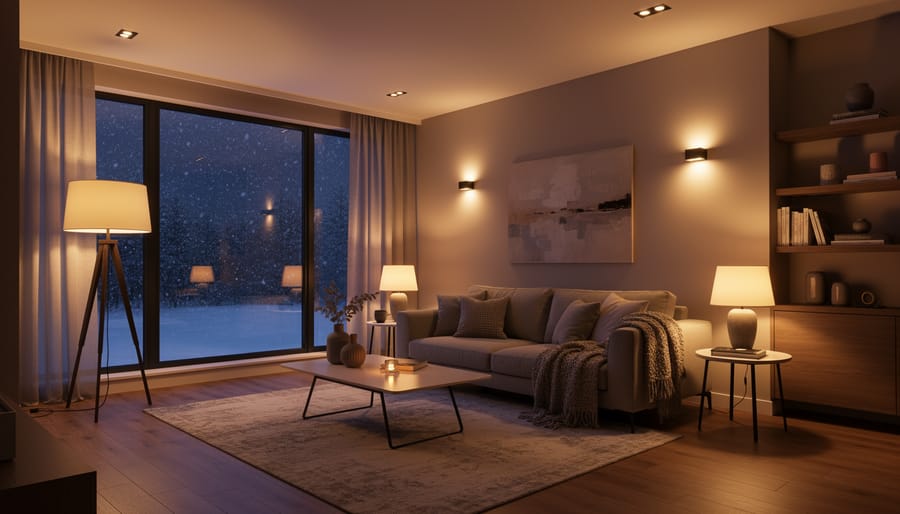
When you’re living through winters where sunset arrives at 4 PM, lighting becomes more than decoration, it’s essential to your mental well-being. Canadians have mastered the art of layering light sources to combat seasonal darkness without creating harsh, clinical spaces.
The strategy starts with respecting whatever natural light you have. Sheer curtains replace heavy drapes during daylight hours, mirrors positioned opposite windows multiply available light, and furniture arrangements never block precious sun exposure. But the magic happens after dark.
Canadian homes layer at least three types of lighting in each main room: ambient ceiling fixtures, task lighting where you actually work or read, and accent lights that create pools of warmth. Think floor lamps with linen shades casting soft glows, pendant lights made from natural materials like wood or woven reeds, and strategically placed candles that flicker like firelight.
Statement lighting pieces do double duty as functional art, sculptural fixtures inspired by ice formations, antler chandeliers that nod to wilderness, or handcrafted pieces from local artisans that tell stories. The key is choosing warm color temperatures (2700-3000K) that mimic firelight rather than cool white bulbs that feel institutional. This approach transforms dark months into cozy evenings rather than something to endure.
The Canadian Home Decor Market in 2026
The Canadian home decor market isn’t just thriving, it’s experiencing remarkable growth that reflects the aesthetic’s broadening appeal. Valued at USD 16,298.62 million in 2025, the market is projected to reach USD 22,764.82 million by 2034, signaling strong consumer investment in creating homes that balance natural beauty with functional design. This expansion mirrors broader North American trends, where the home decor sector is expected to hit USD 578,564.6 million by 2030 with a compound annual growth rate of 8.9 percent.
This growth translates into real opportunities for consumers at every price point. Industry events like CanGift’s Fall Toronto Gift + Home Market, scheduled for August 9-12, 2026, showcase the latest in Canadian design and connect buyers with artisans and manufacturers. Meanwhile, accessible retailers like HomeSense Canada prove that achieving the Canadian aesthetic doesn’t require a designer budget. Their approach demonstrates that natural textures, quality materials, and thoughtful styling can be attainable without compromising on the authenticity that makes Canadian decor distinctive. The market’s expansion means more choices, better availability, and increasing variety for anyone looking to bring this grounded, nature-inspired style into their home.
How to Mix Canadian Decor with Your Existing Style
You don’t need to strip your home bare to embrace Canadian design sensibilities. The beauty of this aesthetic lies in its adaptability, it works with what you already love rather than demanding allegiance to a single vision.
Start with one anchor piece that speaks to Canadian principles. A reclaimed wood coffee table can ground a modern living room without fighting sleek lines. In a traditional space, swap generic artwork for a single piece by an indigenous artist, the cultural narrative adds depth without disrupting your established palette. Farmhouse enthusiasts already share common ground with Canadian style’s love of natural materials, so layering in a chunky wool throw or stone pottery feels like a natural evolution rather than a departure.
Pay attention to textural contrast. If your home leans minimal, introduce warmth through tactile elements: a sheepskin draped over a leather chair, linen curtains that soften hard edges, or a woven basket that adds organic interest to clean surfaces. Conversely, if your space feels busy, Canadian design’s emphasis on functionality can help you edit. Replace three decorative pillows with one substantial wool blanket. Consolidate trinkets into a single statement piece of turned wood or soapstone.
The Canadian color palette integrates beautifully through accent updates that don’t require repainting walls. Forest green velvet cushions, a slate gray runner, or lake blue ceramics can shift your room’s mood while respecting existing tones. These nature-derived hues act as neutrals that play well with both warm and cool schemes.
Think of Canadian elements as conversation starters rather than theme enforcers. A Hudson’s Bay blanket folded at the foot of your bed doesn’t transform your bedroom into a mountain lodge, it adds a layer of heritage and warmth that makes the space more inviting. That’s the real lesson: Canadian design enhances livability first, aesthetic second.
Where to Find Authentic Canadian Home Decor
Finding genuine Canadian home decor requires looking beyond mass-market retailers and connecting with sources that honor the craft, culture, and quality that define this aesthetic. Start with indigenous artisans who create pieces rooted in centuries of tradition, organizations like the Indigenous Tourism Association of Canada maintain directories of authentic makers whose work carries both artistic merit and cultural significance. When you purchase directly from these creators, you’re not just acquiring decor; you’re supporting living traditions and ensuring fair compensation for skilled craftsmanship.
Local craft markets and maker collectives offer another avenue for discovering handcrafted decor that reflects regional character. Events like CanGift’s Fall Toronto Gift + Home Market, scheduled for August 9-12, 2026, bring together Canadian designers and artisans under one roof, making it easier to see quality firsthand and build relationships with makers whose work resonates with you.
For everyday accessibility, retailers like HomeSense Canada demonstrate that Canadian style doesn’t require luxury budgets. Their approach proves you can find pieces with the right aesthetic sensibilities without compromising quality or emptying your wallet. The key is developing an eye for authentic materials and thoughtful design rather than chasing branded names.
Look for reclaimed wood furniture from salvage yards, wool textiles from Canadian mills, and pottery from regional studios. These sources often provide provenance, the story behind the piece, which adds depth to your space that mass-produced items simply cannot match.
Canadian home decor isn’t about following a rigid formula or copying a magazine spread. It’s about learning from a design philosophy that prioritizes authenticity over trends, comfort over perfection, and meaningful connection over Instagram moments. The reason this aesthetic resonates internationally is simple: it reflects how people actually want to live.
You don’t need to live in a cabin or own a Hudson’s Bay blanket to embrace these principles. Start with what speaks to you. Maybe it’s bringing in one handcrafted piece that tells a story, or simply choosing materials that age beautifully instead of falling apart. Perhaps it’s rethinking your color palette to reflect landscapes that calm you, or creating layered lighting that makes winter evenings feel cozy rather than isolating.
The Canadian approach teaches us that homes should work with our lives, not against them. They should honor the places we live and the cultures we come from. Your space doesn’t need to look Canadian to benefit from these ideas. It just needs to feel like yours.
